
Country dossier · Living
🇿🇦 South Africa
Living guide: real net salary, cost of living, taxes, health and quality of life, with source for every figure.
- Region
- Southern Africa
- Capital
- Pretoria (executive; the country has three capitals, see curiosities)
- Languages
- 12 official languages, including English, Afrikaans, Zulu and Xhosa
- Currency
- South African Rand (ZAR)
- Population
- ≈ 63 million
- Time zone
- UTC+2
- Blocs
- SADC (Southern African Development Community); member of the G20 and BRICS
South Africa is the most industrialized country on the African continent and offers real economic opportunities for those who achieve professional integration. Cape Town has established itself as a destination for digital nomads and expatriates, especially in the technology and creative sectors. Cost of living is significantly lower than in developed European and North American countries, but the quality of services varies greatly depending on the neighborhood and city. Urban infrastructure is modern and comparable to other major economies, although the country faces real challenges in education, public health and security in certain areas, visible legacies of a segregation past that ended only in 1994.
South Africa at a glance
Languages and regions
South Africa is deeply multilingual: 12 languages have official status, including South African Sign Language, recognised in 2023, reflecting the country's ethnic and cultural composition. English is widely spoken, especially in professional and urban contexts, particularly in Johannesburg and Cape Town. Afrikaans is the mother tongue of descendants of Dutch settlers and is used in business and administration. Bantu languages such as Zulu, Xhosa, Sotho and Setswana dominate in rural and peri-urban communities. For foreigners in urban areas, English works for most daily interactions, although learning basic phrases in a local language is culturally valued and opens doors in communities. Linguistic diversity reflects cultural richness, but also marks the country's historical socioeconomic divisions.
Climate and geography
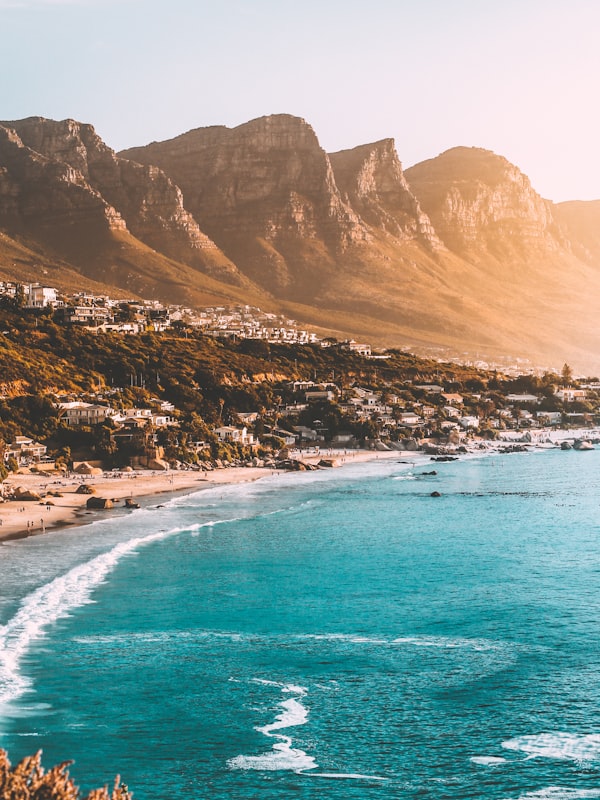
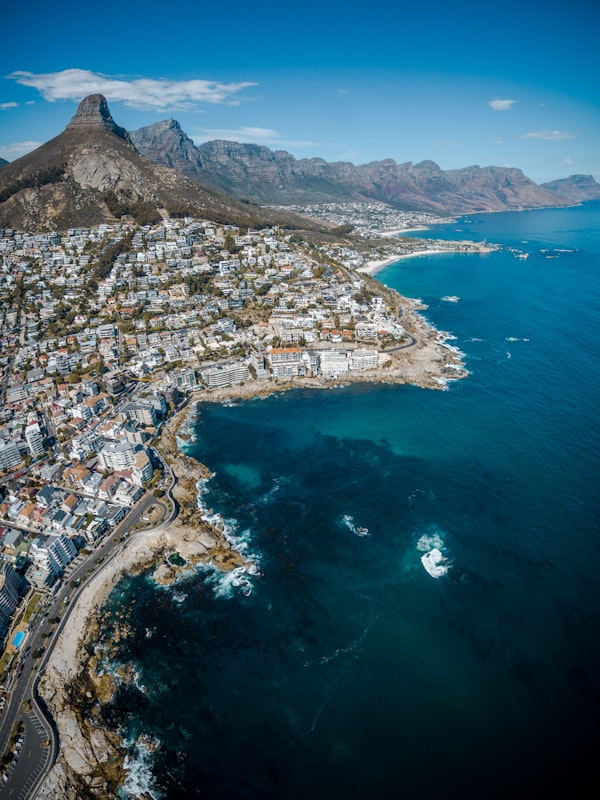
The country spans a vast territory with distinct climates. Cape Town has Mediterranean summer (October to March) and mild winters with regular rainfall; it is considered one of the continent's most beautiful cities, surrounded by Table Mountain and with wineries around it. Johannesburg, in the high interior, has hot summers and mild winters, with rainfall concentrated in summer. The coastline is extensive and diverse, from the South Atlantic to the Indian Ocean. Geography ranges from deserts in the north to forests in the east. The northeastern region, near the border with Mozambique, is home to the Kruger Reserve, one of the world's largest wildlife parks. Air quality in Johannesburg can be a problem during winter due to thermal inversions.
What the country's economy is based on
The South African economy is the largest and most diversified on the entire continent, although it has faced periods of stagnation. Gold, diamond and precious metals mining provides historical export revenue, although the sector faces sustainability challenges. Manufacturing, energy, finance and telecommunications industries employ millions. Agriculture, including viticulture and fruit production, is significant. In recent years, technology, startups and the creative economy have grown rapidly, especially in Cape Town and Johannesburg. The tourism sector is robust due to natural attractions, wildlife parks, urban architecture and international events. Financial services, banking and insurance are institutional pillars. Structural unemployment is a real challenge, particularly among young people without qualifications, reflecting failures in the public education system.
Education
Public education faces chronic deficiencies in infrastructure, teacher training and resources, especially outside affluent urban areas. The system inherited segregation from apartheid and still reflects those inequalities. Private schools offer international quality education, but with high tuition fees. Public universities such as University of Cape Town and University of the Witwatersrand have solid international reputation, but access is competitive. Vocational training and employability programs are expanding, but the education system as a whole lacks urgent investment. For those coming from abroad with children, international or expatriate private schools offer globally recognized curriculum continuity, although at considerable cost.
Culture and integration
South African culture is lived, festive and deeply linked to music, dance, cuisine and art. Jazz, hip-hop, kwaito and amapiano are globally relevant musical expressions. Cuisine is carnivorous and based on local barbecue (braai), fresh seafood and traditions of different communities. Large cities have vibrant scenes of gastronomy, galleries, theater and cinema. Expatriates find well-established communities, especially in Cape Town and Johannesburg, active professional networks and organized social groups. Integration with the local community is possible, but requires initiative; class and race divisions still visibly mark society. Cultural activism, rights movements and conversations about reconciliation and reparative justice are a living part of the social fabric.
Fun facts
- South Africa has three capitals: Pretoria is the executive capital, Cape Town is the legislative capital where Parliament is located, and Bloemfontein is the judicial capital, a unique structure that reflects the post-apartheid commitment to decentralization.
- Nelson Mandela worked as a prisoner on Robben Island, today a museum and world heritage site visited by thousands, a symbol of the struggle against racial segregation.
- Cape Town is the third largest digital economy in Africa, with a vibrant ecosystem of startups, innovation hubs and international talent concentrated in neighborhoods like Woodstock and Camps Bay.
- The country is a member of BRICS (Brazil, Russia, India, China and South Africa) and has political power disproportionate to its size in international forums of economic negotiation.
- The 12 official languages, which since 2023 include South African Sign Language, reflect the country's ethnic and cultural diversity; the struggle for multilingual recognition is still active in education, media and public administration.
Net salary, summarized
Source: national medians (OECD/Eurostat) + calculator formulaJust to show the ballpark of what you earn. Tax and cost of living take a chunk. Three sample professions, junior to senior. The full calculation, for your role, level, family, and currency, is the Living calculator.
| Profession | Junior | Mid | Senior |
|---|---|---|---|
| Software developer | US$ 1.371 | US$ 1.683 | US$ 2.505 |
| Financial analyst | US$ 1.059 | US$ 1.302 | US$ 1.947 |
| Nurse | US$ 953 | US$ 1.173 | US$ 1.756 |
Estimated net monthly, after progressive tax, in dollars (site base). Calculate for your role, level, and currency →
Cost of living, what you actually keep
Source: basket for couple + 2 children (Numbeo) + local health and school rules| Housing (rent)≈ 30% of cost | US$ 780 |
| Food | US$ 655 |
| Transport | US$ 273 |
| Utilities and internet | US$ 237 |
| Recreation and other | US$ 655 |
| Healthcare | US$ 40 |
| Children's schoolpublic viable for non-residents | included |
| Total cost per month | US$ 2.640 |
Spending pattern (housing + living only)
Local tax, health, and school rules change how much is left at month end.
Family and immigration
Visa and spouse work rules; local values estimatedQuality of life
Indices: GPI, PISA, WHO, WHR, Ookla, EF EPI, CPI (0 to 10)Life
Daily
Institutions
Verdict
South Africa is a country of contrasts: real economic opportunities in modern and cosmopolitan sectors, especially in Cape Town, coexist with structural challenges of unemployment, unequal public security and the living legacy of apartheid. For specialized professionals, digital nomads or those who achieve integration into the formal economy, it offers quality of life, comparatively low cost of living and access to unique culture and nature. Social integration is possible but requires sensitivity to complex local dynamics. Regions like Cape Town offer stability and clear opportunities; peripheral areas require caution. It is a long-term destination for those willing to understand the country beyond clichés.
Complete guide: South Africa
This page is the sample. The guide is the complete map.
Everything you saw here, deeper and actionable: from first visa step to moving day, sourced for every fact.
- Visa and sponsorship, step by step
- Cities and regions compared
- Health insurance: how to choose
- Retirement, taxes, and local rules
- Useful links: housing, bank, jobs
Imagine yourself here.
Photos: kylefromthenorth™️, Finding Dan | Dan Grinwis · Unsplash
Frequently asked questions
What is the work visa and how long does it take to get?
The general work visa is intended for professionals with in-demand skills and requires a confirmed job offer from a South African employer. The employer must prove that no available South African citizen can fill the vacancy. Processing typically takes 8 to 12 weeks after submission of a complete dossier. There are also specific visas for investors, entrepreneurs and corporate transfers (intracompany). Work visas initially last up to 3 years and can be renewed.
Can my spouse or partner work if I have a work visa?
Yes. If you obtain a General Work Visa, your spouse or registered partner can apply for a dependent work visa, which authorizes self-employment, formal employment or entrepreneurship. They do not need a closed job offer previously, but must demonstrate independent financial means or connection to your visa. The process is faster than the main work visa, usually 4 to 8 weeks. Both can work simultaneously.
What is the cost of living in Cape Town compared to other world capitals?
Cape Town is significantly cheaper than European, North American and Australian cities. Rent in desirable neighborhoods for expatriates (Camps Bay, Woodstock, Observatory) ranges from USD 800 to USD 1,500 monthly for a 1 to 2 bedroom apartment, while in central European areas it would cost 2 to 3 times that. Food is 40 to 60 percent cheaper. Public transportation is very cheap, but most expatriates use cars or Uber. Private education is expensive compared to the country (USD 5,000 to USD 15,000 annually per child). Private healthcare is accessible but international insurance or a local plan is recommended.
What is the security situation and in which areas is it safe to live?
Security varies drastically by neighborhood. Established Cape Town neighborhoods such as Camps Bay, Woodstock, Green Point and Constantia are safe for expatriates with normal urban precautions. Johannesburg requires more caution; Sandton, Rosebank and similar areas have strong private security but reside in enclaves. Peripheral areas and townships have real crime rates and should be avoided by those unfamiliar with them. Crimes against property (residential theft, car robbery) exist and require standard precautions: good home security, avoiding walking at night on empty streets, being discreet with visible goods. Violent crimes against expatriates are rare in areas inhabited by foreigners, but occur in contexts of drugs and gangs. It is advisable to contact the local expatriate community for specific neighborhood recommendations.
Ready to go beyond the summary?
View the complete guide: South Africa