
Country dossier · Living
🇸🇦 Saudi Arabia
Living guide: real net salary, cost of living, taxes, health and quality of life, with source for every figure.
- Region
- Middle East
- Capital
- Riyadh
- Languages
- Arabic
- Currency
- Saudi Riyal (SAR)
- Population
- ≈ 36 million
- Time zone
- UTC+3
- Blocs
- Gulf Cooperation Council (GCC)
Saudi Arabia is a unique destination for foreign workers, particularly those drawn by the absence of personal income tax and competitive salaries in strong currencies. The country has undergone significant sociocultural transformation since the 2010s, with reforms that relaxed certain historical social restrictions. However, the visa sponsorship system, called kafala, structurally binds the foreigner to their employer, and daily life operates under social and religious rules stricter than in most Western destinations. The climate is extreme, especially in the central desert, and social integration is more complex for those who are not Muslim or do not speak Arabic.
Saudi Arabia at a glance
Languages and regions
Arabic is the official language, and the majority of the foreign population is concentrated in Riyadh (administrative capital), Jeddah (gateway to the Red Sea), Dhahran and the eastern region (center of oil and business activities), in addition to smaller inland cities. Classical Arabic is used formally; the local dialect permeates daily life and differs slightly from Arabic spoken in other regional countries. Many foreigners, especially in multinational technology and finance companies, can work in English, but for real social integration or long-term residence, learning Arabic is recommended.
Climate and geography
Saudi Arabia is predominantly desert. Summers are extremely hot, frequently exceeding 45 degrees Celsius in Riyadh and the central region, with lower humidity than coastal cities. Winters are moderate and pleasant, between 15 and 25 degrees. Rain is rare across almost all territory. Buildings and vehicles in larger cities are well air-conditioned, but outdoor time in summer requires significant adaptation. Coastal regions such as Jeddah experience higher humidity.
What the country lives on
The Saudi economy is built on oil and gas, which represent the vast majority of export revenues. In recent decades, the country has invested heavily in economic diversification through programs such as Vision 2030, covering tourism, technology, and finance. The private sector is proportionally small, and many formal jobs depend on the government or state oil companies. There is strong presence of foreign labor in construction, services, and domestic work. The job market for qualified foreigners exists primarily in technology, engineering, health, and multinational companies.
Education
The education system is divided between public schools, taught in Arabic with Islamic curriculum, and private international schools in larger cities, with British, American, or Indian models. King Saud University in Riyadh is the most well-known institution. Foreigners typically opt for international schools (more expensive) or continue their studies abroad. Government scholarships exist, but are often directed toward Saudi citizens.
Culture and integration
Culture is strongly Islamic and tribal, with family values at the center. Recent changes have allowed women to work and drive, attend public events more freely, and travel without permission from a male relative. Nevertheless, public behavior carries expectations of modesty and respect for local norms. Alcohol consumption is prohibited with severe penalties, as is relationships outside marriage. Foreigners have more freedom than Saudi citizens, but social codes of conduct are observed, especially in public. Expat communities exist in Riyadh and Jeddah, facilitating social integration.
Fun facts
- Saudi Arabia is among the world's three largest oil producers, behind the United States and Russia, and holds the planet's second largest proven reserves, behind Venezuela.
- The country adopts the Islamic lunar calendar, resulting in dates of religious holidays that vary relative to the Gregorian calendar; Ramadan, the most important fasting month, changes date annually.
- Since 2018, women have gained the right to drive automobiles, marking a significant change in the country's laws.
- The Saudi riyal is pegged to the US dollar since 1986 at a fixed rate (3.75 SAR equals 1 USD), offering exchange rate stability.
- The country invests in large-scale urban megaprojects, such as the planned futuristic city of NEOM, focused on technology and sustainability.
Net salary, summarized
Source: national medians (OECD/Eurostat) + calculator formulaJust to show the ballpark of what you earn. Tax and cost of living take a chunk. Three sample professions, junior to senior. The full calculation, for your role, level, family, and currency, is the Living calculator.
| Profession | Junior | Mid | Senior |
|---|---|---|---|
| Software developer | US$ 4.070 | US$ 5.088 | US$ 7.886 |
| Financial analyst | US$ 3.080 | US$ 3.850 | US$ 5.968 |
| Nurse | US$ 2.750 | US$ 3.438 | US$ 5.328 |
Estimated net monthly, after progressive tax, in dollars (site base). Calculate for your role, level, and currency →
Cost of living, what you actually keep
Source: basket for couple + 2 children (Numbeo) + local health and school rules| Housing (rent)≈ 38% of cost | US$ 1.710 |
| Food | US$ 1.004 |
| Transport | US$ 419 |
| Utilities and internet | US$ 363 |
| Recreation and other | US$ 1.004 |
| Healthcare (private plan required)fixed cost, does not decrease with lower income | US$ 250 |
| Children's school | US$ 1.667 |
| Total cost per month | US$ 6.417 |
Spending pattern (housing + living only)
Local tax, health, and school rules change how much is left at month end.
Family and immigration
Visa and spouse work rules; local values estimatedQuality of life
Indices: GPI, PISA, WHO, WHR, Ookla, EF EPI, CPI (0 to 10)Life
Daily
Institutions
Verdict
Saudi Arabia offers attractive financial prospects for qualified foreign professionals, with competitive salaries, absence of personal income tax, and controlled cost of living outside luxury sectors. However, it demands significant adaptation to the visa sponsorship system (kafala), extreme climate, and social and religious norms very different from Western contexts. Recent social changes make the country more open than in previous decades, but social integration remains challenging for those from distinct cultural or religious contexts. It is a destination for those who prioritize economic opportunities and are willing to deal with structural and cultural limitations.
Complete guide: Saudi Arabia
This page is the sample. The guide is the complete map.
Everything you saw here, deeper and actionable: from first visa step to moving day, sourced for every fact.
- Visa and sponsorship, step by step
- Cities and regions compared
- Health insurance: how to choose
- Retirement, taxes, and local rules
- Useful links: housing, bank, jobs
Imagine yourself here.
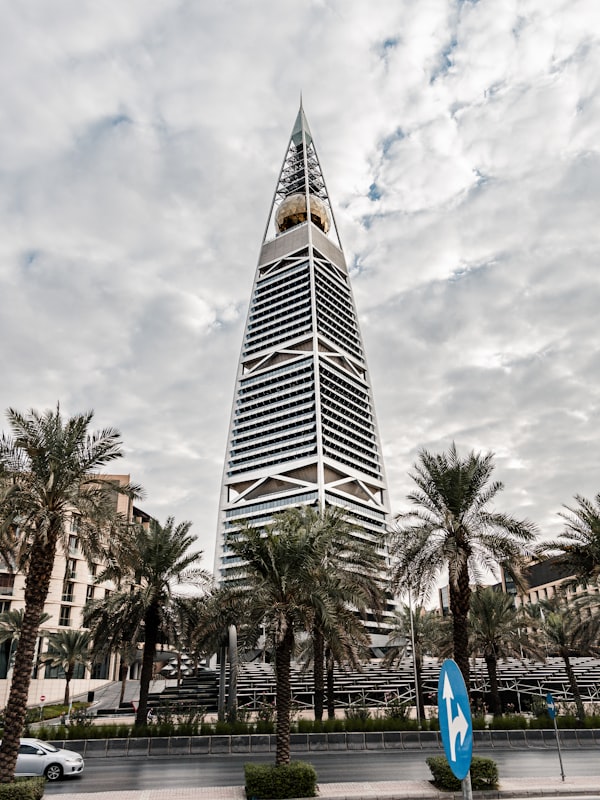
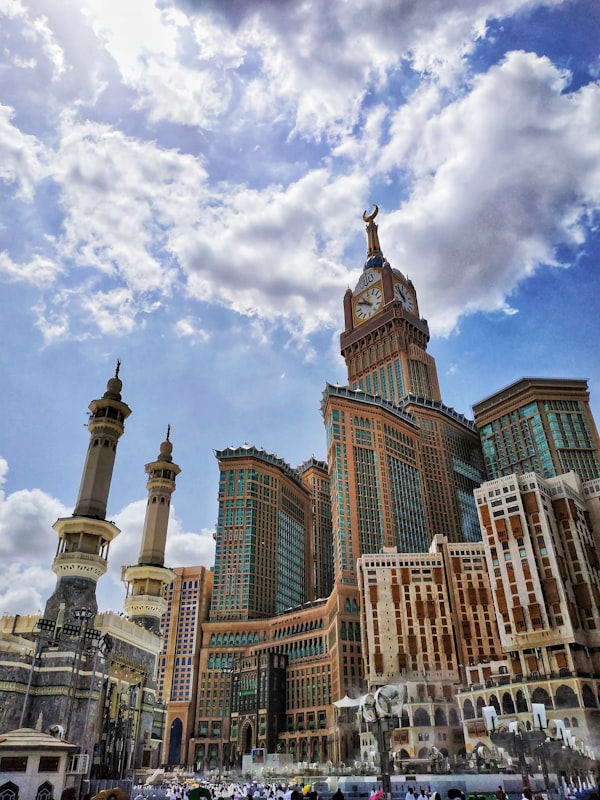
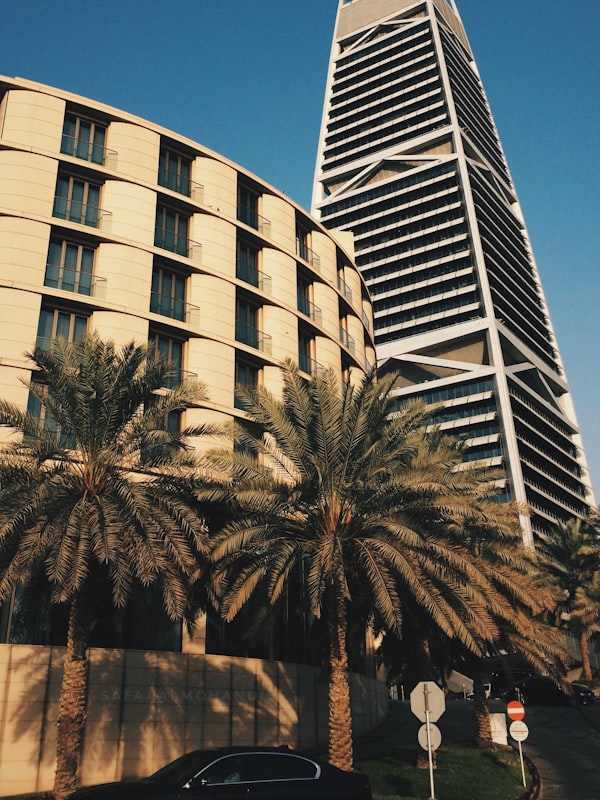
Photos: Haidan, Safaa Almohandis, Omar Al-Ghosson · Unsplash
Frequently asked questions
How does the work visa system in Saudi Arabia function?
The country uses the sponsorship system (kafala), in which the employer sponsors and controls the foreign worker's visa. The employer is legally responsible for the employee, and legal residency is directly linked to employment. To leave the country or change employers, sponsor approval is required. Recent reforms have allowed greater job mobility, but the bond remains structural and must be confirmed in employment terms.
Can my spouse or partner work and move with me?
Spouses can obtain dependent visas and, in principle, can work, but will also need their own sponsorship from an employer under the same kafala system. Unmarried partners face significant legal and social restrictions: relationships outside marriage are legally prohibited. Same-sex couples should be aware that Islamic law criminalizes homosexuality.
What is the cost of living for foreigners?
Costs vary significantly across neighborhoods and lifestyle. Housing for expats in planned communities tends to be relatively expensive in large cities, especially in Riyadh and Jeddah, but food, transportation, and many services maintain affordable prices. Luxurious living exists for those willing to pay; a comfortable and modest life is viable with middle-class salaries. Many expats report that the absence of income tax compensates for higher housing costs.
Which sectors employ most qualified foreigners?
Technology, oil and gas engineering, health (doctors and nurses), finance, and education (teachers in international schools) are the main sectors. Multinational companies in Riyadh and Jeddah also hire foreigners. The Saudi public sector prioritizes Saudi citizens, so opportunities for foreigners concentrate in the private sector and state oil companies like Saudi Aramco.
Ready to go beyond the summary?
View the complete guide: Saudi Arabia