
Country dossier · Living
🇦🇷 Argentina
Living guide: real net salary, cost of living, taxes, health and quality of life, with source for every figure.
- Region
- South America
- Capital
- Buenos Aires
- Languages
- Spanish
- Currency
- Argentine peso (ARS)
- Population
- ≈ 46 million
- Time zone
- UTC-3
- Blocs
- Mercosur
Argentina offers cultural and educational quality of life above the regional average, with a strong tradition in arts, prominent public universities, and an emerging innovation scene. For those working remotely or with income in strong currency, the country offers significant purchasing power and an attractive cost of living outside Buenos Aires. However, economic instability is a permanent fact of Argentine life: the currency faces recurring exchange pressures, inflation remains high, and local wages in pesos lose purchasing power regularly. Careful financial planning and frequent adjustments are part of daily reality for those living there.
Argentina at a glance
Languages and regions
Spanish is the official language, spoken in Rio de la Plata variation in the Buenos Aires region and with distinct regional accents in the subtropical north and Patagonia. Those arriving with Spanish from other regions or from Brazil adapt with ease. Argentina is a geographically vast country: Buenos Aires concentrates a third of the population and offers cosmopolitan urban life, while the interior and Patagonia attract those seeking lower cost of living, smaller communities, and access to wild nature.
Climate and geography
The country extends from the tropics to the sub-arctic: the north is subtropical and humid, the center temperate with hot summers and mild winters, and Patagonia in the south is cold and windy. Buenos Aires has hot summers (December to February) and mild winters; most of the country lives in temperate zones. Geography is diverse: fertile plains in the center, mountain ranges in the west, tropical forest in the northeast, Andes mountains, and steppe and glaciers in Patagonia.
What the country lives on
Argentina is a global agricultural powerhouse, based on soybeans, beef, wheat, and dairy products. The economy is highly dependent on commodities and exchange flows, which makes the country vulnerable to cycles in international prices and currency confidence crises. The services and technology sector grows in Buenos Aires, but the formal economy faces long-standing structural challenges: limited public and private investment, recurring public deficits, and inflationary pressure that affects real wages.
Education
Argentina has a strong tradition of public education: national universities, with the University of Buenos Aires (UBA) as a reference, are free or low-cost and offered to any citizen, including resident foreigners. This places the country above regional standards. Basic and secondary education is offered in both public schools and quality international private schools. Those with children find established options, although quality varies by region and school.
Culture and integration
Buenos Aires is known for its cultural life: tango, theater, museums, internationally significant literature, award-winning wines, and sophisticated gastronomy attract foreigners. Football is religion, beef is tradition, and Argentine sociability values coffee, conversation, and informal meetings. Integration of foreigners is facilitated in large cities, especially Buenos Aires, where migrant communities are visible. In smaller cities integration is slower, but the Argentine tradition of mixing peoples contributes to receptiveness.
Fun facts
- Argentina is the second largest wine producer in South America and offers internationally quality wines at accessible cost for local residents.
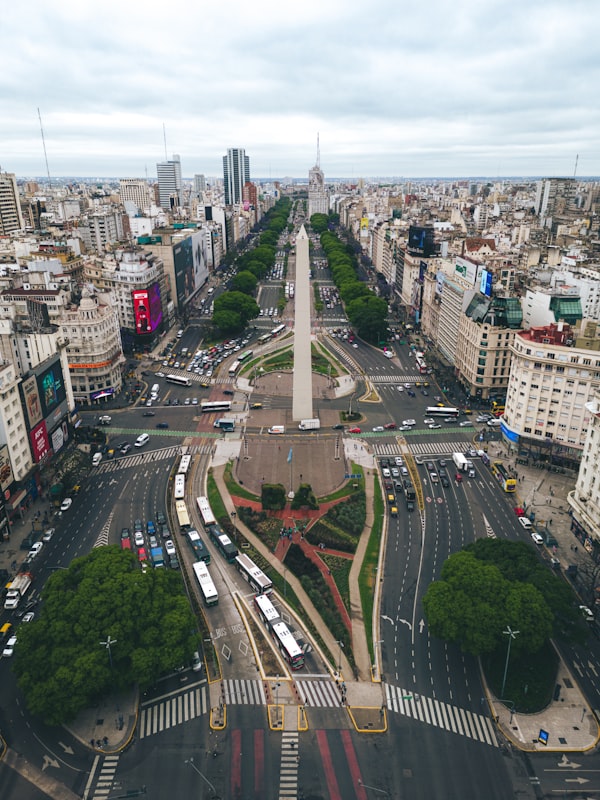
- Buenos Aires is called the 'Paris of South America' for its eclectic architecture, wide avenues, and intellectual life, inheritances from the period of economic gold in the twentieth century.
- Tango was born in Buenos Aires at the end of the nineteenth century, a result of the mixing of African, European, and local rhythms, and remains a cultural symbol and tourist attraction.
- Argentina has compulsory voting for citizens aged 18 to 70 years, reflecting the country's historical political engagement and institutionalized democratic participation.
- The country's social makeup was shaped by large European migration flows between the late 19th century and the mid 20th century, a legacy that still influences social dynamics; today the Argentine population is ageing, with a median age of around 33.
Net salary, summarized
Source: national medians (OECD/Eurostat) + calculator formulaJust to show the ballpark of what you earn. Tax and cost of living take a chunk. Three sample professions, junior to senior. The full calculation, for your role, level, family, and currency, is the Living calculator.
| Profession | Junior | Mid | Senior |
|---|---|---|---|
| Software developer | US$ 725 | US$ 895 | US$ 1.347 |
| Financial analyst | US$ 557 | US$ 688 | US$ 1.039 |
| Nurse | US$ 500 | US$ 618 | US$ 934 |
Estimated net monthly, after progressive tax, in dollars (site base). Calculate for your role, level, and currency →
Cost of living, what you actually keep
Source: basket for couple + 2 children (Numbeo) + local health and school rules| Housing (rent)≈ 32% of cost | US$ 704 |
| Food | US$ 539 |
| Transport | US$ 224 |
| Utilities and internet | US$ 194 |
| Recreation and other | US$ 539 |
| Healthcare | US$ 30 |
| Children's schoolpublic viable for non-residents | included |
| Total cost per month | US$ 2.230 |
Spending pattern (housing + living only)
Local tax, health, and school rules change how much is left at month end.

Family and immigration
Visa and spouse work rules; local values estimatedQuality of life
Indices: GPI, PISA, WHO, WHR, Ookla, EF EPI, CPI (0 to 10)Life
Daily
Institutions
Verdict
Argentina is an attractive destination for those who value cultural quality of life, accessible education, and real purchasing power in strong currency, especially in regions outside Buenos Aires. The ease of residence via Mercosur for South American citizens is a significant advantage. The central challenge is dealing with chronic economic instability: those planning to live there should be prepared for frequent budget adjustments, loss of purchasing power in pesos, and cycles of exchange uncertainty. For remote work in strong currency or outside income, Argentina offers competitive quality of life; for those dependent on local wages in pesos, the calculation is much more challenging.
Complete guide: Argentina
This page is the sample. The guide is the complete map.
Everything you saw here, deeper and actionable: from first visa step to moving day, sourced for every fact.
- Visa and sponsorship, step by step
- Cities and regions compared
- Health insurance: how to choose
- Retirement, taxes, and local rules
- Useful links: housing, bank, jobs
Imagine yourself here.
Photos: Gabriel Ramos, Manuel Cortina, Juan Pablo Mascanfroni · Unsplash
Frequently asked questions
How does residence and visa work for Argentina? Is there a difference if I'm coming from outside Mercosur?
Citizens of Mercosur member countries (Brazil, Paraguay, Uruguay) have the right to residence through free circulation of the bloc, with simplified documentation processes. Those coming from outside Mercosur face more stringent requirements: work visa requires an employer to sponsor you, investor visa requires minimum investment, income visa requires proof of passive income (pension, rent). There are also student and family reunion visas. Consulting the embassy or consulate is essential before moving, as rules and requirements change with immigration policy.
Can my spouse or partner work legally with me in Argentina?
Yes. If you obtain legitimate residence, your spouse or registered partner has the right to family residence and work authorization. This is valid regardless of nationality. For unemployed spouses or partners, family residence offers legal protection; if they want to work formally, they need to obtain registration in the Argentine tax system (CUIT) and comply with employer requirements. Informal work is common practice in Argentina, but offers zero legal protection.
What is the cost of living in Argentina compared to other countries in the region?
The cost of living is attractive if you receive in strong currency, especially outside Buenos Aires: rent, food, and transportation are low by global standards. In Buenos Aires the cost increases, approaching medium-sized cities in Brazil or Chile. For those receiving local wages in pesos, the picture is reversed: wages tend to fall behind inflation, requiring constant adjustments. Periodic currency devaluation makes peso savings risky. Consulting a local cost of living database (like Numbeo) offers updated figures, but they change frequently.
What is the healthcare system like in Argentina? Do foreigners have access?
The system is mixed: public health is offered via public hospital (free for residents), and private health works via health insurance companies (obras sociales) or particular plans. Legal resident foreigners have access to the public system and can opt for private plans. Quality varies: hospitals and doctors in Buenos Aires offer international level, while smaller provinces have fewer resources. Many foreigners hire private insurance to guarantee access to quality private clinics. Costs are accessible in global comparison, but coverage must be verified case by case.
Ready to go beyond the summary?
View the complete guide: Argentina