
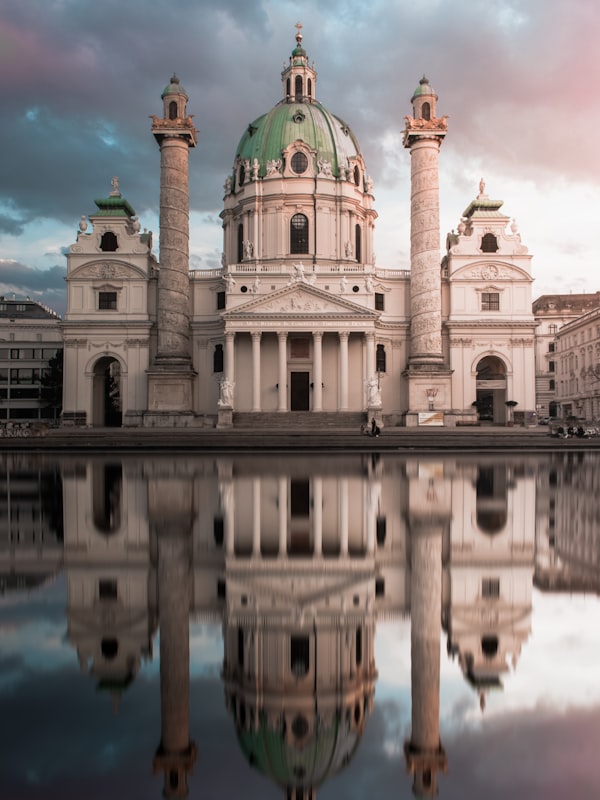
Country dossier · Living
🇦🇹 Austria
Living guide: real net salary, cost of living, taxes, health and quality of life, with source for every figure.
- Region
- Central Europe
- Capital
- Vienna
- Languages
- German
- Currency
- Euro (EUR)
- Population
- ≈ 9.2 million
- Time zone
- UTC+1 (CET)
- Blocs
- EU + Schengen (eurozone)
Austria is a premium destination for those seeking quality of life at European standards. Vienna, its capital, consistently ranks among the world's most livable cities, thanks to efficient infrastructure, impeccable public transport, and access to world-class culture and gastronomy. The country is fully integrated into the European Union and eurozone, with a stable and diversified economy. The cost of living is moderate compared to Switzerland or Scandinavia, but higher than neighboring Central Europe. For those earning a decent European salary, Austria offers comfort and sophistication without the prohibitive prices of other Western urban centers.
Austria at a glance
Languages and regions
German is the official language, spoken as the primary language by virtually the entire population. The Austrian accent is distinctly identifiable to German speakers from Germany, with peculiarities in vocabulary and pronunciation, but intelligibility is complete. Outside Vienna and tourist regions, English is less widespread than in countries like the Netherlands or Scandinavia, so mastering German or being willing to learn is essential for genuine integration. Vienna is cosmopolitan and concentrates English speakers, particularly in professional sectors and among younger populations. The country is divided among Alpine regions (west and south), Central Austria, and the Danube plains (east), each with distinct economic and cultural characteristics.
Climate and geography
The Alps cover more than half of Austrian territory, shaping the climate, economy, and landscape. Vienna, in the east, has a temperate continental climate, with moderate winters (around 0°C in January) and mild summers (20 to 25°C in July). Alpine regions, particularly Tyrol and Vorarlberg, receive more snow and have harsher winters. Spring is long and pleasant, autumn is stable. The northern latitude (48°N) means very short days in winter and very long ones in summer. Austrian geography offers everything from urban valleys to peaks of up to 3,798 meters, at the Grossglockner, suitable for both city living and mountaineering, skiing, and nature tourism.
What the country lives from
The Austrian economy is diversified and robust: manufacturing industry (metals, machinery, paper), financial services (Vienna is a Central European banking hub), tourism (the Alps attract millions annually), hydroelectric power, and growing technology and pharmaceutical sectors. Winter tourism is particularly important for Alpine regions. Unlike some neighbors, Austria does not critically depend on a single sector. Local salaries are moderate compared to Switzerland or southern Germany, but the labor market is relatively competitive and structural unemployment is low. Sectors with high demand include IT, engineering, healthcare, and tourism.
Education
The Austrian education system combines quality public schools with private options concentrated in Vienna. Access to higher education is relatively affordable, with public universities offering programs in German and increasingly in English. The University of Vienna is the oldest in the German-speaking world (founded 1365) and maintains a solid reputation in humanities and sciences. Technical and vocational courses (berufliche Schulen) are traditional and respected options. Expatriate children have access to international schools in Vienna, though tuition is costly. The vocational education system is well-structured and offers viable careers outside the university circuit.
Culture and integration
Austria has a deep cultural heritage: Vienna was the heart of the Austro-Hungarian Empire and is the birthplace of Freud, Wittgenstein, and classical composers. Cultural life is vibrant, with operas, orchestral concerts, museums, and festivals. Classical music permeates national identity. Austrians are initially reserved but welcoming in established social contexts. Integration of foreigners is possible, especially for qualified professionals, but requires active engagement with the language and local social norms. Vienna, cosmopolitan, offers international bubbles, but full life in the country demands German. The Austrian social system is generous (healthcare, pensions, unemployment insurance), funded by significant taxes and social contributions.
Fun facts
- Vienna was voted the world's most livable city in several international rankings (Economist Intelligence Unit) for stable infrastructure, efficient public transport, and low crime.
- Vienna's social housing system is a unique model in Europe: almost 60% of Viennese live in public or heavily subsidized housing of exceptional quality, which keeps rental costs controlled even in the heart of Europe.
- Austria produced a disproportionate share of intellectual and artistic geniuses: besides Mozart, Beethoven (yes, Vienna sometimes gets credit), and Brahms, it produced philosophers like Wittgenstein, physicists like Schrödinger, and psychoanalysts like Freud and Adler.
- The Austrian Alps are the birthplace of modern skiing: Austria is an Olympic power in winter sports and skiing is deeply embedded in the identity of the country's western regions.
- Austria was the centre of the Austro-Hungarian Empire until 1918, and German is still spoken by descendant communities from that period in several Eastern European countries, reflecting a unique historical heritage.
Net salary, summarized
Source: national medians (OECD/Eurostat) + calculator formulaJust to show the ballpark of what you earn. Tax and cost of living take a chunk. Three sample professions, junior to senior. The full calculation, for your role, level, family, and currency, is the Living calculator.
| Profession | Junior | Mid | Senior |
|---|---|---|---|
| Software developer | US$ 4.053 | US$ 4.883 | US$ 7.073 |
| Financial analyst | US$ 3.195 | US$ 3.867 | US$ 5.565 |
| Nurse | US$ 2.897 | US$ 3.511 | US$ 5.073 |
Estimated net monthly, after progressive tax, in dollars (site base). Calculate for your role, level, and currency →
Cost of living, what you actually keep
Source: basket for couple + 2 children (Numbeo) + local health and school rules| Housing (rent)≈ 36% of cost | US$ 1.548 |
| Food | US$ 991 |
| Transport | US$ 413 |
| Utilities and internet | US$ 358 |
| Recreation and other | US$ 991 |
| Healthcare | included |
| Children's schoolpublic viable for non-residents | included |
| Total cost per month | US$ 4.300 |
Spending pattern (housing + living only)
Local tax, health, and school rules change how much is left at month end.
Family and immigration
Visa and spouse work rules; local values estimatedQuality of life
Indices: GPI, PISA, WHO, WHR, Ookla, EF EPI, CPI (0 to 10)Life
Daily
Institutions
Verdict
Austria is a solid choice for those who prioritize quality of life, political stability, access to high-level culture and education. Vienna is a genuinely pleasant city to live in, with excellent public transport, healthcare, safety, and cultural offerings. The cost of living is moderate on the European scale. Drawbacks: German is essential and challenging; the labor market favors specific professions and can be closed to the less qualified; genuine social integration requires effort; the winter climate is cloudy and dark for some. Ideal for qualified European professionals, retirees with stable resources, or families with children who can invest in the language and integration.
Complete guide: Austria
This page is the sample. The guide is the complete map.
Everything you saw here, deeper and actionable: from first visa step to moving day, sourced for every fact.
- Visa and sponsorship, step by step
- Cities and regions compared
- Health insurance: how to choose
- Retirement, taxes, and local rules
- Useful links: housing, bank, jobs
Imagine yourself here.
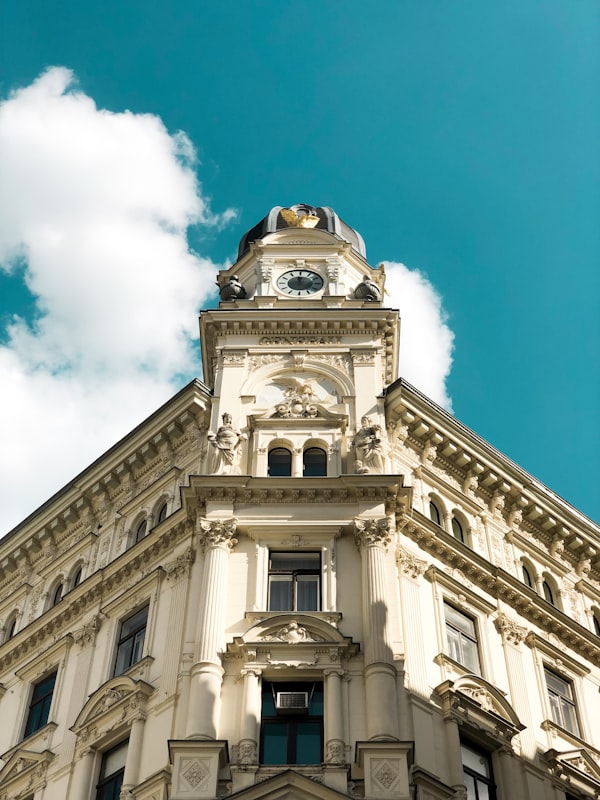
Photos: Eric Hong, Pierre Blaché, Sandi Benedicta · Unsplash
Frequently asked questions
What is the work visa process for those who are not citizens of the European Union?
Non-European citizens need a work visa sponsored by their employer. The visa is granted if the salary meets established minimums and the position cannot be filled by an EU citizen. The process can take weeks to months. Alternatives for entry include a digital nomad visa (for qualified freelancers) or entrepreneur visa. Spouses of visa holders can apply for dependent visas, with work restrictions that vary according to bilateral agreement.
Can my spouse work in Austria if I get a visa?
If both are EU citizens, yes, without any restrictions. If one is non-European and obtains a work visa, the spouse (European or not) can apply for a dependent visa; European spouses can work freely, non-European spouses generally need their own work visa or specific employer authorization. It is recommended to consult the embassy, as rules vary according to nationality and type of principal visa.
What is the cost of rent in Vienna compared to other European capitals?
Vienna is cheaper than Zurich, Geneva, London, or Denmark, and equivalent to or slightly more expensive than Portugal or parts of Central Europe. A two-bedroom apartment in the city center costs between EUR 1,200 and 1,800 per month; in suburbs and adjacent cities, between EUR 800 and 1,200. The Viennese differential is that around 60% of the population lives in municipal or subsidised housing, close to a quarter of it in municipal buildings and the rest in publicly supported co-operatives, creating an unusual price ceiling effect and cost stability. Those who gain access to social housing pay even less.
Do I need to speak fluent German to integrate into Austria?
In Vienna and international professional sectors, English opens doors. But for genuine integration, authentic friendship, and civic participation, German is essential. Level B1 (intermediate) allows you to function in daily life; B2 or higher facilitates friendship and work in many areas. Courses are available at universities and language schools. The good news is that, even being a Germanic language quite different from Romance languages, those who dedicate 12 to 18 months of consistent study usually achieve real conversational competence.
Ready to go beyond the summary?
View the complete guide: Austria