
Country dossier · Living
🇧🇪 Belgium
Living guide: real net salary, cost of living, taxes, health and quality of life, with source for every figure.
- Region
- Western Europe
- Capital
- Brussels
- Languages
- Dutch, French and German (official, by region)
- Currency
- Euro (EUR)
- Population
- ≈ 11.9 million
- Time zone
- UTC+1 (CET)
- Blocs
- EU + Schengen (eurozone); home to EU and NATO institutions
Belgium is a small country with disproportionate influence in Western Europe. It hosts the headquarters of the European Union and NATO in Brussels, creating a robust international job market in diplomacy, multilateral organizations, and lobbying. Developed and diversified economy, with strong sectors in chemicals, pharmaceuticals, energy, and trade, supported by one of Europe's largest ports in Antwerp. Cost of living is moderate within the developed European context, and quality of life ranks among the continent's highest. Official trilingualism and the clear geographic division between Flanders, Wallonia, and the German-speaking region are structural characteristics that shape the experience of those who move: it is not merely a matter of language, but of different economic and cultural contexts within the same country.
Belgium at a glance
Languages and regions
Belgium is not simply a trilingual country, but a federation of linguistic communities with real importance in daily life. Flanders, in the north, speaks Dutch and is economically the motor of the country. Wallonia, in the south, speaks French and was historically Europe's industrial center. The small German-speaking community in the east operates with relative autonomy. Brussels is officially bilingual in Dutch and French, though in practice it is predominantly Francophone, and hosts a very international population. Anyone relocating needs to choose carefully: Flanders offers opportunities in technology and innovation, smaller cities with high quality of life and an established cycling culture. Wallonia has a more fragile economy but communities more integrated into European Francophony. Brussels is cosmopolitan, expensive, and offers unique international opportunities, but requires adaptation to a very expat environment.
Climate and geography
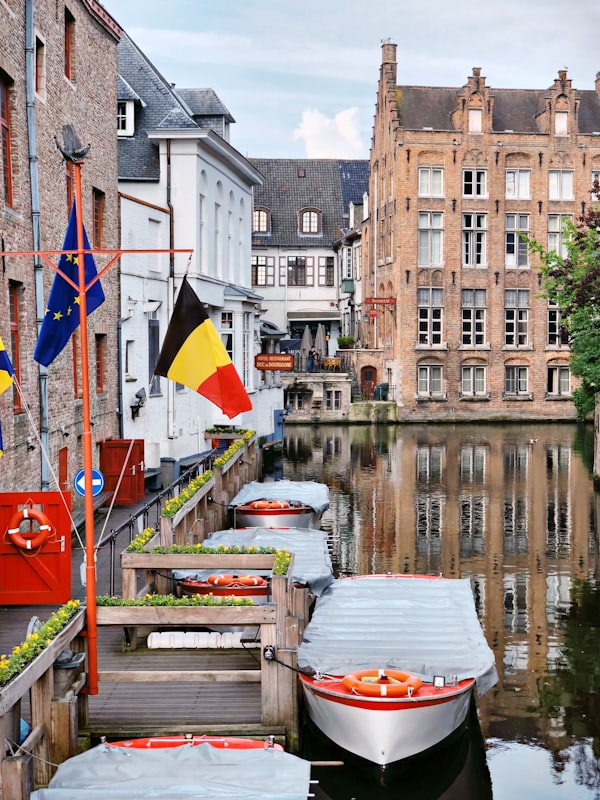
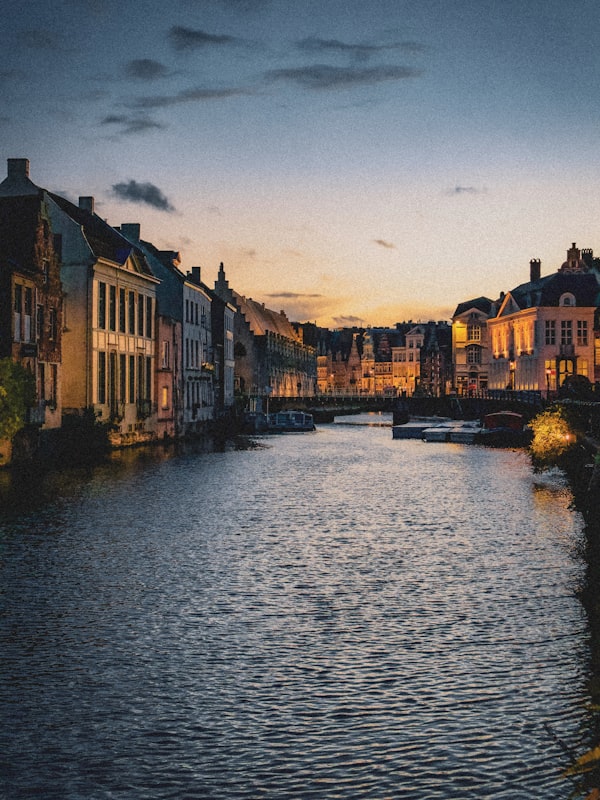
The climate is temperate oceanic, with mild winters and cool summers. Rain is a constant throughout the year, especially in autumn and winter. Belgium is geographically central to Western Europe, bordering France, the Netherlands, and Germany, which facilitates regional travel by road, train, or plane. The port of Antwerp is one of Europe's largest and busiest, connecting the region to global trade routes. Topography is flat in coastal and northern regions, with gentle elevations in the south. Bruges, Ghent, and Antwerp are perfectly preserved medieval cities that combine history with modern infrastructure. Proximity to other European capitals Paris, Amsterdam, Cologne makes weekend trips routine.
What the country lives on
The Belgian economy is one of Europe's most sophisticated, based on high-value-added sectors. Chemicals and petrochemicals are concentrated around Antwerp. The pharmaceutical industry is an important pillar, with world-class research. Nuclear energy supplies a significant proportion of electricity. Financial services and insurance are present in cities like Brussels and Liège. Precision manufacturing and engineering maintain a long tradition. Chocolate and beer, far from being folklore, are genuine export industries, with international quality and history. But the differentiating factor is the presence of EU and NATO institutions in Brussels, which has created a distinct economic ecosystem: jobs in international organizations, lobbying, diplomacy, European consulting. This sector offers international remuneration and multilingual professional environment, attracting professionals from everywhere.
Education
The Belgian education system varies by linguistic community but maintains high standards. Elementary and secondary education are funded and accessible. Belgian universities have solid international reputation, especially in engineering, chemistry, medicine, and economics. The largest, such as KU Leuven (Flanders), ULiège, and Université Libre de Bruxelles (Wallonia), attract international students. Master's programs in English proliferate. Multilingual education is a structural advantage: children exposed to multiple languages early gain linguistic competence that values future resume. Pre-school and early childhood education is widespread and subsidized. Private education costs are moderate compared to other developed European countries.
Culture and integration
Belgium has rich medieval cultural heritage, with cities like Bruges and Ghent functioning as living museums of Flemish architecture. The tradition of Belgian beer is not tourism marketing, but deep-rooted: there are hundreds of distinct styles, monastery producers with centuries of history, and experimental artisanal breweries. The cuisine is sophisticated, with French, Flemish, and Dutch influences. Quality Belgian chocolate is consumed locally with seriousness. Regional celebrations like the Binche Carnival have centuries-old roots. Cycling culture is everyday transport, not hobby. Brussels constantly attracts international population, with well-established expat communities. Integration in smaller cities and rural areas is more traditional, depending on local openness. Flanders has a reputation for being more conservative on diversity issues, but university communities are cosmopolitan. Wallonia and Brussels tend to be more culturally open. Festivals, street markets, cinemas, theaters, and museums are present at all levels.
Fun facts
- Belgium is so small that any point in the country is less than two hours by car from the capital, facilitating professional mobility without needing to change residence.
- Brussels is the effective unofficial capital of Europe, hosting the largest concentration of EU and NATO institutions, creating a permanent multicultural international job market.
- Belgium produces more than 220 distinct types of beer, with a living monastic tradition that produces internationally recognized high-fermentation Trappist beers.
- The port of Antwerp is Europe's second-largest port and functions as the gateway for goods entering the entire Benelux region and beyond, generating vibrant regional economy.
- The Belgian system of government is highly federalized to accommodate linguistic division, with communities having significant autonomous power over education, culture, and health.
Net salary, summarized
Source: national medians (OECD/Eurostat) + calculator formulaJust to show the ballpark of what you earn. Tax and cost of living take a chunk. Three sample professions, junior to senior. The full calculation, for your role, level, family, and currency, is the Living calculator.
| Profession | Junior | Mid | Senior |
|---|---|---|---|
| Software developer | US$ 3.587 | US$ 4.261 | US$ 5.926 |
| Financial analyst | US$ 2.871 | US$ 3.434 | US$ 4.799 |
| Nurse | US$ 2.617 | US$ 3.137 | US$ 4.412 |
Estimated net monthly, after progressive tax, in dollars (site base). Calculate for your role, level, and currency →
Cost of living, what you actually keep
Source: basket for couple + 2 children (Numbeo) + local health and school rules| Housing (rent)≈ 34% of cost | US$ 1.496 |
| Food | US$ 1.045 |
| Transport | US$ 436 |
| Utilities and internet | US$ 378 |
| Recreation and other | US$ 1.045 |
| Healthcare | US$ 40 |
| Children's schoolpublic viable for non-residents | included |
| Total cost per month | US$ 4.440 |
Spending pattern (housing + living only)
Local tax, health, and school rules change how much is left at month end.
Family and immigration
Visa and spouse work rules; local values estimatedQuality of life
Indices: GPI, PISA, WHO, WHR, Ookla, EF EPI, CPI (0 to 10)Life
Daily
Institutions
Verdict
Belgium is a solid choice for those seeking economic stability, high quality of life, and international professional access in central Europe. The country offers competitive salaries, first-rate healthcare system, quality education, and reliable infrastructure. Brussels in particular opens doors to international careers unique in the region. Downsides include frequently grey and rainy weather, demanding European bureaucracy, and the need to navigate linguistic division depending on where you choose to live. Cost of living is moderate compared with Switzerland or Scandinavia, but higher than Wallonia offers. Regional division is a genuine country characteristic, not obstacle: it offers multiple ways to live Belgian according to personal and professional preference.
Complete guide: Belgium
This page is the sample. The guide is the complete map.
Everything you saw here, deeper and actionable: from first visa step to moving day, sourced for every fact.
- Visa and sponsorship, step by step
- Cities and regions compared
- Health insurance: how to choose
- Retirement, taxes, and local rules
- Useful links: housing, bank, jobs
Imagine yourself here.
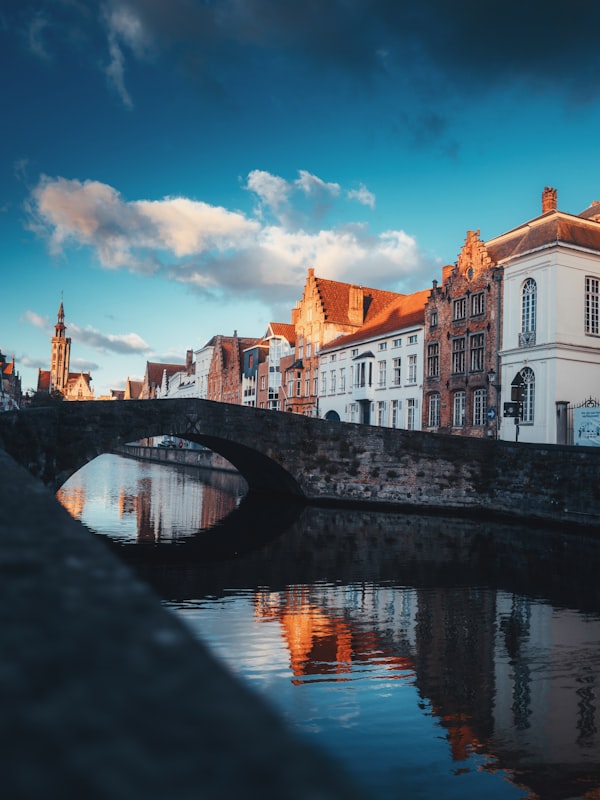
Photos: Despina Galani, Christian Lue, Jerry Kavan · Unsplash
Frequently asked questions
What is the work visa process for those outside the European Union?
Those who are not EU/EEA citizens need a specific work visa or European Blue Card. The process involves confirmed job offer, and the employer interacts with immigration authorities. Minimum salary varies by professional category (generally above national average). Processing takes several weeks. After initial visa, renewal depends on maintaining employment or alternatives such as investment or entrepreneurship.
Can my spouse or partner work?
If spouse or partner is EU/EEA citizen, they have automatic right to work on equal terms with Belgians. If from outside the EU, they will need their own work visa or legal status, usually in the context of family reunification. Some work visas include spouses as dependents, but spouse's ability to work depends on the specific type of visa obtained.
What are the best neighborhoods to live in based on work and lifestyle?
In Brussels, neighborhoods like Ixelles, Saint-Gilles, and Anderlecht offer more international environment and access to EU institutions. For those preferring smaller cities, Bruges and Ghent combine extremely high quality of life, integrated communities, and lower cost of living. Antwerp is modern and economical. Liège offers university community. Choice depends very much on linguistic preference: Dutch-speaker chooses Flanders, French-speaker chooses Wallonia or Brussels.
What is the healthcare system and health insurance like?
Belgium has a high-quality public healthcare system, with mandatory insurance for all residents. Contribution is automatic via payroll. Coverage is comprehensive, including general practitioner, specialists, hospital, and medications with subsidies. Wait times for elective procedures are generally moderate. Quality of care and hospital infrastructure are among Europe's best. Option of supplemental private insurance exists for those wanting expanded coverage.
Ready to go beyond the summary?
View the complete guide: Belgium