
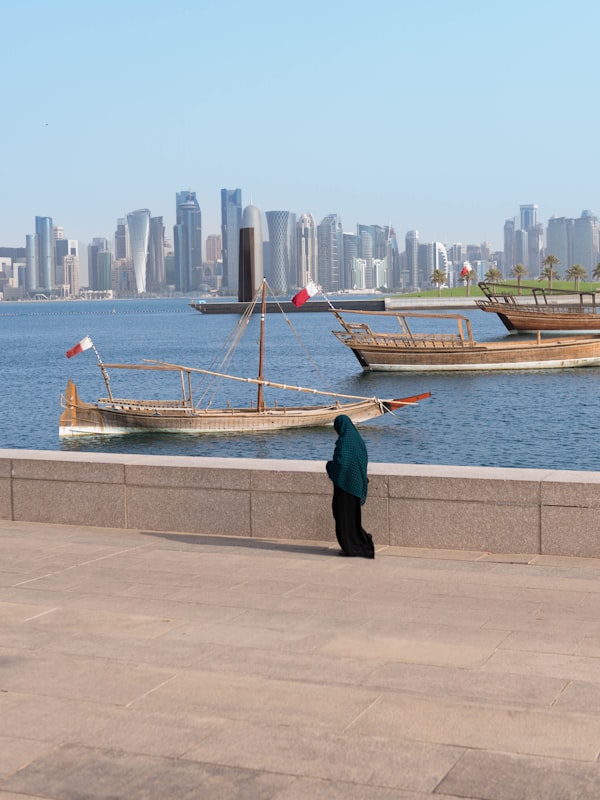
Country dossier · Living
🇶🇦 Qatar
Living guide: real net salary, cost of living, taxes, health and quality of life, with source for every figure.
- Region
- Middle East
- Capital
- Doha
- Languages
- Arabic (official), English widely used in business
- Currency
- Qatari Rial (QAR)
- Population
- ≈ 3 million (majority of foreign nationals)
- Time zone
- UTC+3
- Blocs
- Gulf Cooperation Council (GCC)
Qatar is a work destination for foreign nationals, with a robust economy driven by the natural gas and petroleum industries. The absence of personal income tax and competitive salaries attract international professionals, particularly in technology, finance, and construction sectors. The cost of living is high, especially in Doha, with expensive housing and a consumer goods market oriented toward high-income earners. The majority of the population is expatriate, which makes professional integration relatively straightforward for those arriving with a sponsored employment contract. However, the extreme climate, with temperatures exceeding 45°C during summer months, and a residency system based on employer sponsorship, can present real challenges.
Qatar at a glance
Languages and regions
Arabic is the official language and widely spoken, but English dominates corporate, banking, and expatriate environments. Doha is the primary economic hub, concentrating most employment opportunities and services. The country is small (approximately 11,000 square kilometers) and densely urbanized, with little geographic variation beyond the capital.
Climate and geography
Qatar is located on a peninsula in the Persian Gulf, with an extreme desert climate. Summers (June to September) regularly exceed 45°C, making outdoor activities practically unfeasible during these periods. Winters (December to February) are milder, ranging from 15 to 25°C. The geography is mostly flat with minimal natural vegetation. The country invests heavily in air conditioning infrastructure and covered environments to manage the heat.
Economic foundations
Qatar's economy is sustained by liquefied natural gas (LNG) and petroleum exploitation, which represent the vast majority of exports and government revenues. The financial sector, logistics, hospitality, and international trade are secondary pillars. Civil construction historically absorbed significant foreign labor. There is no personal income tax, which partially finances public services and social welfare for Qatari citizens.
Education
The education system is mixed, with public schools of varying quality and private institutions (many international) that concentrate demand among expatriates. Qatar University offers higher education in Arabic and English. Scholarships and training programs for Qatari citizens are common, as part of labor market nationalization policies (Qatarization). Foreign nationals have access to education but pay significantly higher fees than citizens.
Culture and integration
Social integration for expatriates is pragmatic and professional. Foreign communities are established in specific Doha neighborhoods with infrastructure tailored to their needs. Society is modern in appearance but conservative in religious and cultural values. Foreign women can work and move freely, though modest dress codes are expected in public spaces. Interaction is respectful but lacks the depth of community integration typical of more multicultural societies.
Fun facts
- Qatar holds the world's third largest natural gas reserves, behind Russia and Iran, and is among the largest global exporters of LNG.
- Doha hosted the 2022 FIFA World Cup, the first tournament held in the Middle East and in a Muslim-majority country.
- There is no personal income tax in Qatar, making it attractive for high-earning professionals.
- The standard work week is 40 to 50 hours, often with summer recess during extreme heat months.
- Approximately 88% of the population is foreign nationals, making Doha one of the most cosmopolitan cities in the Middle East.
Net salary, summarized
Source: national medians (OECD/Eurostat) + calculator formulaJust to show the ballpark of what you earn. Tax and cost of living take a chunk. Three sample professions, junior to senior. The full calculation, for your role, level, family, and currency, is the Living calculator.
| Profession | Junior | Mid | Senior |
|---|---|---|---|
| Software developer | US$ 4.933 | US$ 6.167 | US$ 9.558 |
| Financial analyst | US$ 3.733 | US$ 4.667 | US$ 7.233 |
| Nurse | US$ 3.333 | US$ 4.167 | US$ 6.458 |
Estimated net monthly, after progressive tax, in dollars (site base). Calculate for your role, level, and currency →
Cost of living, what you actually keep
Source: basket for couple + 2 children (Numbeo) + local health and school rules| Housing (rent)≈ 42% of cost | US$ 1.974 |
| Food | US$ 981 |
| Transport | US$ 409 |
| Utilities and internet | US$ 354 |
| Recreation and other | US$ 981 |
| Healthcare (private plan required)fixed cost, does not decrease with lower income | US$ 250 |
| Children's school | US$ 2.000 |
| Total cost per month | US$ 6.950 |
Spending pattern (housing + living only)
Local tax, health, and school rules change how much is left at month end.
Family and immigration
Visa and spouse work rules; local values estimatedQuality of life
Indices: GPI, PISA, WHO, WHR, Ookla, EF EPI, CPI (0 to 10)Life
Daily
Institutions
Verdict
Qatar is a viable option for professionals seeking high salaries, absence of personal income tax, and a stable corporate environment. It is ideal for those working in finance, technology, or construction with secured employment already in place. However, the extreme summer climate is a genuine challenge, not insignificant. The visa sponsorship system offers contractual security but also creates employer dependence. Social integration is more professional than deep; expatriate communities exist and function, but the saturation of foreign capital does not necessarily create lasting bonds with local society. The high cost of living consumes part of the income advantage from not paying income tax. For those with secure contracts, good compensation, and heat tolerance, it is attractive; for others, it may feel isolated and temporary.
Complete guide: Qatar
This page is the sample. The guide is the complete map.
Everything you saw here, deeper and actionable: from first visa step to moving day, sourced for every fact.
- Visa and sponsorship, step by step
- Cities and regions compared
- Health insurance: how to choose
- Retirement, taxes, and local rules
- Useful links: housing, bank, jobs
Imagine yourself here.
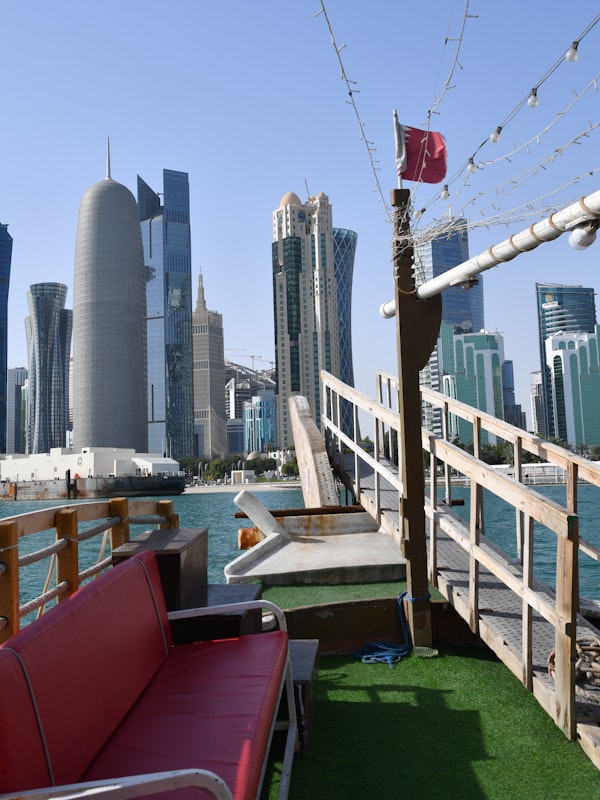
Photos: Jaseel Mohammed, sadiq abdulmalik, Thomas Lohmann · Unsplash
Frequently asked questions
What is the work visa process in Qatar?
The work visa in Qatar is employer-sponsored through a formal contract. The process begins with a job offer; the employer then requests authorization from the Ministry of Labor and submits supporting documentation. Once approved, the foreign national receives an entry visa to process residency. This sponsorship system legally binds the foreign national to the employer, meaning job changes require formal release from the previous employer. The process cost is typically covered by the employer.
Can a spouse or partner work in Qatar?
Yes, spouses can work, but they need their own visa and employment sponsorship. Most employers offer visa facilitation for employee family members (spouse and children), but the spouse is not automatically authorized to work simply by being sponsored as a dependent. They must secure their own employment contract and sponsorship. This separation between residency visa and work permission is a feature of Qatar's system.
What is it like living in Qatar during summer months?
June to September are extremely hot, with temperatures regularly exceeding 45°C, making outdoor activities practically impossible. Life concentrates in air-conditioned spaces: home, office, shopping centers. Many expatriates travel abroad during this period if they can. Constant hydration and sun protection are essential. Some employers offer summer breaks or remote work flexibility. For those with low heat tolerance, this factor warrants serious consideration.
What is the tax structure beyond income tax?
Although there is no personal income tax, Qatar maintains corporate taxes. The country has not implemented a value-added tax (VAT): in May 2026, it approved an e-invoicing law as prior preparation, but with no officially confirmed VAT implementation date (estimates point to a possible 2027, still unofficial). There are no inheritance or gift taxes. High cost of living (especially housing and imports) is the real major expense for residents, far more than tax burden.
Ready to go beyond the summary?
View the complete guide: Qatar