
Country dossier · Living
🇨🇴 Colombia
Living guide: real net salary, cost of living, taxes, health and quality of life, with source for every figure.
- Region
- South America
- Capital
- Bogotá
- Languages
- Spanish
- Currency
- Colombian Peso (COP)
- Population
- ≈ 53 million
- Time zone
- UTC-5
- Blocs
- Pacific Alliance
Colombia is an emerging destination for foreigners seeking quality of life at reduced cost. Cities like Medellín and Bogotá attract digital nomads and retirees, particularly those receiving income in strong currencies. Local salaries are modest, but the cost of living aligns with that reality, offering real advantage for those working remotely or with international income. The country has undergone significant economic transformations over the past two decades, consolidating itself as a regional technology hub and attracting growing investment in startups and digital services.
Colombia at a glance
Languages and Regions
Spanish is the official language and widely spoken throughout the national territory. Colombia is a country of great geographical diversity, divided into well-defined regions: the central Andes, where Bogotá and Medellín are located; the Caribbean coast with tourist cities like Cartagena; the Pacific coast; and the Amazonian region. The presence of indigenous communities in various regions keeps ancestral languages alive, though Spanish dominates. Foreigners find increasingly large communities in major cities, especially Medellín, which has become a magnet for digital nomads and expatriates seeking accessible quality of life.
Climate and Geography
Bogotá is situated at high altitude in the Andes, resulting in mild weather year-round, without extremes of intense heat or cold. This characteristic makes the capital particularly comfortable for those who don't adapt well to extreme climate variations. The Caribbean coast offers hot, humid tropical climate, ideal for those seeking beaches and constant warmth. The Andean mountain range creates diverse microclimates, allowing you to find regions with temperate, subtropical, or tropical climates at relatively short distances. The Pacific coast is rainier and less populated, while the Amazonian region offers unique landscapes with elevated temperatures throughout the year.
What the Country Lives On
Historically, Colombia has been known for coffee and flowers, both major export products. Over recent decades, however, the economy has diversified significantly. Bogotá and Medellín have emerged as centers of technology and innovation, with accelerating growth in startup ecosystems and digital services companies. Tourism has also developed, driven by natural beauty, cultural heritage, and overall improvements in safety conditions in tourist regions. The diverse economy allows foreign professionals to find opportunities in education, technology, consulting, and entrepreneurship, without depending solely on remote income.
Education
The Colombian educational system includes public and private institutions of varying quality. The universities with the best reputation are concentrated in major cities, with Bogotá and Medellín leading in higher education offerings. Foreigners with children find international schools in major cities, though with tuition higher compared to the general cost of living. The country has invested in technical and vocational education, with good opportunities for courses that prepare for the regional job market. Children who speak Spanish fluently can integrate into the public system, which offers solid education at much lower cost.
Culture and Integration
Colombia has a vibrant cultural scene, with visual arts, music, theater, and gastronomic events constant in major cities. Music and dance are part of local identity, with indigenous, African, and European influences intertwined. Foreigners report good receptiveness and ease of integration into expatriate communities already established in Medellín and Bogotá. Colombian cuisine offers a range of regional flavors, from Bogotá's ajiaco to unique tropical fruits. The hospitality of Colombians facilitates the social and professional life of those who move here, creating networks of mutual support among local residents and foreigners.
Fun facts
- Colombia is the world's largest producer of mild coffee, and the coffee region (Eje Cafetero) is a UNESCO cultural heritage site, with a landscape of coffee-covered mountains extending across Andean valleys.
- The country has more bird species than any other in the world, with extraordinary biodiversity concentrated in a geographically small area.
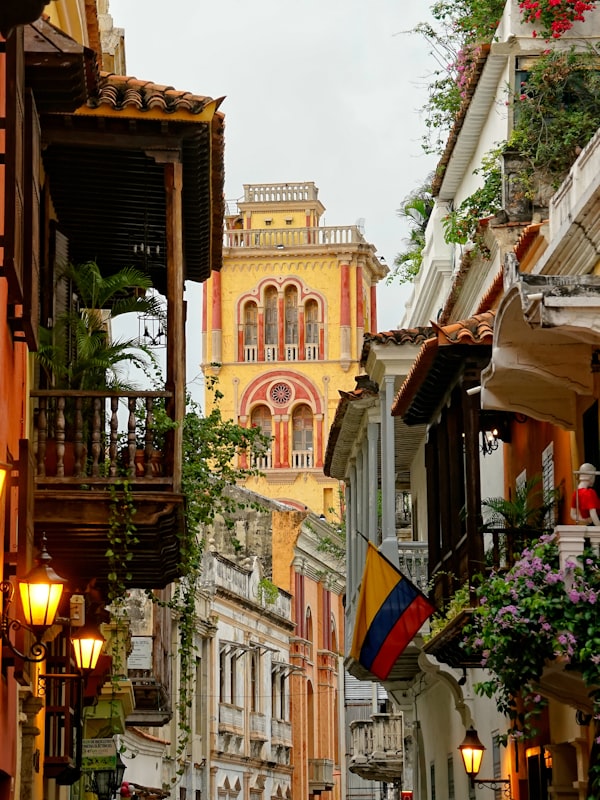
- Cartagena, an ancient fortified city, is a UNESCO World Heritage site and one of the most sought-after Caribbean tourist destinations, combining preserved colonial architecture with Caribbean beaches.
- Medellín experienced remarkable urban transformation over the past two decades, transitioning from one of the world's most challenging urban centers to a pole of urban innovation with a creative cable car system connecting hillside communities.
- Caño Cristales, a river in the Andes with unique coloration in shades of red, green, blue, and yellow caused by aquatic algae, is considered one of the world's most beautiful rivers and a growing tourist attraction.
Net salary, summarized
Source: national medians (OECD/Eurostat) + calculator formulaJust to show the ballpark of what you earn. Tax and cost of living take a chunk. Three sample professions, junior to senior. The full calculation, for your role, level, family, and currency, is the Living calculator.
| Profession | Junior | Mid | Senior |
|---|---|---|---|
| Software developer | US$ 790 | US$ 976 | US$ 1.474 |
| Financial analyst | US$ 606 | US$ 750 | US$ 1.135 |
| Nurse | US$ 544 | US$ 673 | US$ 1.020 |
Estimated net monthly, after progressive tax, in dollars (site base). Calculate for your role, level, and currency →
Cost of living, what you actually keep
Source: basket for couple + 2 children (Numbeo) + local health and school rules| Housing (rent)≈ 30% of cost | US$ 630 |
| Food | US$ 529 |
| Transport | US$ 221 |
| Utilities and internet | US$ 191 |
| Recreation and other | US$ 529 |
| Healthcare | US$ 30 |
| Children's schoolpublic viable for non-residents | included |
| Total cost per month | US$ 2.130 |
Spending pattern (housing + living only)
Local tax, health, and school rules change how much is left at month end.

Family and immigration
Visa and spouse work rules; local values estimatedQuality of life
Indices: GPI, PISA, WHO, WHR, Ookla, EF EPI, CPI (0 to 10)Life
Daily
Institutions
Verdict
Colombia is a viable and increasingly attractive choice for foreigners seeking quality of life at affordable cost, especially in Medellín and Bogotá. Key strengths include reduced cost of living for those earning in strong currencies, receptive expatriate community, favorable climate, remarkable geographical diversity, and growing economy. Considerations involve the need to learn Spanish for full integration, variations in safety conditions depending on the region, and bureaucracy that can be slow in government procedures. For digital nomads with income in dollars or euros, or retirees with stable savings, the country offers real value proposition and opportunity to build a comfortable life on a moderate budget.
Complete guide: Colombia
This page is the sample. The guide is the complete map.
Everything you saw here, deeper and actionable: from first visa step to moving day, sourced for every fact.
- Visa and sponsorship, step by step
- Cities and regions compared
- Health insurance: how to choose
- Retirement, taxes, and local rules
- Useful links: housing, bank, jobs
Imagine yourself here.
Photos: Ricardo Gomez Angel, Ricardo Gomez Angel, Paul García · Unsplash
Frequently asked questions
What is the process for obtaining a work visa or residency in Colombia?
Colombia offers several visa options, including income visa for retirees, work visa (requires employment contract with a Colombian company), and renewable tourist visa. The tourist visa initially allows 90 days, renewable for another 90. Exact procedures vary by embassy, so it is recommended to check directly with the Colombian embassy or consulate of your country of origin for updated requirements.
Can my spouse or partner work if I move to Colombia?
If both partners have a valid work visa, yes, both can work formally. If only one has a work or residency visa, the other can request an independent visa, including work visa, provided they obtain a contract with a Colombian company. Some couples opt for remote income for the partner, which is simpler from a bureaucratic point of view. The law allows spouses of Colombians or foreigners with a work visa to request an accompanying visa with work rights.
What is the estimated monthly cost to live in Bogotá or Medellín?
The cost of living is significantly lower than in first-world cities, especially in housing and food. Foreigners living modestly can sustain themselves on a reduced budget, while those seeking a more comfortable standard of living and international education for children will have higher expenses. Medellín tends to be slightly more affordable than Bogotá. The exact amount depends on lifestyle, neighborhood location, and quantity of contracted services, so it is recommended to consult expatriate communities for updated and realistic data.
How is security in major cities for foreigners?
Bogotá and Medellín, especially traditional neighborhoods for foreigners and middle-class areas, present reasonable security for Latin America, with visible improvements over the past two decades. As in any large city, it is recommended to avoid certain areas at night, not display valuable belongings, and use appropriate transportation. Foreigners who respect these general precautions live without major incidents. Cartagena and other tourist regions are also considered relatively safe. Violence situations mainly affect specific areas outside the usual map of residents, and regional variations are significant.
Ready to go beyond the summary?
View the complete guide: Colombia