
Country dossier · Living
🇭🇷 Croatia
Living guide: real net salary, cost of living, taxes, health and quality of life, with source for every figure.
- Region
- Southeast Europe (Balkans)
- Capital
- Zagreb
- Languages
- Croatian
- Currency
- Euro (EUR)
- Population
- ≈ 3.9 million
- Time zone
- UTC+1 (CET)
- Blocs
- EU + Schengen (eurozone)
Croatia offers an attractive balance between the charm and legacy of Central Europe, the beauty of the Adriatic, and a moderate cost of living compared with Western Europe. As a recent member of the European Union (since 2013) and the Schengen area (since January 2023), the country has opened significantly to international workers. The economy depends heavily on tourism, especially on the Dalmatian coast, which creates both opportunities and seasonal challenges. In Zagreb, the capital in the interior, a growing technology and services sector thrives, attracting remote professionals through digital nomad visa programs. Local salaries remain below Western Europe's average, but those working remotely in strong currency find real purchasing power and quality of life superior to what they would find in many Western cities.
Croatia at a glance
Languages and regions
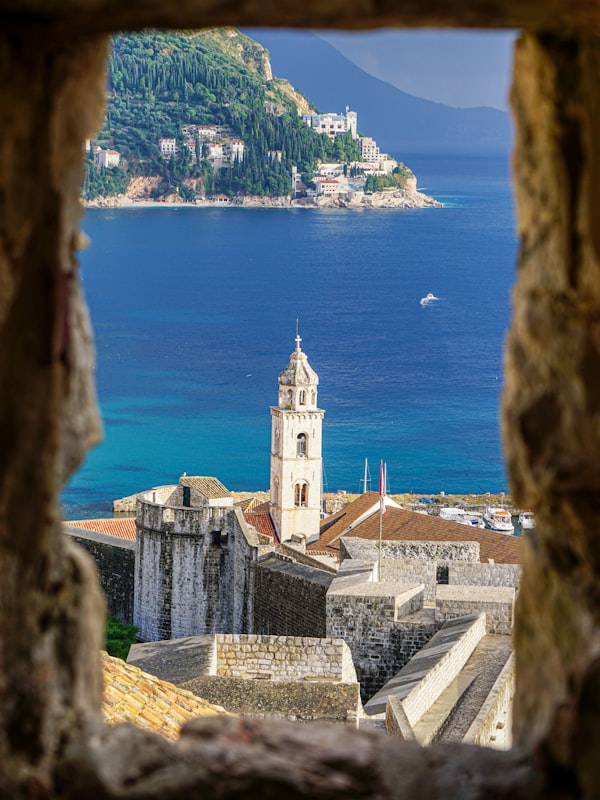
Croatian is the official language, spoken throughout the country. Zagreb, the capital, is located inland and concentrates most jobs in offices, technology, and administration. The Dalmatian coast stretches along the Adriatic, with cities like Dubrovnik, Split, and Zadar dominated by tourism, especially during summer months. The Adriatic islands form a unique archipelago, with smaller communities where the pace of life is slower. The region beyond Zagreb, toward the interior, offers more traditional villages and even lower cost of living. English is widely understood in larger cities and tourist areas, but learning basic Croatian phrases opens doors and demonstrates respect for local culture.
Climate and geography
Croatia's climate varies significantly between regions. On the Dalmatian coast, the Mediterranean climate predominates with hot summers (30°C or more), mild winters, and rain concentrated in autumn and winter. In the interior, where Zagreb is located, a continental pattern prevails with cold winters (below freezing), pleasant springs, and moderate summers. The Adriatic is the great geographic attraction, surrounded by rocky coasts, pebble beaches, and limestone islands. Mountainous geography inland offers opportunities for hiking and contact with nature. The country is relatively compact, allowing quick travel between regions: from Zagreb to the coast is only 4 to 6 hours by car.
What the country lives from
Tourism is Croatia's economic engine, accounting for a significant share of GDP and creating jobs mainly on the coast. Construction, light manufacturing, and agriculture complement the economy. The country produces quality wine (especially from the Istria and Dalmatia regions), olive oil, and diverse agricultural products. Zagreb and its metropolitan region concentrate the country's services, technology, and administrative center. The digital nomad visa program has attracted remote workers in recent years, creating an expanding international community. The economy still deals with effects from wars that occurred in the 1990s, but recovery is ongoing and entry into the euro (January 2023) brought greater economic stability.
Education
The Croatian education system offers free compulsory education up to secondary school. The University of Zagreb is the country's most important higher education institution, complemented by smaller universities in Split, Rijeka, and other cities. Private schools exist but are less common than in Western countries. Those with children will find international school options mainly in Zagreb, with British, American, or International Baccalaureate curricula. Access to higher education is competitive, with national entrance exams. Many Croats seek to complement their education abroad, especially in Western Europe.
Culture and integration
Croatia inherits a complex mix of influences: Austro-Hungarian in the interior, Venetian and Mediterranean on the coast, and Balkan throughout. This diversity manifests itself in architecture, gastronomy, and ways of life. European integration has accelerated in recent years, with euro and Schengen accession generating excitement and renewed expectations. Expats find active communities in Zagreb and larger coastal cities, with social groups, shared ventures, and cultural initiatives. Croats value family, outdoor life, and shared meals. Festivals, markets, and seasonal events (especially in summer) structure the social calendar. Openness to European immigrants is positive, though expats from outside the EU face greater bureaucracies. The sense of national identity is strong but not aggressive, a result of complex history that locals enjoy sharing with those who demonstrate genuine curiosity.
Fun facts
- Dubrovnik, the famous medieval walled city on the coast, became globally known after being depicted in Game of Thrones as the fictional King's Landing, attracting waves of tourists inspired by the series.
- Diocletian's Palace in Split, built in the 4th century AD by a Roman emperor, remains remarkably intact and today functions as the living heart of the city, with residences, shops, and restaurants within its original walls.
- Croatia's entry into the Schengen area in January 2023 eliminated land border controls with European neighbors, facilitating travel and relocation for EU citizens in an unprecedented way.
- The Croatian digital nomad visa program (D visa) allows remote workers to live and work in the country for up to one year, attracting technology and creative professionals from around the world.
- The Dalmatian archipelago comprises over a thousand limestone islands, with fewer than 50 permanently inhabited, offering a unique lifestyle where mountain trails alternate with isolated beaches accessible only by boat.
Net salary, summarized
Source: national medians (OECD/Eurostat) + calculator formulaJust to show the ballpark of what you earn. Tax and cost of living take a chunk. Three sample professions, junior to senior. The full calculation, for your role, level, family, and currency, is the Living calculator.
| Profession | Junior | Mid | Senior |
|---|---|---|---|
| Software developer | US$ 1.678 | US$ 2.050 | US$ 3.020 |
| Financial analyst | US$ 1.303 | US$ 1.596 | US$ 2.363 |
| Nurse | US$ 1.174 | US$ 1.440 | US$ 2.137 |
Estimated net monthly, after progressive tax, in dollars (site base). Calculate for your role, level, and currency →
Cost of living, what you actually keep
Source: basket for couple + 2 children (Numbeo) + local health and school rules| Housing (rent)≈ 34% of cost | US$ 1.020 |
| Food | US$ 713 |
| Transport | US$ 297 |
| Utilities and internet | US$ 257 |
| Recreation and other | US$ 713 |
| Healthcare | US$ 20 |
| Children's schoolpublic viable for non-residents | included |
| Total cost per month | US$ 3.020 |
Spending pattern (housing + living only)
Local tax, health, and school rules change how much is left at month end.

Family and immigration
Visa and spouse work rules; local values estimatedQuality of life
Indices: GPI, PISA, WHO, WHR, Ookla, EF EPI, CPI (0 to 10)Life
Daily
Institutions
Verdict
Croatia deserves serious consideration from those seeking better quality of life for less money, without giving up European access, pleasant climate, and natural beauty. The country offers real opportunities for remote workers, since moderate cost of living combines with adequate infrastructure and, since 2023, full Schengen integration. Challenges exist: the economy depends too heavily on seasonal tourism, local salaries remain low compared with Western Europe, and those who are not European citizens will face more rigorous bureaucratic processes. The country's change is visible and optimistic, but expectations should be calibrated to the reality of a developing European country, not a Western power. Croatia works best for those who want European stability with reduced cost, not for those seeking high salaries in local work.
Complete guide: Croatia
This page is the sample. The guide is the complete map.
Everything you saw here, deeper and actionable: from first visa step to moving day, sourced for every fact.
- Visa and sponsorship, step by step
- Cities and regions compared
- Health insurance: how to choose
- Retirement, taxes, and local rules
- Useful links: housing, bank, jobs
Imagine yourself here.
Photos: Arber Pacara, Arber Pacara, Cat Bassano · Unsplash
Frequently asked questions
What is the work visa like for those who are not from the European Union?
Those who are not European citizens will need a work contract from a Croatian employer to obtain a work visa. The process requires the employer to demonstrate that the position cannot be filled by Europeans and that the salary meets minimum criteria. A common alternative is the digital nomad visa program (D visa), which allows working remotely for companies outside Croatia. This visa is more accessible than the traditional work visa and is valid for one year, renewable.
Can my spouse or partner work if I get a visa?
If you are a European Union citizen, your spouse or registered partner has the right to freedom of movement and work within the EU automatically. If you are a non-EU citizen with a work visa, your spouse will be entitled to a spouse visa that permits work, although the process varies depending on nationality and type of visa.
What is the cost of living in Zagreb compared with the coast?
Zagreb is significantly cheaper than the Dalmatian coast. Rent, meals, and services cost about 30 to 40 percent less in the inland capital. The coast, especially Dubrovnik, Split, and Zadar, has elevated prices during tourist season (summer) and drops in winter. Outside tourist areas, cost of living is moderate to low compared with Western Europe.
Are there established digital nomad and expat communities?
Yes, especially in Zagreb and Split. Zagreb concentrates the largest community of remote workers and international professionals, with coworking spaces, social groups, and regular events. The expat community is smaller than in larger Western European cities, but grows annually. Split, as a tourist destination, attracts seasonal digital nomads. Internet connectivity is good in major cities and adequate even in villages, essential for remote work.
Ready to go beyond the summary?
View the complete guide: Croatia