
Country dossier · Living
🇦🇪 United Arab Emirates
Living guide: real net salary, cost of living, taxes, health and quality of life, with source for every figure.
- Region
- Middle East
- Capital
- Abu Dhabi
- Languages
- Arabic (official), English widely used in business
- Currency
- United Arab Emirates Dirham (AED)
- Population
- ≈ 11.3 million (majority foreign-born)
- Time zone
- UTC+4
- Blocs
- Gulf Cooperation Council (GCC)
The United Arab Emirates, particularly Dubai, has established itself as a highly professional destination for expatriation, attracting skilled workers from around the world. The country offers high net salaries, zero personal income tax, and access to modern urban infrastructure. However, residency is strictly tied to an employment visa, which depends on employer sponsorship. Quality of life is high in terms of security, access to goods and services, but accompanied by elevated housing costs, especially in major cities, and an extremely hot climate that shapes residents' daily routines.
United Arab Emirates at a glance
Languages and regions
Arabic is the official language, but English functions as the de facto language in business, higher education, and urban life. Most expatriates work and live in English-speaking contexts. The country comprises seven emirates, with Abu Dhabi (political capital) and Dubai (largest economic and tourism center) being the two main metropolises. Dubai is internationally known and concentrates financial, commercial, and retail activity, while Abu Dhabi, more traditional and conservative, hosts the federal government. Other cities such as Sharjah, Ajman, and Ras Al Khaimah offer more affordable housing options, with established expatriate communities.
Climate and geography
The country lies in the desert of the Arabian Peninsula, with arid subtropical climate. Summers (May to October) are extremely hot, with temperatures regularly exceeding 40 degrees Celsius, making outdoor activities practically impossible during this period. Most expatriates adapt to air-conditioned indoor living patterns during these months. Winters are mild and pleasant, a period when outdoor life is intense. The coast offers access to the Persian Gulf, with beaches and coral reefs, though beach tourism is limited by heat and water salinity.
Economic base
The economy has historically rested on oil and natural gas, but has diversified significantly in recent decades. Dubai is a global center for trade, finance, logistics, and tourism. Abu Dhabi continues to extract oil and invests revenues in sovereign wealth funds, technology, and infrastructure. The country is a strategic hub for importing and re-exporting goods to the Middle East and beyond. Tourism is an important industry, attracting visitors to resorts, shopping centers, and business events. Construction has historically been a growth engine, employing large numbers of migrant workers. Sectors such as aviation (Emirates, Etihad), technology, and startups are growing rapidly.
Education
The country offers free public education in Arabic for Emirati citizens, while most expatriates rely on private schools, which charge high tuition. There are high-quality international higher education institutions, including campuses of British and North American universities. The supply of international schools is extensive in Dubai and Abu Dhabi, with British, American, Indian, and other curricula. Quality in private schools is generally high, but costs are significant for families with children. Scholarships for migrant workers are rare, so early childhood education is a direct family expense.
Culture and integration
The population is predominantly composed of expatriates, exceeding seventy percent of the total. Communities from various countries form well-established cultural pockets, facilitating initial social integration. The country is multicultural in its urban dimension, with Indians, Filipinos, Westerners, Iranians, and many other groups present. Integration with Emirati citizens is limited by structural reasons: visas are tied to employment, offering restricted civil rights compared to long-term residents in other countries. There is no clear path to citizenship for most expatriates, even after decades of residence. Social and community life often organizes around expatriates of the same nationality or profession. The environment is liberal compared to some Gulf neighbors, but conservative regarding local customs: alcoholic beverages are sold, but in restricted contexts; modesty in dress is recommended in public spaces.
Fun facts
- The United Arab Emirates does not levy personal income tax, a significant economic factor that attracts high-earning professionals, although some dirhams are withheld for mandatory pension and insurance systems.
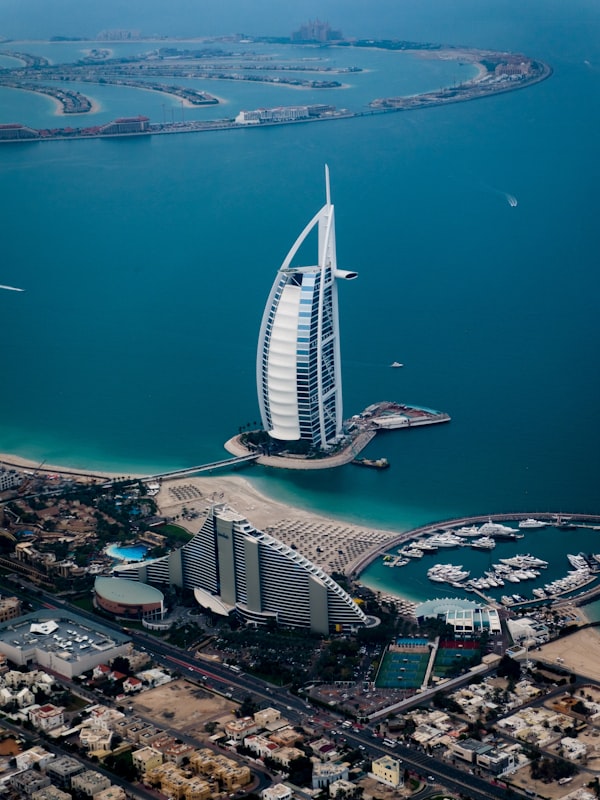
- Dubai has the world's tallest building, the Burj Khalifa Tower, and was planned from near zero in recent decades, transforming from a small port into a global metropolis.
- The country imports the majority of its food and drinking water, making it highly dependent on international trade for basic subsistence.
- The visa system is intrinsically linked to employment through sponsorship contracts, meaning job changes frequently require complex visa transitions.
- Abu Dhabi houses the Louvre Abu Dhabi and invests significantly in cultural and scientific infrastructure, positioning itself as a center of knowledge beyond tourism and finance.
Net salary, summarized
Source: national medians (OECD/Eurostat) + calculator formulaJust to show the ballpark of what you earn. Tax and cost of living take a chunk. Three sample professions, junior to senior. The full calculation, for your role, level, family, and currency, is the Living calculator.
| Profession | Junior | Mid | Senior |
|---|---|---|---|
| Software developer | US$ 5.180 | US$ 6.475 | US$ 10.036 |
| Financial analyst | US$ 3.920 | US$ 4.900 | US$ 7.595 |
| Nurse | US$ 3.500 | US$ 4.375 | US$ 6.781 |
Estimated net monthly, after progressive tax, in dollars (site base). Calculate for your role, level, and currency →
Cost of living, what you actually keep
Source: basket for couple + 2 children (Numbeo) + local health and school rules| Housing (rent)≈ 45% of cost | US$ 2.745 |
| Food | US$ 1.208 |
| Transport | US$ 503 |
| Utilities and internet | US$ 436 |
| Recreation and other | US$ 1.208 |
| Healthcare (private plan required)fixed cost, does not decrease with lower income | US$ 300 |
| Children's school | US$ 2.500 |
| Total cost per month | US$ 8.900 |
Spending pattern (housing + living only)
Local tax, health, and school rules change how much is left at month end.

Family and immigration
Visa and spouse work rules; local values estimatedQuality of life
Indices: GPI, PISA, WHO, WHR, Ookla, EF EPI, CPI (0 to 10)Life
Daily
Institutions
Verdict
The United Arab Emirates offers a clear economic proposition for professionals: high salaries, zero personal income tax, and first-rate infrastructure. However, this economic advantage is accompanied by a restrictive social dimension: the visa is tied to employment, there is no path to long-term citizenship, and most residents remain in the expatriate condition indefinitely. The extremely hot desert climate strongly shapes quality of life during most of the year. Cultural integration is possible in well-established expatriate communities, but less viable with local society. It is a vocational destination for those seeking economic gains in the short or medium term, not necessarily a place for permanent rootedness.
Complete guide: United Arab Emirates
This page is the sample. The guide is the complete map.
Everything you saw here, deeper and actionable: from first visa step to moving day, sourced for every fact.
- Visa and sponsorship, step by step
- Cities and regions compared
- Health insurance: how to choose
- Retirement, taxes, and local rules
- Useful links: housing, bank, jobs
Imagine yourself here.

Photos: Christoph Schulz, Darcey Beau, Ahmed Aldaie · Unsplash
Frequently asked questions
How does the work visa system function in the Emirates?
The work visa is sponsored by the employer through a formal contract. After a job offer, the company initiates the sponsorship process with immigration authorities. The visa is tied to the specific employer, meaning job changes require government approval and, frequently, a transition window. The spouse and children can be included on the visa as dependents, also sponsored by the employer. Processing takes between two to four weeks, depending on the emirate and specific requirements.
Can my spouse work if I move with a work visa?
Yes. When including your spouse as a dependent on the visa, they can then seek employment and obtain their own work visa sponsored by the new employer. Some employers offer a streamlined process in this scenario. Minor children are sponsored as dependents until adulthood, and after that need their own visas if they wish to remain or work in the country. The system works adequately for couples seeking both to work, but requires planning and coordination between employers.
What is the cost of living in Dubai and Abu Dhabi?
Housing cost is the most significant element of the monthly budget, particularly in Dubai, where rents for two-bedroom apartments in more central neighborhoods are high. Food, utilities, and transportation are moderate for a developed country, benefiting from the lack of income tax that offsets high rents. Private education is expensive, especially quality international schools. Private healthcare also has costs, although mandatory employer-sponsored insurance covers essentials. Abu Dhabi tends to be slightly more affordable than Dubai, with satellite cities like Sharjah offering more economic options.
Can I obtain permanent residency or citizenship after living here for a few years?
No. The country does not offer a clear path to citizenship for most expatriates, regardless of how many years they reside. Recently, long-term visas (such as the ten-year golden visa) have been introduced for certain professional profiles and investors, extending possible residency, but they do not confer citizenship rights. Residency remains tied to employment or investment. This is an important distinction: one can reside in the Emirates for decades, but as an expatriate indefinitely.
Ready to go beyond the summary?
View the complete guide: United Arab Emirates