
Country dossier · Living
🇸🇮 Slovenia
Living guide: real net salary, cost of living, taxes, health and quality of life, with source for every figure.
- Region
- Central Europe
- Capital
- Ljubljana
- Languages
- Slovenian
- Currency
- Euro (EUR)
- Population
- ≈ 2.1 million
- Time zone
- UTC+1 (CET)
- Blocs
- EU + Schengen (eurozone)
Slovenia is a small and green country at the intersection of Central Europe and the Balkans, with high quality of life and solid security. The salary does not impress by raw numbers, and perhaps that is precisely why the equation works: multiplied by proportional cost of living, what remains is real comfort. The problem appears later: the labor market is small and concentrated, career growth is slow, and not every profession finds space here.
Slovenia at a glance
Languages and regions
Slovenian dominates completely. There is an Italian minority legally recognized in the Istria region, and a Hungarian one on the eastern border, both with institutional protections. English works well in Ljubljana's professional life and in large technology companies, but outside that the local language weighs heavily in daily life and integration. Slovenia is geographically diverse for its size: Alps to the north, a short and scenic Adriatic coast to the west with cities like Portorož and Piran, and Pannonian plains to the east, bordering Hungary and Croatia.
Climate and geography
Climate variation follows topography. The mountainous north has real winters, with snow, and mild summers. The coast allows beach days and Mediterranean architecture, though the coast is only a few kilometers long. The eastern plains are continental, with hot summers and harsher winters. Forests cover more than 60% of the territory, which explains why Slovenia is one of Europe's greenest countries and why hiking, mountaineering and outdoor tourism are inseparable from life and cultural identity.
What the country lives on
The economy rests on three pillars: manufacturing and processing industry, with automotive components, machinery and chemicals, logistics, with the port of Koper in Istria functioning as a gateway to the Adriatic, and nature and culture tourism. It is not a purely digital economy like Estonia's, nor financial services like Luxembourg's. It is diversified and understated, with multinationals sharing space with small family industries that have been operating for decades.
Education
The public education system is solid, with quality similar to the rest of Central Europe. Local universities have good standards, although the University of Ljubljana is the primary destination for those completing secondary education. Those who arrive with children find stable and safe daycare centers and schools, without the contested admission processes of Western capitals.
Culture and integration
Nature is the almost invisible cultural axis: mountaineering, trails, natural lakes and Lake Bled are not leisure, they are identity. The cities are small and community spirit is strong, especially outside Ljubljana. Cultural life is understated and works well for those seeking peace, but sounds dull for those expecting constant nightlife. Cafes and bookstores function as meeting points, and weekends are usually reserved for nature, not partying.
Fun facts
- Forests cover more than 60% of the territory, which makes Slovenia one of Europe's most forested countries.
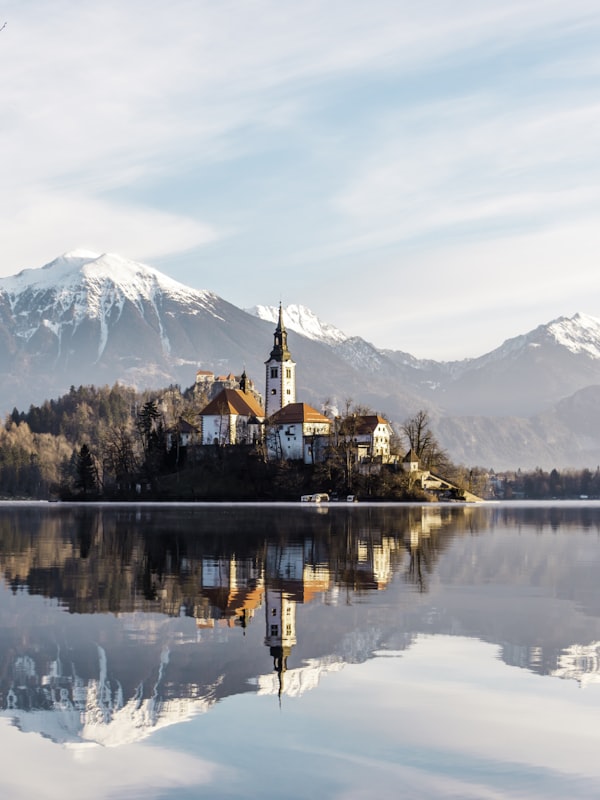
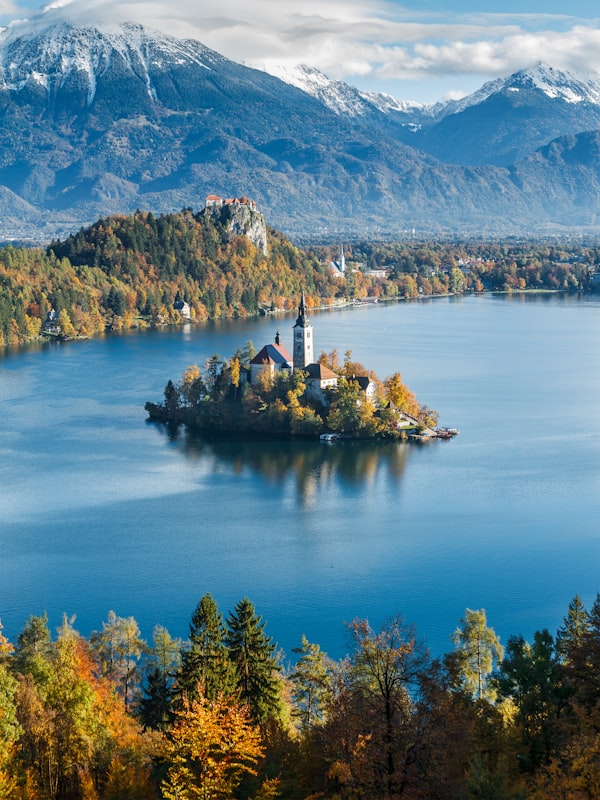
- Lake Bled, with its central island and castle in the background, is one of the most photographed natural landscapes on the continent.
- The labor market is so concentrated that most vacancies in international professions are in Ljubljana, leaving the interior practically without equivalent opportunities.
- The Slovenian Adriatic coast is only 47 kilometers long, but includes cities with Venetian architecture that still preserve their history.
- Compared to its Balkan neighbors, Slovenia is between 30% and 50% more expensive, but offers institutions and security closer to Western Europe.
Net salary, summarized
Source: national medians (OECD/Eurostat) + calculator formulaJust to show the ballpark of what you earn. Tax and cost of living take a chunk. Three sample professions, junior to senior. The full calculation, for your role, level, family, and currency, is the Living calculator.
| Profession | Junior | Mid | Senior |
|---|---|---|---|
| Software developer | US$ 2.228 | US$ 2.701 | US$ 3.902 |
| Financial analyst | US$ 1.746 | US$ 2.123 | US$ 3.093 |
| Nurse | US$ 1.579 | US$ 1.923 | US$ 2.809 |
Estimated net monthly, after progressive tax, in dollars (site base). Calculate for your role, level, and currency →
Cost of living, what you actually keep
Source: basket for couple + 2 children (Numbeo) + local health and school rules| Housing (rent)≈ 34% of cost | US$ 1.088 |
| Food | US$ 760 |
| Transport | US$ 317 |
| Utilities and internet | US$ 275 |
| Recreation and other | US$ 760 |
| Healthcare | US$ 20 |
| Children's schoolpublic viable for non-residents | included |
| Total cost per month | US$ 3.220 |
Spending pattern (housing + living only)
Local tax, health, and school rules change how much is left at month end.
Family and immigration
Visa and spouse work rules; local values estimatedQuality of life
Indices: GPI, PISA, WHO, WHR, Ookla, EF EPI, CPI (0 to 10)Life
Daily
Institutions
Verdict
Slovenia appeals to those seeking real quality of life rather than advertised salary: the monthly surplus is decent, security is high, and there is forest practically at your doorstep. It is worth it for professionals with geographic flexibility, such as remote work or multinationals, or for those in a life phase that prioritizes balance over rapid career advancement. It is worth less for those who want to climb positions quickly, because the market simply does not have scale: careers advance slowly, salary jumps are small, and competition is limited because competitors are few. Real point of attention: the labor market is so concentrated in Ljubljana that opportunities outside the capital, in your profession, may simply not exist, which forces very specific life decisions.
Complete guide: Slovenia
This page is the sample. The guide is the complete map.
Everything you saw here, deeper and actionable: from first visa step to moving day, sourced for every fact.
- Visa and sponsorship, step by step
- Cities and regions compared
- Health insurance: how to choose
- Retirement, taxes, and local rules
- Useful links: housing, bank, jobs
Imagine yourself here.
Photos: Hostaphoto, Neven Krcmarek, Alex Azabache · Unsplash
Frequently asked questions
Do I need to speak Slovenian to work in Slovenia?
Not necessarily, if you work in an international environment or in a multinational in Ljubljana, where English works well. But learning the language significantly changes your experience outside work: social integration, housing, shopping and bureaucracy become much easier even with basic Slovenian. It is possible to relocate without speaking the language, but this leaves you more isolated.
How does the work visa process work for non-EU citizens?
Non-EU citizens need a work visa or long-term residence permit. The process starts with an employer willing to sponsor: there is a signed contract, the employer submits the request to the Slovenian immigration authorities, and the visa is issued. Timelines and documentation vary depending on your country of origin and profession, but the process is usually less rigorous than in Switzerland or the Nordic countries.
Can my spouse work if I have a work visa?
Yes, family members of those with long-term residence or work visas typically receive companion visas that allow them to work. The process is usually simpler than for the primary visa holder. It is worth confirming with the Slovenian consulate in your country the exact status of your family situation.
What is social life and integration like in Ljubljana compared to other European capitals?
Ljubljana is welcoming, but requires effort on your part. The city has only about 300,000 inhabitants and a compact expatriate community, without the automatic circles of cities like Berlin or Barcelona. Cafes and streets work well, but nightlife is quiet. Real integration begins when people participate in hiking groups, outdoor activities or learn Slovenian: then friendships advance quickly. Those seeking intense urban life outside the home may be disappointed; those seeking a small and healthy community usually find themselves well.
Ready to go beyond the summary?
View the complete guide: Slovenia