
Country dossier · Living
🇪🇪 Estonia
Living guide: real net salary, cost of living, taxes, health and quality of life, with source for every figure.
- Region
- Northern Europe (Baltics)
- Capital
- Tallinn
- Languages
- Estonian
- Currency
- Euro (EUR)
- Population
- ≈ 1.4 million
- Time zone
- UTC+2 (EET)
- Blocs
- EU + Schengen (eurozone)
Estonia is Europe's most digitalized nation, with government nearly 100% online and electronic signature in nearly everything, from starting a business to voting. It sounds futuristic in the advertisement, but the reality for those who move there is different: salaries much lower than in Western Europe, a cost of living that drops in the same proportion, and rapid economic growth since independence that created a vibrant technology market, birthplace of Skype. The data below shows what you are actually getting.
Estonia at a glance
Languages and regions
Estonian is the official language, different from Russian and Finnish, and not easy for speakers of other languages. In the technology sector, companies operate in English, especially in Tallinn, hiring people who do not speak Estonian. Outside this sector, the local language weighs more in daily life. A significant Russian-speaking minority lives in the northeast, especially in Narva, a historical legacy of the Soviet era, which makes Tallinn more internationalized than the interior.
Climate and geography
The climate is Baltic: long, dark and severely cold winters, with days of few hours of light in December and January. Summers are short but pleasant, with sunlight almost until midnight in June. Estonia is located between Sweden to the west and Russia to the east, on the coast of the Baltic Sea, and is a full member of the European Union and Schengen, which facilitates circulation throughout Europe. Almost half of the territory is covered by forest, which gives the country high environmental quality and reinforces the isolation of the interior.
What the country lives on
The Estonian economy shifted to technology, digital services and software after independence, with companies like Skype and Wise being born there. Wood, oil shale and tourism also generate significant revenue. The job market is small outside of technology, which limits employment offers in other areas and leaves salaries proportionally lower there. The transition from planned economy to market economy occurred rapidly, forming a generation of digital entrepreneurs.
Education
The Estonian public education system is known internationally for high performance in assessments like PISA. Education is offered in Estonian and, in some areas, also in Russian for the Russian-speaking minority. Public universities charge tuition only in courses taught in foreign languages, keeping higher education in Estonian free or low-cost. The pedagogical approach is modern, with emphasis on critical thinking and digital literacy from elementary school.
Culture and integration
Estonian culture is discreet, introspective and quite digital: much of routine interactions happen online. Socially, there is less emphasis on small talk and more on direct exchanges, which can sound cold to those from more expressive cultures. Sauna is an important part of life, a reflection of Nordic heritage. Integration of foreigners is facilitated by the fluency in English of the younger generation and the openness of the technology community to international talent, although learning Estonian opens more doors outside the digital sector.
Fun facts
- e-Residency offers digital identity to anyone in the world, allowing them to start a business remotely and sign documents electronically without ever setting foot in the country.
- Skype was created in Estonia, as were Wise and Bolt, which puts the country on the map as a birthplace of globally significant technology companies.
- Estonia is among the countries with the most saunas per capita in the world.
- The winter is so severe that in December there are only three to four hours of natural light, a period that requires psychological adaptation for those arriving from outside.
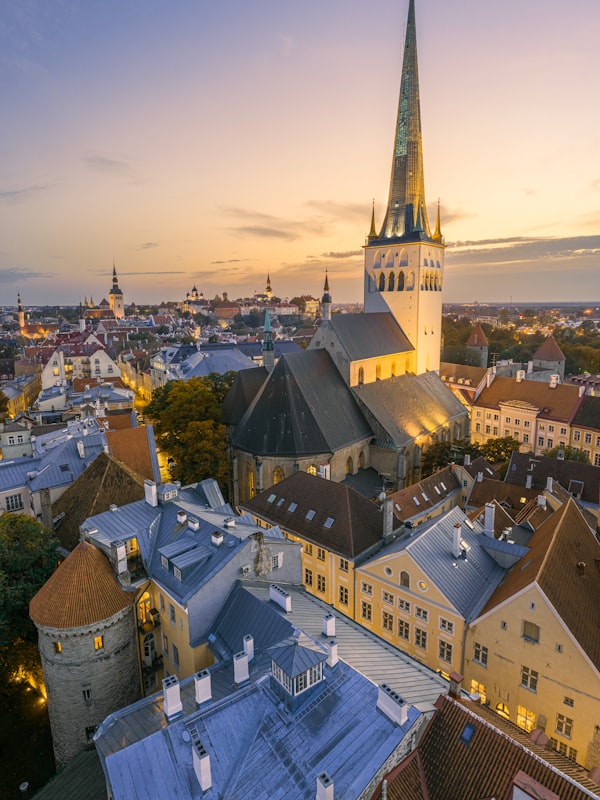
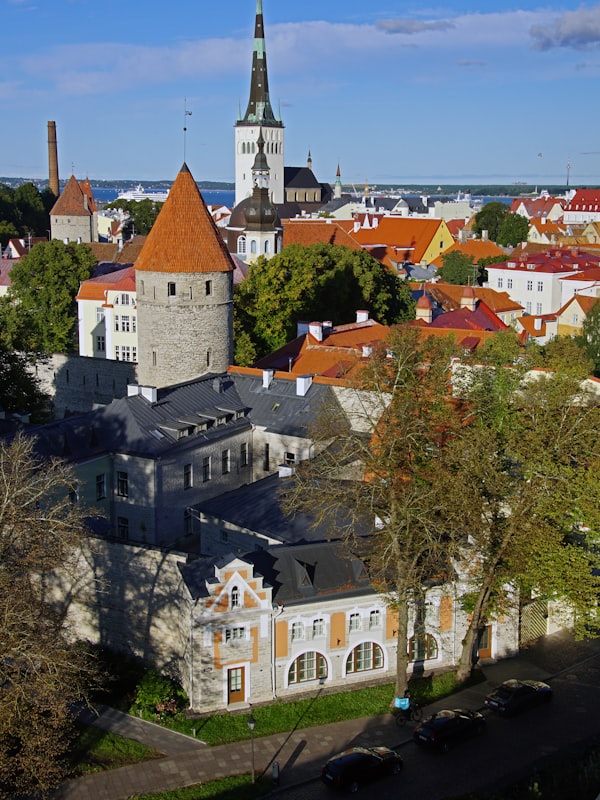
- Tallinn is one of Europe's best-preserved medieval cities, with a historic center intact since the Middle Ages and recognized as a World Heritage site by Unesco.
Net salary, summarized
Source: national medians (OECD/Eurostat) + calculator formulaJust to show the ballpark of what you earn. Tax and cost of living take a chunk. Three sample professions, junior to senior. The full calculation, for your role, level, family, and currency, is the Living calculator.
| Profession | Junior | Mid | Senior |
|---|---|---|---|
| Software developer | US$ 2.337 | US$ 2.867 | US$ 4.263 |
| Financial analyst | US$ 1.806 | US$ 2.220 | US$ 3.315 |
| Nurse | US$ 1.626 | US$ 2.000 | US$ 2.991 |
Estimated net monthly, after progressive tax, in dollars (site base). Calculate for your role, level, and currency →
Cost of living, what you actually keep
Source: basket for couple + 2 children (Numbeo) + local health and school rules| Housing (rent)≈ 33% of cost | US$ 1.056 |
| Food | US$ 772 |
| Transport | US$ 322 |
| Utilities and internet | US$ 279 |
| Recreation and other | US$ 772 |
| Healthcare | US$ 20 |
| Children's schoolpublic viable for non-residents | included |
| Total cost per month | US$ 3.220 |
Spending pattern (housing + living only)
Local tax, health, and school rules change how much is left at month end.
Family and immigration
Visa and spouse work rules; local values estimatedQuality of life
Indices: GPI, PISA, WHO, WHR, Ookla, EF EPI, CPI (0 to 10)Life
Daily
Institutions
Verdict
Worth it for those who work in technology, startups or digital companies, seeking low cost of living with enough salary to save. Estonia offers high quality of life, good level education, cutting-edge digital government and a welcoming technology community. Worth less for those who cannot find work in the technology sector, since the market outside this niche is limited, or for those who do not deal well with long and dark winters. Real point of attention: the few hours of light in December affect the mental health of many people in a documented way, and the professional community outside technology is small, which can generate isolation.
Complete guide: Estonia
This page is the sample. The guide is the complete map.
Everything you saw here, deeper and actionable: from first visa step to moving day, sourced for every fact.
- Visa and sponsorship, step by step
- Cities and regions compared
- Health insurance: how to choose
- Retirement, taxes, and local rules
- Useful links: housing, bank, jobs
Imagine yourself here.
Photos: Jaanus Jagomägi, Martti Salmi, Judith Prins · Unsplash
Frequently asked questions
Do I need to speak Estonian to work in Estonia?
It depends on the sector. In the technology market, most companies operate entirely in English, especially in Tallinn, hiring people who do not speak Estonian. Outside of technology, the local language is essential to get work and integrate socially. Learning Estonian opens doors significantly and is well regarded by employers, even though it is a challenging language.
How does the work visa work for those who are not from the European Union?
The standard is for an employer in Estonia to sponsor the application, proving that the position cannot be filled by an EU citizen. Residence and work permits are tied to that employer, and spouses and dependents can follow with derived permits.
Can my spouse work with me there?
Yes. If you obtain residence permission as a worker, the spouse receives derived permission and generally has the right to work independently, without having to be tied to your employment. Minor children also receive derived permits. It is worth confirming current requirements with the Estonian Border Police, as procedures may change.
What is e-Residency and does it help to live there?
e-Residency offers complete digital identity, electronic signature, bank account and business to anyone in the world, without needing to set foot in Estonia. But it does not give residence permission or a visa to live there: it is a digital business service, not a migration pathway. Anyone who wants to physically live there needs a work visa, student visa or family reunification via common routes. e-Residency is more useful for maintaining a business in Estonia while living in another country.
Ready to go beyond the summary?
View the complete guide: Estonia