
Country dossier · Living
🇭🇰 Hong Kong SAR China
Living guide: real net salary, cost of living, taxes, health and quality of life, with source for every figure.
- Region
- East Asia
- Capital
- —
- Languages
- Cantonese and English (official); Mandarin widely used
- Currency
- Hong Kong Dollar (HKD)
- Population
- ≈ 7.5 million
- Time zone
- UTC+8
- Blocs
- Special Administrative Region of China; outside the EU
Hong Kong promises one of the world's lowest income tax rates, which on paper seems ideal. But those who arrive there discover that the cost of housing is among the highest on the planet, enough to devour much of that tax advantage. Add to this the extreme population density, where personal space is a luxury, and the appeal changes. The data below shows what actually remains for those who work in Hong Kong, beyond the shine of nominal salary.
Hong Kong SAR China at a glance
Languages and regions
In daily life, Hong Kong speaks Cantonese, a variant of Chinese very different from Mandarin in structure and pronunciation. English is widely spoken in professional environments, a direct legacy of British administration that ended in 1997, and remains the language of business, government, and multinationals. Mandarin gains economic importance, especially among younger generations and those dealing with direct business with mainland China. A foreigner in finance or technology can live and work fluently in English alone, although learning Cantonese opens social doors.
Climate and geography
Hong Kong is located in the subtropical region of East Asia, with warm and humid climate year-round. Summers, from May to September, are intense, with temperatures above 30°C and monsoons that bring heavy rain and, occasionally, typhoons. Winter is mild, between 15°C and 20°C, considered the best season of the year. The geography is dramatic: the city is mountainous, with steep peaks occupying much of the territory, which explains the vertical concentration of the population in low areas and coastal plains.
What the country lives from
Hong Kong's economy is based almost entirely on services: international finance, foreign trade, port logistics, insurance, and real estate markets. The port is among the world's busiest, functioning as an entry and exit point for products circulating between mainland China and the rest of the world. Manufacturing has largely migrated to mainland China in recent decades, leaving Hong Kong as a commercial and financial intermediary, and decision center. There are no significant natural resources: almost everything depends on trade and knowledge.
Education
The public education system follows a structure close to the British model: primary, secondary, and then university or technical training. Performance is consistently high in international rankings such as PISA. Teaching occurs in Cantonese or Chinese in public schools, but many private and international schools teach in English. The main universities have global standards and attract outside researchers. Expatriate families typically invest in international schools, a significant additional cost in the budget.
Culture and integration
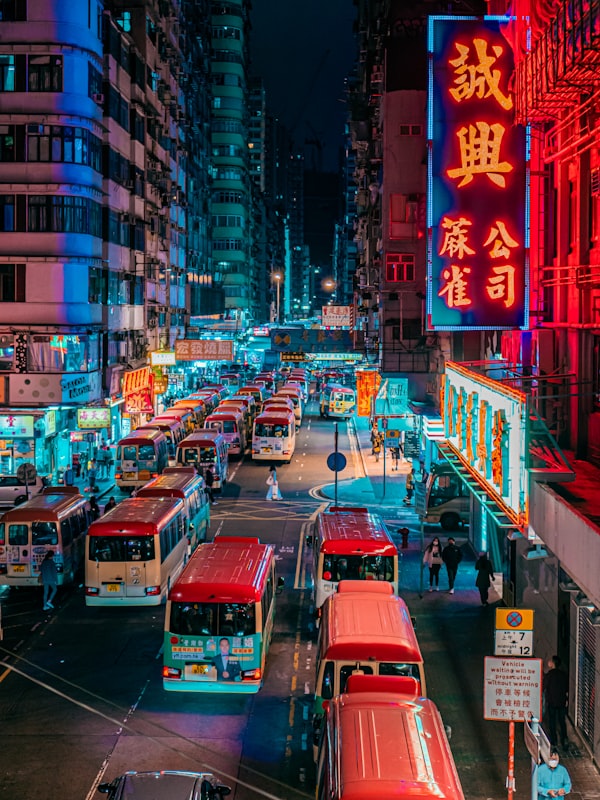
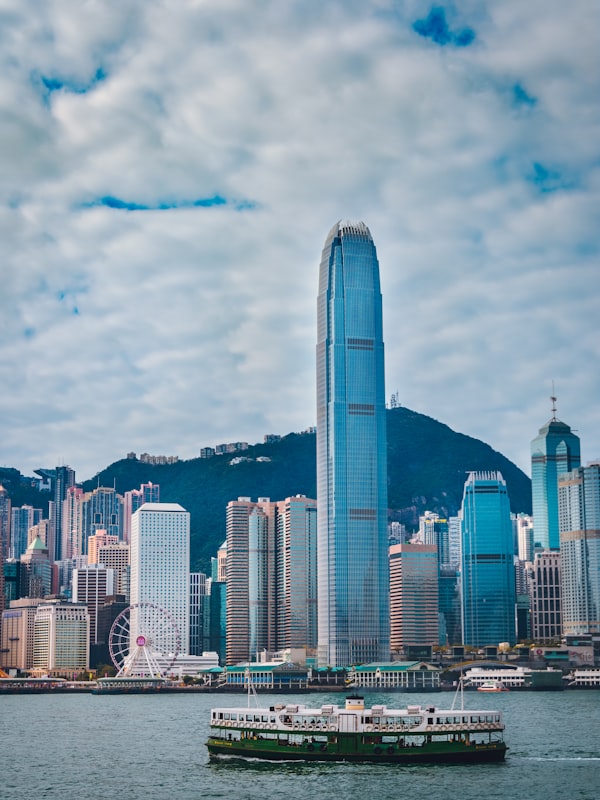
Hong Kong is a deeply vertical city: skyscrapers and stacked residential towers, with commerce on the lower floors. Population density is among the highest in the world, and this defines urban life. Each region has a distinct personality: Hong Kong Island is more sophisticated and residential, Kowloon is commercial and dense, and the New Territories are more suburban, yet still with close contact with nature. Cultural life is intense, mixing British heritage with Chinese dynamism and global influence, something visible in restaurants, cinemas, and public spaces.
Fun facts
- Hong Kong's skyline is frequently cited as one of the most impressive in the world, with skyscrapers occupying every available square meter near sea level.
- The public transportation system, the MTR, frequently ranks among the most efficient in the world, with trains that operate with great schedule precision.
- Despite being a megacity of 7.5 million people, there are mountains and trails just minutes from the urban center.
- Hong Kong was a British colony until 1997 and still maintains traces of the British legal system coexisting with the Chinese system.
- Many residential apartments have significantly reduced area by Western standards, frequently smaller than 50 square meters.
Net salary, summarized
Source: national medians (OECD/Eurostat) + calculator formulaJust to show the ballpark of what you earn. Tax and cost of living take a chunk. Three sample professions, junior to senior. The full calculation, for your role, level, family, and currency, is the Living calculator.
| Profession | Junior | Mid | Senior |
|---|---|---|---|
| Software developer | US$ 4.577 | US$ 5.670 | US$ 8.612 |
| Financial analyst | US$ 3.501 | US$ 4.339 | US$ 6.604 |
| Nurse | US$ 3.138 | US$ 3.891 | US$ 5.926 |
Estimated net monthly, after progressive tax, in dollars (site base). Calculate for your role, level, and currency →
Cost of living, what you actually keep
Source: basket for couple + 2 children (Numbeo) + local health and school rules| Housing (rent)≈ 48% of cost | US$ 3.072 |
| Food | US$ 1.198 |
| Transport | US$ 499 |
| Utilities and internet | US$ 433 |
| Recreation and other | US$ 1.198 |
| Healthcare | US$ 40 |
| Children's school | US$ 3.667 |
| Total cost per month | US$ 10.107 |
Spending pattern (housing + living only)
Local tax, health, and school rules change how much is left at month end.
Family and immigration
Visa and spouse work rules; local values estimatedQuality of life
Indices: GPI, PISA, WHO, WHR, Ookla, EF EPI, CPI (0 to 10)Life
Daily
Institutions
Verdict
It's worth it for those who work in finance, technology, or international trade at senior or executive level, where the low income tax and access to global opportunities still leave real gains even after housing costs. It's worth less for those at the start of their career or planning to save quickly: the low tax advantage loses strength against a real estate market driven by global investment dynamics. Real point of concern: the housing cost is not only high in absolute numbers, it's disproportionate even for those who earn well, and families with children need to carefully assess if it fits the budget, as the cost of private international education further exacerbates the bill.
Complete guide: Hong Kong SAR China
This page is the sample. The guide is the complete map.
Everything you saw here, deeper and actionable: from first visa step to moving day, sourced for every fact.
- Visa and sponsorship, step by step
- Cities and regions compared
- Health insurance: how to choose
- Retirement, taxes, and local rules
- Useful links: housing, bank, jobs
Imagine yourself here.
Photos: Chi Hung Wong, Sébastien Goldberg, Florian Wehde · Unsplash
Frequently asked questions
Do I need to speak Cantonese or Mandarin to work in Hong Kong?
It's not necessary if your career is in finance, technology, or multinationals, where English is the standard working language. Learning Cantonese helps a lot in life outside the office, like restaurants, public transport, and local friendships. Mandarin is less urgent in daily life, but gains economic value for those doing business with mainland China.
How difficult is it to get a work visa for foreigners?
The Hong Kong government offers visa categories for qualified professionals, usually sponsored by the employer. Large companies in finance, technology, and international trade often sponsor foreigners with an established routine; smaller companies may face more bureaucracy. The process takes a few weeks, and the employer needs to demonstrate that there is no local candidate available for the position.
Can my spouse work if I get a visa?
Yes, dependent spouses can apply for a companion visa and, once in Hong Kong, seek employment locally. Some employers help with the spouse's visa; in other cases, the spouse needs to find employment and go through the sponsorship process independently.
Why are apartments in Hong Kong so small and so expensive?
Land supply is extremely limited: Hong Kong is a small and mountainous territory with development restricted by law. Demand is huge, fueled by international investment and population growth. This results in prices that absorb all available supply and keep residential units small as standard, even for middle-class families. The legacy of the British building code allowed very tall towers, which maximizes vertical density but does not solve the land shortage.
Ready to go beyond the summary?
View the complete guide: Hong Kong SAR China