
Country dossier · Living
🇮🇳 India
Living guide: real net salary, cost of living, taxes, health and quality of life, with source for every figure.
- Region
- South Asia
- Capital
- New Delhi
- Languages
- Hindi and English (official at federal level), with dozens of recognized regional languages
- Currency
- Indian Rupee (INR)
- Population
- ≈ 1.45 billion
- Time zone
- UTC+5:30
- Blocs
- G20 member; headquarters of SAARC (South Asia regional cooperation)
India offers one of the lowest costs of living among rapidly growing economies, especially outside metropolitan centers. For those working remotely in foreign currency or earning a competitive rupee salary, particularly in technology sectors, purchasing power is significant. Major metropolises like Bangalore, Mumbai and New Delhi host established expatriate communities with infrastructure, private healthcare and leisure oriented toward that demographic. Linguistic, cultural and geographic diversity is both richness and challenge: each region has distinct characteristics in climate, cost of living and quality of life.
India at a glance
Languages and regions
India constitutionally recognizes 22 official languages and hundreds of regional dialects. Hindi is the predominant federal language, and English functions as a second official language in government and business practices, widely spoken in major cities. Each state has its main language: Tamil, Telugu, Kannada, Marathi, Bengali, Punjabi and others. The experience of living in the south, in Dravidian states, differs substantially from the north, with Indo-Aryan states. For expatriates, English opens doors in larger urban centers; in smaller cities, the language barrier can be more challenging.
Climate and geography
India's geography is enormously varied: from snow-capped Himalayas in the north to tropical beaches, from the Thar Desert in the west to dense forests in the northeast. The climate is dominated by monsoons from June to September, with intense rains in many regions and prolonged droughts in others. Temperature range is large: mild winters in the south, between 20 and 30 degrees Celsius, and very cold in the north, reaching freezing in New Delhi. Cities like Bangalore and Hyderabad enjoy temperate climate year-round, while Mumbai suffers from high humidity and persistent heat. This geographic diversity makes it essential to choose a region with climate compatible with your personal preference.
What drives the economy
India is a global technology and IT services engine, with consolidated hubs in Bangalore (IT capital), Hyderabad, Pune and Mumbai. The software outsourcing and consulting sector employs millions and attracts multinational companies. Beyond IT, the economy depends on agriculture (majority of rural population), manufacturing, pharmaceuticals and a robust services sector. GDP growth has been consistent, between 5 and 7 percent annually, sustaining demand for skilled professionals. For expatriates with technology skills, demand is real and well-paid in local terms, although rupee salaries are often lower than Western practices.
Education
The education system follows a structure similar to the British model: primary education through the tenth year, then secondary and higher education. Elite universities, the IITs (Indian Institutes of Technology) and IIMs (Indian Institutes of Management), are highly respected globally but extremely competitive. Private English-language schools proliferate in major cities with tuitions between one and five thousand dollars annually, while the public system offers more accessible education with variable quality. For expatriate families with children, major cities have quality international schools: American, British or elite Indian, with tuitions between ten and thirty thousand dollars annually. Higher education typically requires international tuitions or fierce competition for scholarships.
Culture and integration
India is deeply multicultural, with multiple religions: predominant Hinduism, plus Islam, Christianity, Sikhism, Buddhism and Jainism. Large cities like Delhi, Mumbai, Bangalore and Hyderabad host visible expatriate communities in well-known neighborhoods: Bandra in Mumbai, Whitefield in Bangalore, Jubilee Hills in Hyderabad, where expatriates find social circles, international restaurants and familiar services. Outside these hubs, social integration may require more effort, especially without speaking the local language. Cultural and religious practices are relevant in daily life: holidays, dietary customs, festivals. Respect and genuine curiosity facilitate coexistence. The LGBTQ+ community finds growing space in metropolises, although still faces legal and social challenges outside them.
Fun facts
- India constitutionally recognizes 22 official languages, making it one of the world's most linguistically diverse nations.
- Bollywood produces more films annually than any other film industry, solidifying India as the world's largest film producer.
- Despite historical legal challenges, cities like Delhi, Mumbai and Bangalore develop active and visible LGBTQ+ communities, with a growing cultural and entertainment scene.
- The caste system, although officially abolished since 1950, still influences opportunities and social dynamics in certain sectors and regions, particularly outside cosmopolitan urban centers.
- The Indian Constitution, adopted in 1950, established universal adult suffrage from age 21, an exceptional democratic achievement for the time; the minimum age dropped to 18 in 1989, with the 61st amendment.
Net salary, summarized
Source: national medians (OECD/Eurostat) + calculator formulaJust to show the ballpark of what you earn. Tax and cost of living take a chunk. Three sample professions, junior to senior. The full calculation, for your role, level, family, and currency, is the Living calculator.
| Profession | Junior | Mid | Senior |
|---|---|---|---|
| Software developer | US$ 725 | US$ 895 | US$ 1.347 |
| Financial analyst | US$ 557 | US$ 688 | US$ 1.039 |
| Nurse | US$ 500 | US$ 618 | US$ 934 |
Estimated net monthly, after progressive tax, in dollars (site base). Calculate for your role, level, and currency →
Cost of living, what you actually keep
Source: basket for couple + 2 children (Numbeo) + local health and school rules| Housing (rent)≈ 30% of cost | US$ 600 |
| Food | US$ 504 |
| Transport | US$ 210 |
| Utilities and internet | US$ 182 |
| Recreation and other | US$ 504 |
| Healthcare | US$ 20 |
| Children's schoolpublic viable for non-residents | included |
| Total cost per month | US$ 2.020 |
Spending pattern (housing + living only)
Local tax, health, and school rules change how much is left at month end.
Family and immigration
Visa and spouse work rules; local values estimatedQuality of life
Indices: GPI, PISA, WHO, WHR, Ookla, EF EPI, CPI (0 to 10)Life
Daily
Institutions
Verdict
India is a realistic option for those seeking very low cost of living, structured expatriate community in major urban centers and professional opportunities in technology. The downsides are significant: uneven urban infrastructure with chaotic traffic and pollution in certain cities, limited public healthcare systems although private ones are available, social integration challenges outside international circles, and climate stress with extreme heat and monsoons. For remote professionals in strong currency or expatriate income, life can be comfortable in selected neighborhoods. For those dependent on local salaries, it still offers good quality of life at low cost, but requires realistic adaptation to local conditions.
Complete guide: India
This page is the sample. The guide is the complete map.
Everything you saw here, deeper and actionable: from first visa step to moving day, sourced for every fact.
- Visa and sponsorship, step by step
- Cities and regions compared
- Health insurance: how to choose
- Retirement, taxes, and local rules
- Useful links: housing, bank, jobs
Imagine yourself here.
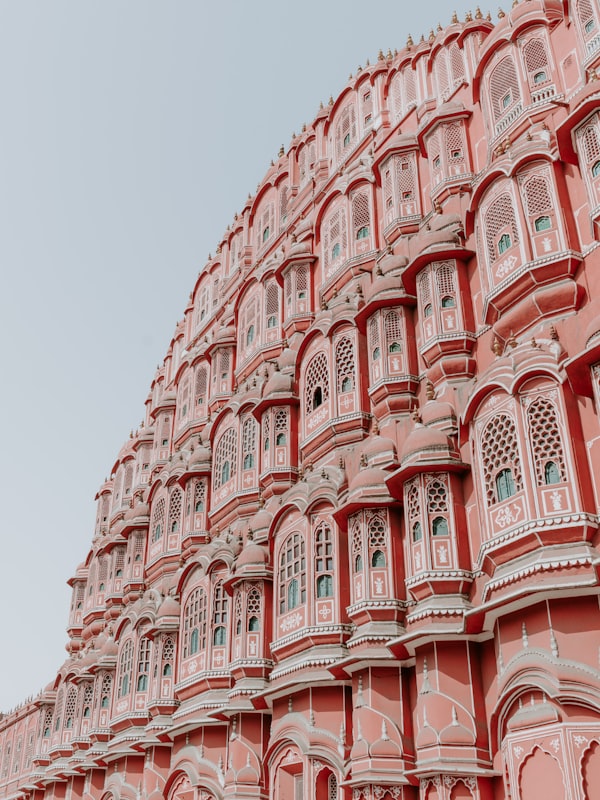
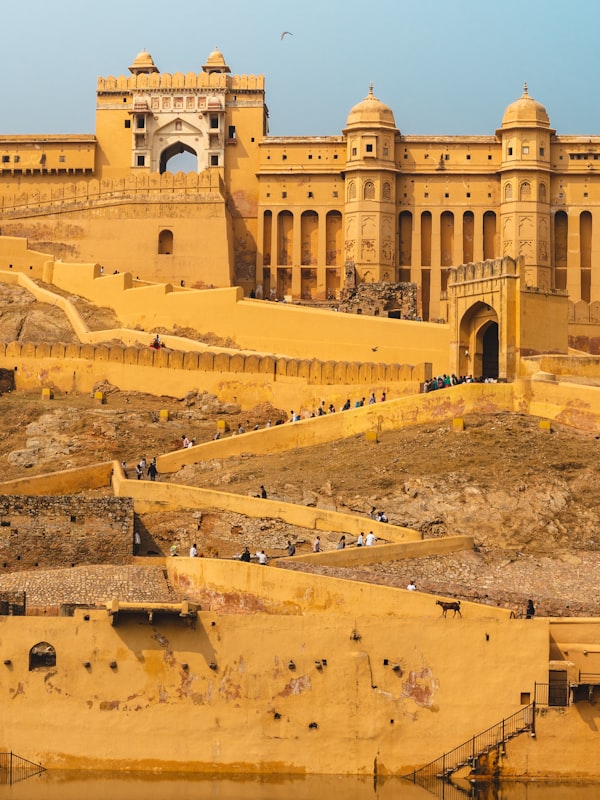
Photos: Annie Spratt, Meriç Dağlı, Abhishek R · Unsplash
Frequently asked questions
What visa do I need to work in India?
The main work visa is the Employment Visa, valid for up to one year and renewable. IT professionals often obtain this visa with sponsorship from their employing company. Spouses and children accompany on the entry visa, the X Visa, which grants residence for the same period as the main holder but does not authorise paid work. Some countries have special visa agreements with expanded timeframes. The typical process takes between one and three months. It is recommended to consult directly with India's Ministry of External Affairs or your country's embassy for updated requirements.
Can my spouse or partner work if I have a work visa?
Yes, a spouse or registered partner can apply for an independent Employment Visa if they secure sponsorship from a company. Alternatively, some spouses apply for a Business Visa, which allows self-employment or consulting work. The dependent visa does exist and is the X Visa, which grants residence but does not authorise paid work, so anyone wanting to work needs to move to a visa of their own. It is recommended to confirm this right with the embassy, as regulations evolve, but historically both partners can work with separate visas.
What is the quality of life like in major cities for expatriates?
Expatriate neighborhoods in Bangalore, Mumbai, Delhi and Hyderabad offer comfort comparable to global urban centers: modern apartments, 24-hour security condominiums, international restaurants, gyms, quality international schools. Private healthcare is excellent in top hospitals with internationally trained doctors. Cost of living remains far below the West, even in premium neighborhoods. Downsides include air pollution in cities like Delhi, particularly in winter, congested traffic and possible social isolation outside international circles. Cities like Bangalore have better air quality and more pleasant climate.
How do long-term visas work for those who want to stay long-term?
The Overseas Citizen of India (OCI) is a non-resident status offering advantages such as indefinite visa and simplified banking access, but is not permanent residency and does not allow direct remunerated work. For genuine permanent residence, residency and investment requirements must be met, a process that varies case by case. Most expatriates who stay long-term renew work visas or switch to a Business Visa. It is recommended to consult immigration lawyers specialized in India for long-term strategy.
Ready to go beyond the summary?
View the complete guide: India