
Country dossier · Living
🇮🇩 Indonesia
Living guide: real net salary, cost of living, taxes, health and quality of life, with source for every figure.
- Region
- Southeast Asia
- Capital
- Jakarta
- Languages
- Indonesian (Bahasa Indonesia)
- Currency
- Indonesian Rupiah (IDR)
- Population
- ≈ 285 million
- Time zone
- UTC+7 to UTC+9 (the country has three time zones)
- Blocs
- ASEAN
Indonesia is the world's largest archipelago and a rising economy in Southeast Asia. With over 280 million people spread across thousands of islands, the country offers remarkably low cost of living, especially outside Jakarta. Local salaries reflect this economic reality, but expats with income in strong currencies find significant purchasing power. Bali has established itself as a destination for digital nomads and remote workers, while Jakarta and cities with growing tech hubs attract innovation professionals. The equatorial tropical climate, burgeoning startup scene, and vibrant culture attract immigrants in increasing numbers.
Indonesia at a glance
Languages and regions
Indonesian is the official language and functions as a unifying link in an extraordinarily diverse country. Over 700 local languages coexist on the islands, but Indonesian is taught in schools and widely understood. English is spoken primarily by urban professionals and in the tourism industry. Java is home to more than half the national population and concentrates most economic activity, while Sumatra, Borneo, Sulawesi, and the Lesser Islands remain less densely populated regions. Bali, though small, is known for its infrastructure tailored to foreigners and an established international community.
Climate and geography
Indonesia straddles the equator and has a tropical equatorial climate year-round, without well-defined seasons. The region experiences a rainy season (October to March) and a dry season (April to September), with variations depending on location. The country is prone to earthquakes and volcanic eruptions, given its location on the Pacific Ring of Fire. The islands offer extraordinary landscapes: from beaches and coral reefs to volcanoes, tropical forests, and mountainous terrain. Transportation infrastructure between islands continues to improve, facilitating internal travel.
What the country's economy is based on
Indonesia's economy is Southeast Asia's largest and is sustained by diverse pillars. Agriculture, mining, manufacturing, and tourism figure as important sectors. Jakarta and its surroundings concentrate the most economic activity and host most multinational corporations and tech startups. The startup sector grew significantly in the last decade, and cities like Jakarta and Surabaya emerge as regional technology hubs. Tourism, especially in Bali, generates considerable revenue. Per capita income remains modest compared to developed countries, reflected in low cost of living.
Education
Indonesia's educational system offers free public education, though quality varies substantially by region and school type. Many expats and affluent residents use international schools, concentrated in Jakarta, Surabaya, and Bali, whose curriculum follows international standards. Recognized local universities offer programs in English. The country has quality universities, but students with resources frequently migrate for university studies abroad. Literacy and educational access improved notably in recent decades.
Culture and integration
Indonesia is a profoundly multicultural society. While Islam is the majority religion, the country practices remarkable religious tolerance. Bali, the epicenter of Indonesian Hinduism, offers a distinct cultural experience. Expat communities are present and well established, especially in Jakarta, Bali, Surabaya, and Bandung. Social networks, interest groups, and foreign associations facilitate integration. The Indonesian language is considered relatively accessible to Portuguese speakers. Social life is vibrant, with community events, active nightlife, and an expanding food scene mixing traditional cuisine with international influences.
Fun facts
- Indonesia is the world's largest archipelago, with over 17,000 mapped islands, though only about 6,000 are inhabited.
- The Krakatoa volcano in Indonesia caused one of the largest recorded eruptions in history in 1883, whose effects were felt globally.
- Bali is the only Indonesian state predominantly Hindu, while the rest of the country is predominantly Islamic, creating a unique cultural dynamic.
- Batik, an Indonesian textile dyeing technique, was recognized by UNESCO as a masterpiece of the oral and immaterial heritage of humanity.
- Indonesia is home to the world's greatest biological diversity after Brazil, harboring thousands of fauna and flora species found only on its islands.
Net salary, summarized
Source: national medians (OECD/Eurostat) + calculator formulaJust to show the ballpark of what you earn. Tax and cost of living take a chunk. Three sample professions, junior to senior. The full calculation, for your role, level, family, and currency, is the Living calculator.
| Profession | Junior | Mid | Senior |
|---|---|---|---|
| Software developer | US$ 600 | US$ 743 | US$ 1.128 |
| Financial analyst | US$ 458 | US$ 568 | US$ 865 |
| Nurse | US$ 411 | US$ 510 | US$ 776 |
Estimated net monthly, after progressive tax, in dollars (site base). Calculate for your role, level, and currency →
Cost of living, what you actually keep
Source: basket for couple + 2 children (Numbeo) + local health and school rules| Housing (rent)≈ 32% of cost | US$ 704 |
| Food | US$ 539 |
| Transport | US$ 224 |
| Utilities and internet | US$ 194 |
| Recreation and other | US$ 539 |
| Healthcare | US$ 20 |
| Children's school | US$ 1.500 |
| Total cost per month | US$ 3.720 |
Spending pattern (housing + living only)
Local tax, health, and school rules change how much is left at month end.
Family and immigration
Visa and spouse work rules; local values estimatedQuality of life
Indices: GPI, PISA, WHO, WHR, Ookla, EF EPI, CPI (0 to 10)Life
Daily
Institutions
Verdict
Indonesia presents itself as an attractive destination for those seeking low cost of living, tropical climate, international community, and an expanding economic environment. Jakarta offers growing professional opportunities and urban infrastructure, while Bali provides high quality of life, relative safety, and an established network of foreigners. Drawbacks include administrative bureaucracy, variability in healthcare service quality outside major centers, possibility of sexual harassment for women in public spaces, and the rupiah's exchange rate volatility. The country is ideal for digital nomads, technology professionals, and those who value cultural adventure and flexibility over established comforts.
Complete guide: Indonesia
This page is the sample. The guide is the complete map.
Everything you saw here, deeper and actionable: from first visa step to moving day, sourced for every fact.
- Visa and sponsorship, step by step
- Cities and regions compared
- Health insurance: how to choose
- Retirement, taxes, and local rules
- Useful links: housing, bank, jobs
Imagine yourself here.
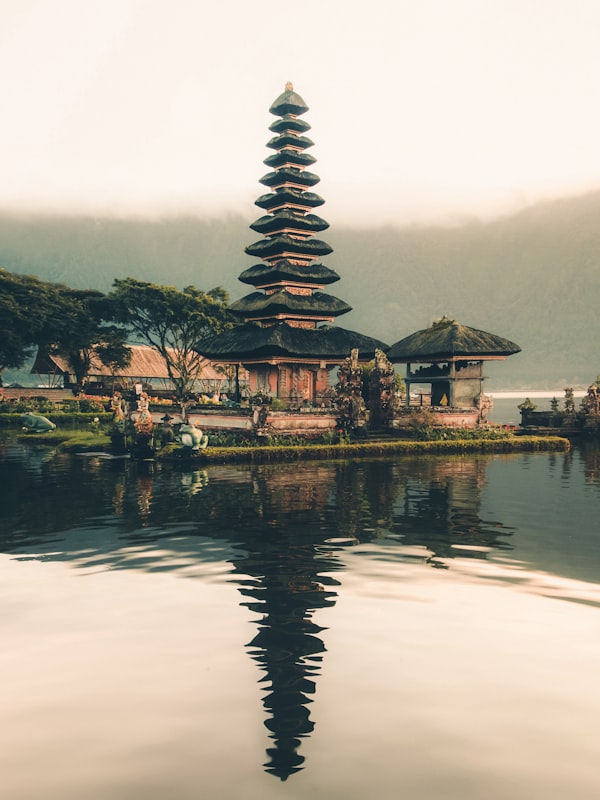
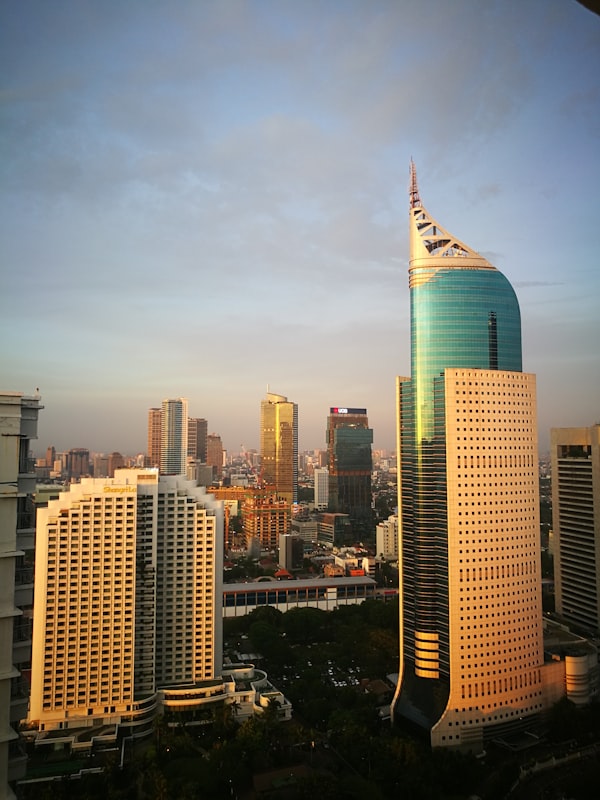
Photos: Aron Visuals, Gints Gailis · Unsplash
Frequently asked questions
What is the process for obtaining a work or residence visa in Indonesia?
Indonesia offers several visa types. The visa on arrival is valid for 30 days and can be extended once, reaching 60 days in total, and the B211A visit visa, now classified as C1, is valid for 60 days. For work, employer sponsorship is necessary, with the employer requesting the visa from the government. There is also the ITAS visa (temporary residence permit) for long-term residence, often related to entrepreneurship or investment. The digital nomad visa, similar to those in other Asian countries, allows stays of up to one year. Processes are generally straightforward but require complete documentation and cooperation from a local agent or employer.
Can my spouse or partner work if I move to Indonesia?
Yes, your spouse or partner can work provided they obtain the appropriate work visa and sponsorship from a local employer. It is not automatic after marriage, but it is permitted and practiced routinely. Many expat couples split remote work, own business activities, or local employment. Marriage documentation must be recognized by Indonesian authorities, which sometimes requires additional authentication procedures.
What is the quality of the healthcare system?
Healthcare quality varies significantly depending on location. Jakarta and Bali have international-quality private hospitals with multilingual staff, adequate for emergencies and complex care. Outside these centers, quality declines and access may be limited. Most expats purchase supplementary international health insurance. Generic medications are abundant and inexpensive. Dental treatments and elective procedures attract medical tourism patients. The public system is accessible but often overcrowded.
How much does it cost to live in Indonesia and how does the cost of living compare to other countries?
The cost of living is very low compared to Western countries. Rent for a comfortable apartment in Jakarta or Bali varies widely, as do food and transportation. Remote work well-paid offers extraordinary purchasing power for those earning in strong currencies. Local professionals earn less, but also spend less, and the economy functions in two distinct registers. Consumption of imported products and international education substantially increase the cost of living. The rupiah's exchange rate volatility periodically affects foreigners' budgets.
Ready to go beyond the summary?
View the complete guide: Indonesia