
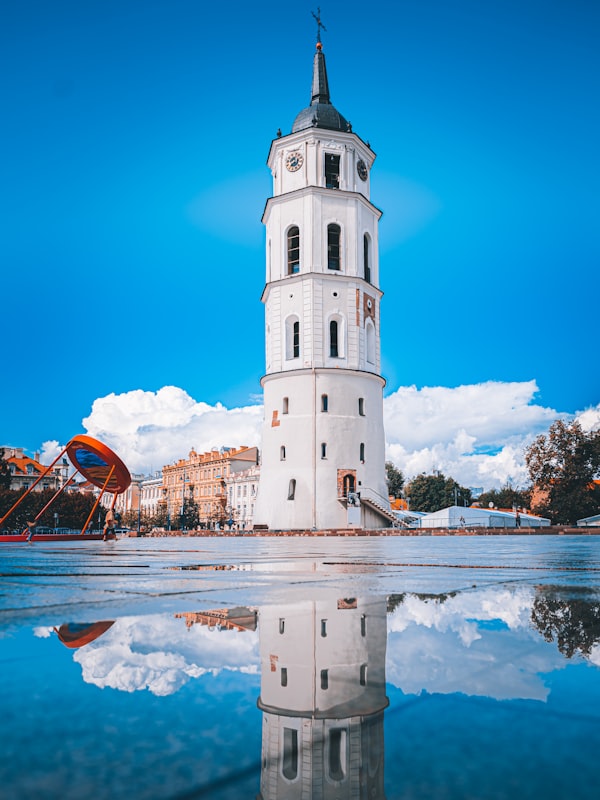
Country dossier · Living
🇱🇹 Lithuania
Living guide: real net salary, cost of living, taxes, health and quality of life, with source for every figure.
- Region
- Northern Europe (Baltics)
- Capital
- Vilnius
- Languages
- Lithuanian
- Currency
- Euro (EUR)
- Population
- ≈ 2.9 million
- Time zone
- UTC+2 (EET)
- Blocs
- EU + Schengen (eurozone)
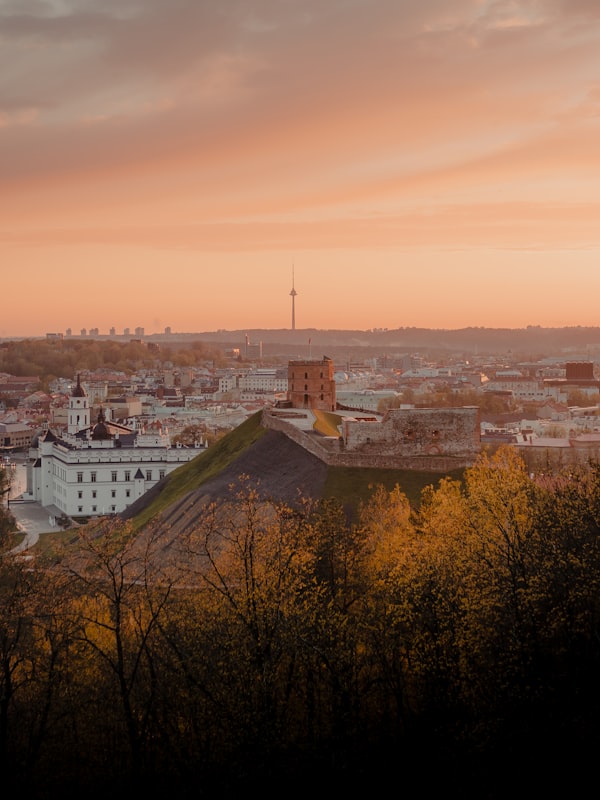
Lithuania is the largest of the three Baltic republics and one of the most successful examples of post-Soviet economic transformation. Since joining the European Union, the country has accelerated: Vilnius consolidated itself as a European fintech hub, tech startups grow rapidly, and real wages advance faster than the European average. The cost of living remains low, which keeps the proposition interesting for those who move even with nominal figures below Western Europe.
Lithuania at a glance
Languages and regions
Lithuanian is the dominant language and one of the most conservative Indo-European languages still in use, with a structure considered archaic by linguists. In Vilnius and major cities, Russian and Polish minorities are significant and have their own cultural presence. Those who work in fintech, technology or startups in Vilnius can manage well with just English at work. Outside the technology professional environment, however, Lithuanian is necessary for daily life and real integration.
Climate and geography
Lithuania has a humid continental climate: harsh winters with temperatures well below zero and mild, short summers. Baltic geography brings rivers, forests and a coast on the Baltic Sea, without mountains or dramatic relief. The country is relatively flat and dense with vegetation, which makes cloudy skies common throughout the year. For those coming from tropical or Mediterranean regions, the Lithuanian winter is a serious transition.
What the country lives on
The Lithuanian economy rests on three pillars: fintech and financial services, which grow rapidly thanks to flexible banking licenses that attract international companies, logistics and maritime trade, leveraging the Baltic coast and position in Eastern Europe, and light manufacturing, from food processing to chemicals and mid-value electronics. Technology employment concentrates in Vilnius and nearby cities, while the interior maintains a more traditional economy.
Education
The Lithuanian public education system is structured, with solid primary education and good access to technical and higher education. Universities like Vilnius University have growing international presence. For international students, many programs offer instruction in English, especially in technical fields. The basic quality of teaching and the possibility of studying in English make the country attractive for those who move with children.
Culture and integration
Lithuania went through a marked reconstruction of national identity after independence was declared in 1990 and the Soviet Union dissolved in 1991, and this recent history permeates current culture. The Baltic Way, a human chain from 1989 that united the three Baltic nations in a peaceful demonstration for independence, is remembered with national pride and integrates the country's narrative. Museums and public spaces celebrate this recovered identity. For those who move, this means arriving at a place where recent history and sense of community are alive, not just in books.
Fun facts
- Vilnius claims to be the geographic center of Europe, a calculation made by the French National Geographic Institute in 1989 and still cited with local pride today.
- The Lithuanian fintech startup scene grew so much in the last decade that the country today brings together dozens of licensed financial technology companies.
- Trakai Island Castle, near Vilnius, is one of the few preserved island castles in Eastern Europe.
- Lithuanian is considered one of the most conservative living Indo-European languages, preserving traits reminiscent of Proto-Indo-European.
- Lithuania was the first Soviet republic to declare independence, in 1990, paving the way for a sequence of breaks that led to the end of the Soviet Union.
Net salary, summarized
Source: national medians (OECD/Eurostat) + calculator formulaJust to show the ballpark of what you earn. Tax and cost of living take a chunk. Three sample professions, junior to senior. The full calculation, for your role, level, family, and currency, is the Living calculator.
| Profession | Junior | Mid | Senior |
|---|---|---|---|
| Software developer | US$ 1.834 | US$ 2.238 | US$ 3.285 |
| Financial analyst | US$ 1.427 | US$ 1.745 | US$ 2.577 |
| Nurse | US$ 1.287 | US$ 1.576 | US$ 2.332 |
Estimated net monthly, after progressive tax, in dollars (site base). Calculate for your role, level, and currency →
Cost of living, what you actually keep
Source: basket for couple + 2 children (Numbeo) + local health and school rules| Housing (rent)≈ 32% of cost | US$ 960 |
| Food | US$ 734 |
| Transport | US$ 306 |
| Utilities and internet | US$ 265 |
| Recreation and other | US$ 734 |
| Healthcare | US$ 20 |
| Children's schoolpublic viable for non-residents | included |
| Total cost per month | US$ 3.020 |
Spending pattern (housing + living only)
Local tax, health, and school rules change how much is left at month end.
Family and immigration
Visa and spouse work rules; local values estimatedQuality of life
Indices: GPI, PISA, WHO, WHR, Ookla, EF EPI, CPI (0 to 10)Life
Daily
Institutions
Verdict
It's worth living in Lithuania if you work in fintech, technology or startup and land a well-paid remote or local position: the combination of rising wages with still-low cost of living generates real surplus. It's worth less if you seek work in traditional sectors outside Vilnius, because the local job market outside technology is less open to foreigners. Integration is possible, but demands real willingness to learn Lithuanian beyond a certain point. Concrete point of attention: the English-language job market remains strongly concentrated in fintech and technology in Vilnius; in any other city or sector, Lithuanian stops being optional.
Complete guide: Lithuania
This page is the sample. The guide is the complete map.
Everything you saw here, deeper and actionable: from first visa step to moving day, sourced for every fact.
- Visa and sponsorship, step by step
- Cities and regions compared
- Health insurance: how to choose
- Retirement, taxes, and local rules
- Useful links: housing, bank, jobs
Imagine yourself here.
Photos: Tadas Petrokas, Gantas Vaičiulėnas, Paulius Andriekus · Unsplash
Frequently asked questions
Do I need to know Lithuanian to work in Lithuania?
It depends on the sector. In fintech, tech startups and some multinationals in Vilnius, it's entirely possible to work in English day-to-day. Outside of that, Lithuanian is expected, and job seeking without the language becomes much slower. For daily life, such as bureaucracy, banking, small shops and public transport, basic Lithuanian knowledge saves considerable frustration.
How does the work visa process work for those not from the EU?
Lithuania requires a formal work visa for those not from the EU. The process begins with the employer, who opens the position with the immigration authority. Timeframes vary, but the country typically processes in one to two months. A valid passport, work contract and proof of residence are required. Startups and technology companies in Vilnius handle this routinely.
Can my spouse work with me?
If you receive a work visa, your spouse can accompany you with a family visa and then request permission to work locally. The work authorization process for the spouse is separate, but Lithuania typically approves without additional difficulties. It's worth starting the documentation in parallel from the start.
Why did Vilnius become so important for European fintech?
Lithuania adopted a more flexible regulatory framework for banking and digital payment licenses in the late 2010s, attracting companies that wanted a European base with lighter regulation than traditional Western markets. Vilnius also offered competent technology infrastructure, available talent and low operational cost. Today the city concentrates dozens of fintech companies at advanced growth stage, which made it a natural path for those who want to build quickly in this sector.
Ready to go beyond the summary?
View the complete guide: Lithuania