
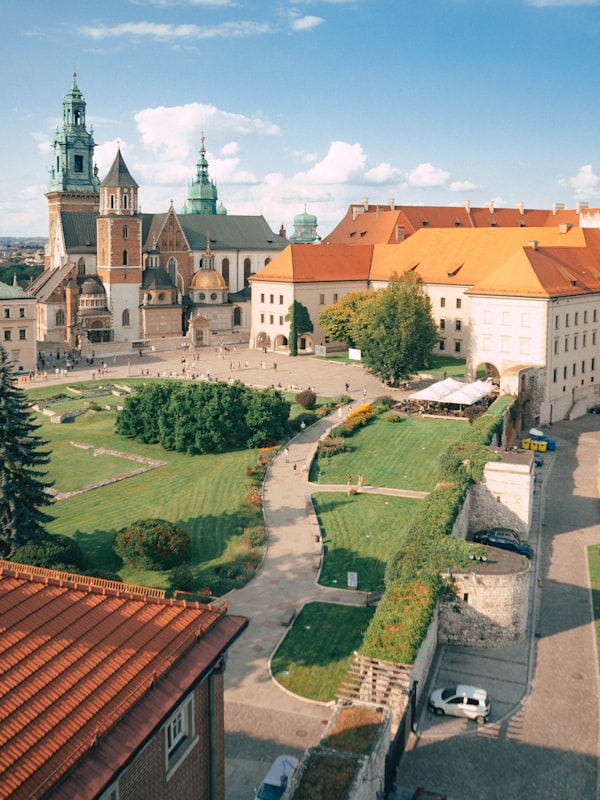
Country dossier · Living
🇵🇱 Poland
Living guide: real net salary, cost of living, taxes, health and quality of life, with source for every figure.
- Region
- Central Europe
- Capital
- Warsaw
- Languages
- Polish
- Currency
- Polish Zloty (PLN)
- Population
- ≈ 36.5 million
- Time zone
- UTC+1 (CET)
- Blocs
- EU + Schengen (outside the eurozone)
Poland is one of Europe's most underrated economic successes. Since the 1990s, the country has grown consistently, becoming a regional hub for technology, manufacturing, and shared services that attracts multinational companies. Warsaw and Krakow function as magnets for tech professionals across Europe, offering internationally competitive salaries and cost of living significantly lower than Western Europe. For those who land jobs in this sector, Poland offers a rare balance: career opportunities in vibrant cities without the prices of Zurich or Berlin.
Poland at a glance
Languages and regions
Polish is the official language and predominant in everyday life. Over the past two decades, English has gained ground rapidly among young professionals in urban centers, especially in the technology sector, where many teams work entirely in English even within Polish companies. Warsaw concentrates financial services, media, and government, while Krakow is the epicenter of the technology and startup scene. Other cities such as Wrocław, Poznań, and Gdańsk have their own regional economies, but these two main poles shape the job market for foreigners.
Climate and geography
Poland has typical continental climate, with harsh winters and pleasant summers, ranging from around minus 5 degrees Celsius to 20 degrees Celsius depending on the season. Geographically, it borders Germany to the west, Ukraine and Belarus to the east, and lies between the Baltic Sea to the north and the Carpathians to the south. Development is concentrated in large cities like Warsaw and Krakow, plus northern port cities, leaving much of the rural area with much lower population density.
What the country does
The Polish economy combines manufacturing, agriculture, and a growing presence of technology services and outsourcing. The country is a major supplier of electronic components, agricultural products, and processed foods to Europe. But the engine of growth over the past fifteen years has been the international shared services centers: major corporations in technology, finance, and consulting opened operations in Warsaw and Krakow, attracted by skilled labor, lower costs, and favorable time zones. This industry grew rapidly and remains active.
Education
The Polish education system is public, free, and offers basic and higher education at no direct cost to residents. Universities are historically respected throughout Central Europe, and the quality of education in science and technology fields is particularly strong, which helps fuel the technology sector workforce. However, teacher and researcher salaries remain below those practiced in wealthier EU countries, which causes some talent drain to the west.
Culture and integration
Poland has a strong cultural identity, deeply rooted in a history of resistance and Catholic tradition. Although traditionally more closed in some aspects, major cities, especially Warsaw and Krakow, are cosmopolitan and welcoming to foreign professionals. Social integration takes time, and learning Polish helps greatly: much of social life happens in Polish even in international circles. Openness varies between professional circles, which tend to be more international, especially in technology, and more traditional local communities.
Fun facts
- Poland has grown economically at an average rate close to 4% per year since 1990, one of the highest rates among European countries in the post-socialist period.
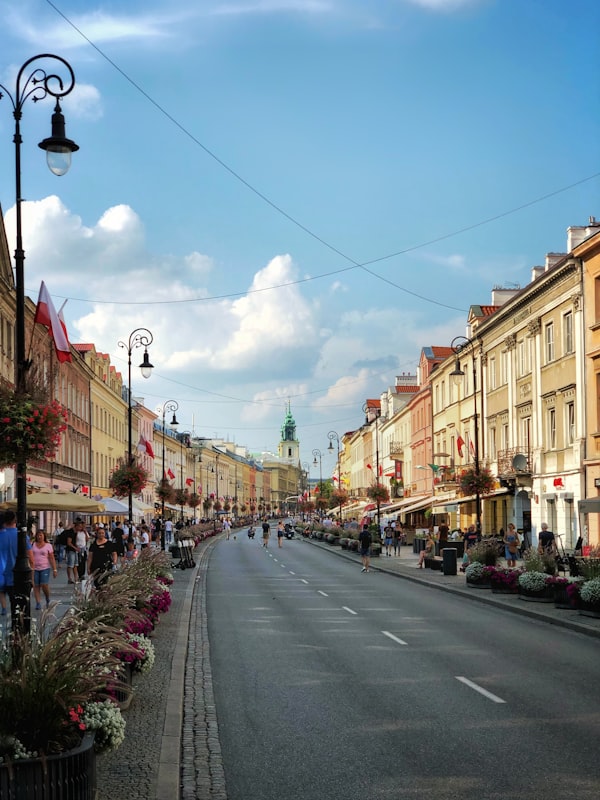
- Warsaw was largely destroyed during World War II and rebuilt almost entirely; its Old Town is today a UNESCO World Heritage site.
- Krakow escaped massive destruction in World War II and has preserved medieval and Renaissance architecture nearly intact.
- Krakow established itself as a technology hub relevant enough to rival Berlin and Prague as a startup destination in Central Europe.
- Poland entered the Schengen area in 2007, which facilitates mobility within Europe, but maintains its own currency, the zloty, without adopting the euro.
Net salary, summarized
Source: national medians (OECD/Eurostat) + calculator formulaJust to show the ballpark of what you earn. Tax and cost of living take a chunk. Three sample professions, junior to senior. The full calculation, for your role, level, family, and currency, is the Living calculator.
| Profession | Junior | Mid | Senior |
|---|---|---|---|
| Software developer | US$ 2.296 | US$ 2.834 | US$ 4.271 |
| Financial analyst | US$ 1.763 | US$ 2.178 | US$ 3.292 |
| Nurse | US$ 1.583 | US$ 1.957 | US$ 2.960 |
Estimated net monthly, after progressive tax, in dollars (site base). Calculate for your role, level, and currency →
Cost of living, what you actually keep
Source: basket for couple + 2 children (Numbeo) + local health and school rules| Housing (rent)≈ 34% of cost | US$ 1.020 |
| Food | US$ 713 |
| Transport | US$ 297 |
| Utilities and internet | US$ 257 |
| Recreation and other | US$ 713 |
| Healthcare | US$ 30 |
| Children's schoolpublic viable for non-residents | included |
| Total cost per month | US$ 3.030 |
Spending pattern (housing + living only)
Local tax, health, and school rules change how much is left at month end.
Family and immigration
Visa and spouse work rules; local values estimatedQuality of life
Indices: GPI, PISA, WHO, WHR, Ookla, EF EPI, CPI (0 to 10)Life
Daily
Institutions
Verdict
Worth it for technology, consulting, or finance professionals who land mid-level or senior positions: salaries are internationally competitive and cost of living in Warsaw and Krakow allows real savings. Worth less for other sectors and less specialized careers, where local salary levels are much lower and the cost advantage shrinks. Cultural integration requires patience and willingness to learn Polish, since Poland is less cosmopolitan than some western neighbors. Real point of attention: outside the technology ecosystem and major international corporations, salaries are still well below Western Europe, which significantly changes the equation for those outside this sector.
Complete guide: Poland
This page is the sample. The guide is the complete map.
Everything you saw here, deeper and actionable: from first visa step to moving day, sourced for every fact.
- Visa and sponsorship, step by step
- Cities and regions compared
- Health insurance: how to choose
- Retirement, taxes, and local rules
- Useful links: housing, bank, jobs
Imagine yourself here.
Photos: Lindsey Bahia, Victor Malyushev, Maksym Harbar · Unsplash
Frequently asked questions
Do you need to speak Polish to work in Poland?
It's not mandatory in the technology sector and large international corporations, where English is usually the working language. But learning Polish is strongly recommended for everyday life, personal relationships, and integration with the local community. Outside urban centers and more specialized sectors, Polish is necessary. Many foreigners who stay beyond a few months take basic Polish courses.
What is the work visa process for non-EU citizens?
Non-EU citizens need a work visa sponsored by the employer. The process is relatively straightforward when the company is willing to help, but requires complete documentation and takes several weeks. There are visa categories with varying timeframes, and some allow renewal.
Can my spouse work if I have a work visa?
Yes. Spouses of EU citizens have automatic right to residence and work in Poland. Spouses of non-EU citizens can also work, but depend on their own work visa or resident status, something negotiated with Polish immigration depending on the situation. Many couples manage to both work, but this requires careful documentation planning.
What is the cost of living difference between Warsaw and smaller cities?
Warsaw is significantly more expensive than the rest of the country, especially in rent: a one-bedroom apartment in the center costs on average double that in Krakow or Wrocław. Food, transport, and entertainment are also more expensive in the capital. Outside the two major cities, cost of living drops further, allowing greater savings with similar salaries. This makes Warsaw attractive for those with international salaries, but less advantageous for those hired locally.
Ready to go beyond the summary?
View the complete guide: Poland