
Country dossier · Living
🇨🇿 Czechia
Living guide: real net salary, cost of living, taxes, health and quality of life, with source for every figure.
- Region
- Central Europe
- Capital
- Prague
- Languages
- Czech
- Currency
- Czech koruna (CZK)
- Population
- ≈ 10.9 million
- Time zone
- UTC+1 (CET)
- Blocs
- EU + Schengen (outside the eurozone)
The Czech Republic is where a strong industrial economy of Central Europe meets a cost of living well below Germany and Austria, its neighbors. Prague attracts tourists, but residential neighborhoods outside the historic center still breathe space and more accessible prices. Those who move there encounter an important particularity: their own currency, the Czech koruna, not the euro, which changes the equation for those who receive euros or dollars and spend in local currency.
Czechia at a glance
Languages and regions
Czech is the language of daily life and public life. English grows among young people and technology professionals, but remains concentrated in Prague and in specific sectors: outside this, the local language is practically mandatory in daily life. The population is ethnically quite homogeneous, which makes learning the language even more relevant for genuine integration outside of work. Prague has neighborhoods with strong expatriate presence, but living your entire life in English in the capital still requires income well above average.
Climate and geography
The climate is continental: cold winters with frequent snow, mild and pleasant summers. The Czech Republic is in Central Europe, surrounded by Germany, Poland, Slovakia and Austria, a position that historically placed it at a kind of crossroads. Prague, in the north of the country, is the capital and largest city. The rest of the territory is more industrial, especially the Moravian region in the east, with many small and well-preserved towns.
What the country lives on
The automotive industry is the backbone of the economy: Škoda is the best-known brand, but there is a broad network of parts suppliers and engineering distributed throughout the country. Technology and startups are growing, especially in Prague, although the market remains small compared to Berlin or Vienna. Tourism is relevant in Prague, less so in other cities. The economic base is solid, with no high structural unemployment, which makes the labor market accessible for those with the right qualifications.
Education
The public education system is free and of solid quality. Public universities charge fees only to foreigners, and even then symbolic amounts when the course is in Czech. Foreign professionals with higher education usually have ease in diploma recognition within the EU. The supply of master's degrees in English at major universities is growing, which helps attract international talent.
Culture and integration
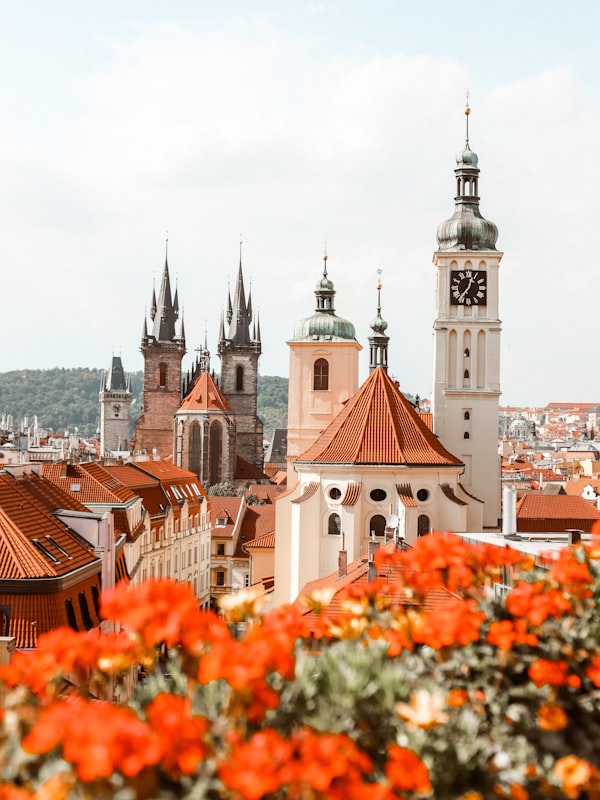
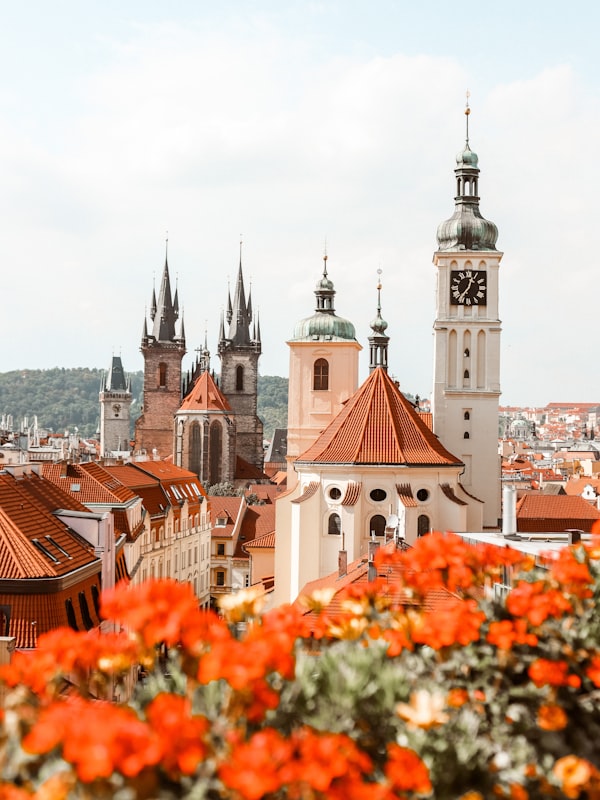
Czech culture is historic and deep: Prague is one of the most beautiful cities in Europe, with historic squares where social life happens around beer tables. The country is among the largest beer consumers per capita in the world. There is also a strong tradition of music, literature and design. Czechs, historically, tend to be more reserved with foreigners than peoples of southern Europe, but are hospitable when genuine connection exists. Real integration requires time and your own initiative to learn the language.
Fun facts
- The historic region of Bohemia, where Prague is located, is the birthplace of crystal glass and remains one of Europe's largest producers of handcrafted glass.
- Prague preserved much of its medieval and Renaissance buildings even after World War II.
- The country has maintained the Czech koruna since independence in 1993, and chose not to join the eurozone, preserving more control over its own monetary policy.
- The structural unemployment rate is historically among the lowest in the EU, with labor shortages in technical sectors.
- Czech beer has geographic protection: only beer from the Plzeň region can be called Pilsner.
Net salary, summarized
Source: national medians (OECD/Eurostat) + calculator formulaJust to show the ballpark of what you earn. Tax and cost of living take a chunk. Three sample professions, junior to senior. The full calculation, for your role, level, family, and currency, is the Living calculator.
| Profession | Junior | Mid | Senior |
|---|---|---|---|
| Software developer | US$ 2.158 | US$ 2.649 | US$ 3.945 |
| Financial analyst | US$ 1.667 | US$ 2.050 | US$ 3.065 |
| Nurse | US$ 1.500 | US$ 1.846 | US$ 2.764 |
Estimated net monthly, after progressive tax, in dollars (site base). Calculate for your role, level, and currency →
Cost of living, what you actually keep
Source: basket for couple + 2 children (Numbeo) + local health and school rules| Housing (rent)≈ 35% of cost | US$ 1.015 |
| Food | US$ 679 |
| Transport | US$ 283 |
| Utilities and internet | US$ 245 |
| Recreation and other | US$ 679 |
| Healthcare | US$ 20 |
| Children's schoolpublic viable for non-residents | included |
| Total cost per month | US$ 2.920 |
Spending pattern (housing + living only)
Local tax, health, and school rules change how much is left at month end.
Family and immigration
Visa and spouse work rules; local values estimatedQuality of life
Indices: GPI, PISA, WHO, WHR, Ookla, EF EPI, CPI (0 to 10)Life
Daily
Institutions
Verdict
It's worth it for those who work in technology, engineering or qualified sectors and get contracts with salary above the Czech average, where real savings are significant. Worth less for those who move without a concrete job offer or expect to work in English outside Prague: the labor market is concentrated, and salaries in more generic sectors still fall below Western Europe. Real point of attention: nominal salary is indeed lower than in Germany or Austria, but proportional cost of living is so much lower that the equation favors those who get stable technical employment. The real barrier is linguistic, not financial: without Czech, or without access to international companies in Prague, integration and access to opportunities become much more restricted.
Complete guide: Czechia
This page is the sample. The guide is the complete map.
Everything you saw here, deeper and actionable: from first visa step to moving day, sourced for every fact.
- Visa and sponsorship, step by step
- Cities and regions compared
- Health insurance: how to choose
- Retirement, taxes, and local rules
- Useful links: housing, bank, jobs
Imagine yourself here.
Photos: Kelsey Curtis, Kelsey Curtis, Ilia Bronskiy · Unsplash
Frequently asked questions
Do I need to speak Czech to work in the Czech Republic?
It depends on the sector. In technology, startups and multinationals in Prague, English usually suffices at work. Outside that, or in local companies, Czech is expected. For daily life, even in Prague, the local language helps a lot: renting housing, interacting with neighbors, understanding contracts. Learning it takes time if you have no prior experience with Slavic languages.
What is the work visa process for those who are not EU citizens?
Those who are not EU citizens need a confirmed job offer to apply for a work visa. The process goes through the Czech embassy or consulate in the candidate's country of origin, and contracts need to be in compliance with local legislation. Foreign students can work during their studies with hour restrictions. The visa is tied to the employer, so changing jobs requires renewal.
Can my spouse work if I get a visa?
Spouses of visa holders who are EU citizens have automatic work rights. If the spouse is from outside the EU, they will need their own work visa with a corresponding job offer. This can be arranged in parallel, but they are two separate processes. Couples where both work need two confirmed job offers.
Why didn't the Czech Republic adopt the euro and what does that change for those who live there?
The decision to keep the Czech koruna is political, tied to autonomy over its own monetary policy and protection against external economic shocks. For those who live there and receive salary in koruna, it doesn't change much in daily life, since it's the local currency. For those who receive remittances in euros or dollars, or work for a multinational that pays in euros, currency variation matters: income in strong currency usually has even greater purchasing power in Czech koruna than it would have within the eurozone.
Ready to go beyond the summary?
View the complete guide: Czechia