
Country dossier · Living
🇷🇴 Romania
Living guide: real net salary, cost of living, taxes, health and quality of life, with source for every figure.
- Region
- Eastern Europe
- Capital
- Bucharest
- Languages
- Romanian
- Currency
- Romanian Leu (RON)
- Population
- ≈ 19 million
- Time zone
- UTC+2 (EET)
- Blocs
- EU + Schengen (outside eurozone)
Romania is one of the most affordable countries in the European Union to live in, especially outside Bucharest. Local salaries rank among the lowest on the European continent, but cost of living adjusts proportionally to this economic reality. For those working remotely in strong currency or earning an international salary, purchasing power can be substantial. The economy is undergoing modernization, with Bucharest emerging as a technology and services hub, while the country continues to face infrastructure challenges and rural exodus to cities and abroad.
Romania at a glance
Languages and regions
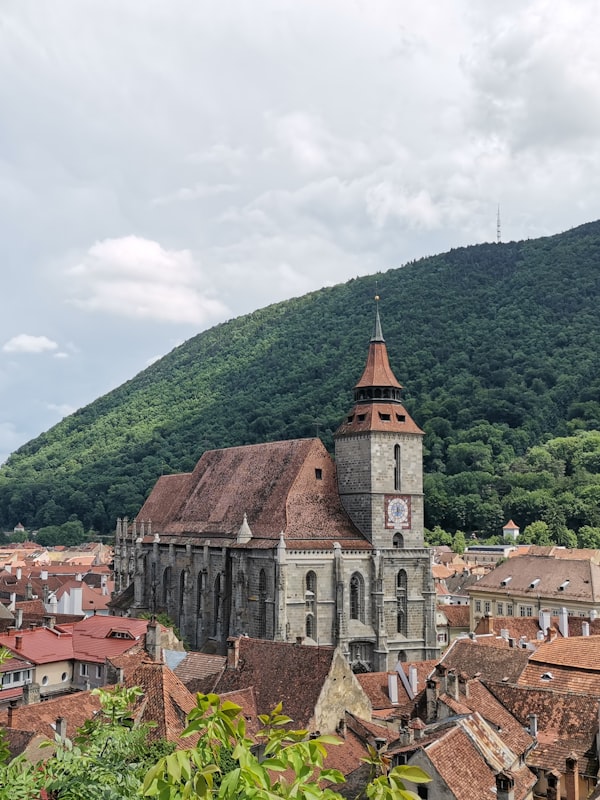
Romanian is a Neo-Latin language, similar to Italian and French in vocabulary. Most younger Romanians speak English, but in older generations knowledge of the language is less common. The country divides into historical regions with distinct characteristics: Moldavia to the north with strong agricultural tradition, Muntenia (Bucharest region) as political-economic center, Transylvania in the center with Austro-Hungarian heritage and diversified economy, and Banat and Oltenia to the west and southwest. Each region preserves its own cultural aspects, from architecture to local dialects. Bucharest concentrates most formal employment and foreign jobs, while other cities like Cluj-Napoca offer high quality of life with lower cost.
Climate and geography
Romania has a continental climate, with harsh winters, especially in mountainous regions, and hot, dry summers. In Bucharest, winters bring temperatures near freezing, while summers are pleasant. Geography is dominated by the Carpathians in the center, mountains that occupy approximately one-third of the territory and create landscapes of great beauty. The country has access to the Black Sea to the southeast and is crossed by the Danube River, which serves as a border with Serbia and Bulgaria. Outside the Bucharest plain, much of the country is mountainous or hilly, which offers preserved natural environments but also implies less developed transport infrastructure outside the main axes.
What the country lives on
The Romanian economy combines manufacturing, agriculture, and a growing services sector. Historically agricultural, Romania maintains an important grain cultivation and livestock raising sector, although rural exodus has been significant for decades. Manufacturing industry, especially clothing, automotive components, and textiles, accounts for a considerable share of exports, with foreign investment concentrated in these segments. In recent years, Bucharest has consolidated itself as a technology and services outsourcing hub for European companies, with robust growth in startups and multinational IT companies. This dynamic sector contrasts with the more traditional rural economy. Small-scale and subsistence agriculture still represents a relevant share in rural communities, but formal employment opportunities are concentrated in cities.
Education
The Romanian educational system is compulsory until age 18 and comprises primary school, gymnasium, and high school, or secondary education. Access to public universities is competitive; major institutions like the University of Bucharest and the Technical University of Cluj-Napoca offer education in Romanian and, to a lesser extent, programs in English. Quality varies considerably between top-tier universities and other institutions; investment in research and infrastructure still lags behind Western European countries. International schools and higher education programs in English exist but are limited and tend to be expensive. Language courses and vocational education are accessible in Bucharest and other major cities, offering alternatives for those preferring not to integrate into the public system.
Culture and integration
Romanians have a strong sense of cultural identity, with traditional festivities celebrating Orthodox heritage and local folklore. Social life in Bucharest is cosmopolitan and youthful, with cafes, bars, and cultural spaces concentrated in neighborhoods like Lipscani; expat communities are notably large due to the technology sector and multinational companies. Outside the capital, life is more traditional and oriented toward local community; integration depends greatly on learning Romanian and demonstrating genuine interest in local customs. Romania has a history of significant emigration, which generated Romanian communities in several European countries and beyond, but also means many Romanians understand the experience of change and new environments. Discrimination based on nationality is not structural in urban regions, but expectation of cultural assimilation and language is real outside international circles. The role of Orthodox religion is culturally important, even among non-practitioners.
Fun facts
- The Danube is the second longest river in Europe, and Romania possesses one of the last great wild river delta areas on the continent, protected as a world heritage site.
- Transylvania was historically part of the Austro-Hungarian Empire and presents architecture, culture, and mentality distinct from the rest of the country, leading some Romanians to identify as Transylvanians as a regional identity.
- Romania has a significant Roma population, one of the largest in Europe in absolute numbers, although integration and discrimination remain complex social issues.
- Bucharest is often called the Paris of the East for its belle époque architecture and 19th-century urban planning, although much was destroyed and rebuilt during the communist era.
- Romanian public higher education is one of the most accessible options in the European Union for European citizens, with tuition fees very low compared to many other countries on the continent.
Net salary, summarized
Source: national medians (OECD/Eurostat) + calculator formulaJust to show the ballpark of what you earn. Tax and cost of living take a chunk. Three sample professions, junior to senior. The full calculation, for your role, level, family, and currency, is the Living calculator.
| Profession | Junior | Mid | Senior |
|---|---|---|---|
| Software developer | US$ 1.683 | US$ 2.068 | US$ 3.085 |
| Financial analyst | US$ 1.299 | US$ 1.599 | US$ 2.394 |
| Nurse | US$ 1.168 | US$ 1.439 | US$ 2.158 |
Estimated net monthly, after progressive tax, in dollars (site base). Calculate for your role, level, and currency →
Cost of living, what you actually keep
Source: basket for couple + 2 children (Numbeo) + local health and school rules| Housing (rent)≈ 32% of cost | US$ 832 |
| Food | US$ 636 |
| Transport | US$ 265 |
| Utilities and internet | US$ 230 |
| Recreation and other | US$ 636 |
| Healthcare | US$ 20 |
| Children's schoolpublic viable for non-residents | included |
| Total cost per month | US$ 2.620 |
Spending pattern (housing + living only)
Local tax, health, and school rules change how much is left at month end.

Family and immigration
Visa and spouse work rules; local values estimatedQuality of life
Indices: GPI, PISA, WHO, WHR, Ookla, EF EPI, CPI (0 to 10)Life
Daily
Institutions
Verdict
Romania offers low cost of living, high purchasing power for those earning in strong currency, and real economic growth in sectors like technology. The expat community is vibrant in Bucharest and Cluj-Napoca, with well-established networks. On the other hand, infrastructure outside major cities is deficient, the healthcare system requires patience and local contacts to navigate well, and the quality of public education varies considerably. Learning Romanian significantly helps social integration, especially outside international circles. It is an ideal country for those seeking low cost of living combined with dynamic urban life and professional opportunities in technology, but requires adaptability and willingness to deal with administrative and infrastructure challenges.
Complete guide: Romania
This page is the sample. The guide is the complete map.
Everything you saw here, deeper and actionable: from first visa step to moving day, sourced for every fact.
- Visa and sponsorship, step by step
- Cities and regions compared
- Health insurance: how to choose
- Retirement, taxes, and local rules
- Useful links: housing, bank, jobs
Imagine yourself here.
Photos: Marian Mirea, Gloria Cretu, Elena Alexandra Vatavu · Unsplash
Frequently asked questions
What is the work visa process for those who are not EU citizens?
Those who are not EU citizens need a work visa, which is obtained through a Romanian employer who must prove that no European candidate is available for the position. The process is bureaucratic and can take weeks or months. Once the visa is approved, it is possible to reside and work legally. Employment portals like BestJobs and eJobs concentrate formal opportunities, especially in Bucharest.
Can the spouse or partner also work?
If the spouse or partner is an EU or EEA citizen, they can work freely in Romania by registering as a resident. If not European, they also need their own work visa, independent of the spouse's visa. The law does not offer a spousal visa that authorizes automatic work; both need separate work documentation if they wish to work formally.
What is the level of bureaucracy for opening a bank account and managing finances?
Opening a bank account is relatively straightforward if you reside legally; institutions like ING and BRD have a robust presence with online services in English. International transfers exist but can have high fees; many expats use services like Wise to convert and send currency. Tax filing is mandatory if working in Romania; the country has a competitive income tax rate among the lowest in the European Union.
What is the quality of the healthcare system for foreigners?
Public health is subsidized by the state but faces challenges with resources, waiting lines, and infrastructure. If you contribute to the social security system through formal work, you have free or reduced access. Many expats supplement with private insurance or use private clinics in Bucharest, which offer European quality at significantly lower cost. Medications and procedures are generally cheaper than in Western Europe, even in private establishments.
Ready to go beyond the summary?
View the complete guide: Romania