
Country dossier · Living
🇹🇷 Türkiye
Living guide: real net salary, cost of living, taxes, health and quality of life, with source for every figure.
- Region
- Eurasia (European and Asian parts)
- Capital
- Ankara
- Languages
- Turkish
- Currency
- Turkish lira (TRY)
- Population
- ≈ 86 million
- Time zone
- UTC+3
- Blocs
- EU candidate (not a member); customs union with the EU; NATO member
Turkey is a fascinating and complex country, with a cost of living significantly lower than most European countries, but with economic challenges of its own that deserve attention. Those working remotely in strong foreign currency find real purchasing power, especially outside major cities. The Turkish economy is diverse and resilient, but faces currency volatility that demands serious prudence from those planning to move. The country offers a unique bridge between Europe and Asia, a millennia-old history visible on every corner, and an accessible quality of life that attracts a growing number of foreigners.
Türkiye at a glance
Languages and regions
Turkish is the official language and widely spoken throughout the country. English is understood in major cities and tourist areas, but in smaller cities and rural areas Turkish is essential for daily life. Turkey is geographically divided into several distinct regions, each with its own characteristics: the Aegean and Mediterranean coasts, the Anatolian interior, the Marmara region (where Istanbul is located), the Black Sea region, and the southeast. Istanbul, while not the capital, is the economic and cultural center, with around 15 million people in the metropolitan area. Ankara, the political capital, is more orderly and administrative. Izmir, on the Aegean coast, is a major hub for foreigners seeking quality of life on the coast. Other cities like Bursa, Gaziantep and Antalya have growing expatriate communities.
Climate and geography
Turkey has very diverse climate depending on region. The Mediterranean and Aegean coasts enjoy hot, dry summers with mild winters, ideal for those who love beaches and mild weather most of the year. The Anatolian interior has harsh winters with snow in Ankara and Istanbul for months, and very hot summers requiring air conditioning. The Black Sea region is more humid and verdant than the rest of the country. Istanbul, being transcontinental (half in Europe, half in Asia), has a temperate climate with four well-marked seasons. Geography is dramatically varied: from snow-capped mountains to fertile valleys, spectacular beaches and unique rock formations.
What the country lives from
The Turkish economy is diverse and does not depend on a single sector, which gives it relative resilience. Tourism is an important pillar, with millions of annual visitors attracted by ancient ruins, beaches, history and strategic location. Manufacturing industry (textiles, automotive, electronics) employs hundreds of thousands of people and is an important source of foreign exchange. Agriculture remains economically relevant, especially in rural regions and for export. The services sector grows with large and modernized cities. Strategic geographic position in trade between Europe, Asia and the Middle East is a permanent economic asset. Istanbul functions as an important regional financial hub. The Turkish economy has characteristics typical of emerging markets: growth potential, but also volatility.
Education
Education in Turkey is public and free up to high school, although quality varies considerably between well-funded urban schools and schools in rural areas. Public universities are financially accessible for those who can pass competitive entrance exams. There are also private institutions of varying quality. International universities in major cities, such as branches of American universities in Istanbul, offer globally standard education. Higher education in Turkish is the norm, although some universities offer programs in English. Foreigners who move with children need to verify the equivalence of previous diplomas for local enrollment.
Culture and integration
Turks are generally welcoming to foreigners, especially in urban areas where there is greater international exposure. There are well-established and active expatriate communities in Istanbul, Izmir and Ankara. Turkish culture has deep Islamic roots, but Turkey is a secular country with vibrant nightlife, bars, restaurants and entertainment. Integration is possible but requires real effort: learning Turkish opens many social doors and facilitates practical navigation of daily life. The cuisine is excellent and very affordable in price. Religious holidays like Eid are official holidays, respecting the Muslim majority. Foreigners with an open attitude and willingness to learn easily find local friendships. Bureaucracy can be slow and sometimes frustrating, but it is navigable with patience.
Fun facts
- Istanbul is the only major metropolis in the world that extends across two continents (Europe and Asia), separated by the Bosphorus Strait, which is one of the most important and busiest maritime routes in the world.
- Turkey has had an association relationship with the European Union since 1963 and has been an official candidate for membership since 1999, with negotiations opened in 2005 and stalled for years, which makes its international status peculiar: it has a customs agreement with the EU but is not a member of the organization.
- The Topkapi Palace in Istanbul, residence of Ottoman sultans for nearly 400 years, is now a public museum and one of the most visited historical sites in the world.
- Cappadocia, in the interior of Anatolia, is world-famous for its unique rock formations (fairy chimneys) and ancient underground cities, now a tourist attraction and chosen location for long-term residents.
- Turkish cuisine is recognized as Intangible Cultural Heritage by UNESCO and is considered one of the healthiest in the world, based on vegetables, legumes, fresh fish and olive oil.
Net salary, summarized
Source: national medians (OECD/Eurostat) + calculator formulaJust to show the ballpark of what you earn. Tax and cost of living take a chunk. Three sample professions, junior to senior. The full calculation, for your role, level, family, and currency, is the Living calculator.
| Profession | Junior | Mid | Senior |
|---|---|---|---|
| Software developer | US$ 902 | US$ 1.110 | US$ 1.660 |
| Financial analyst | US$ 695 | US$ 857 | US$ 1.286 |
| Nurse | US$ 625 | US$ 771 | US$ 1.158 |
Estimated net monthly, after progressive tax, in dollars (site base). Calculate for your role, level, and currency →
Cost of living, what you actually keep
Source: basket for couple + 2 children (Numbeo) + local health and school rules| Housing (rent)≈ 32% of cost | US$ 768 |
| Food | US$ 588 |
| Transport | US$ 245 |
| Utilities and internet | US$ 212 |
| Recreation and other | US$ 588 |
| Healthcare | US$ 20 |
| Children's schoolpublic viable for non-residents | included |
| Total cost per month | US$ 2.420 |
Spending pattern (housing + living only)
Local tax, health, and school rules change how much is left at month end.

Family and immigration
Visa and spouse work rules; local values estimatedQuality of life
Indices: GPI, PISA, WHO, WHR, Ookla, EF EPI, CPI (0 to 10)Life
Daily
Institutions
Verdict
Turkey is an attractive country for foreigners seeking low cost of living, profound cultural diversity and a vibrant lifestyle between the Mediterranean and the Oriental. The pros include significantly lower cost of living than Western Europe, extraordinary history and natural beauty, well-developed expatriate communities in major cities, and quality of life possible on a modest budget. The cons are real and deserve respect: economic and currency instability require financial prudence and careful planning, government bureaucracy can be frustratingly slow and complex, the quality of public services (health, education, infrastructure) varies greatly depending on the region, and those receiving income in Turkish lira face concrete purchasing power challenges. Turkey works best for those with income in strong foreign currency, willing to navigate cultural and administrative complexity with genuine patience, and seeking an experience different from conventional Europe.
Complete guide: Türkiye
This page is the sample. The guide is the complete map.
Everything you saw here, deeper and actionable: from first visa step to moving day, sourced for every fact.
- Visa and sponsorship, step by step
- Cities and regions compared
- Health insurance: how to choose
- Retirement, taxes, and local rules
- Useful links: housing, bank, jobs
Imagine yourself here.
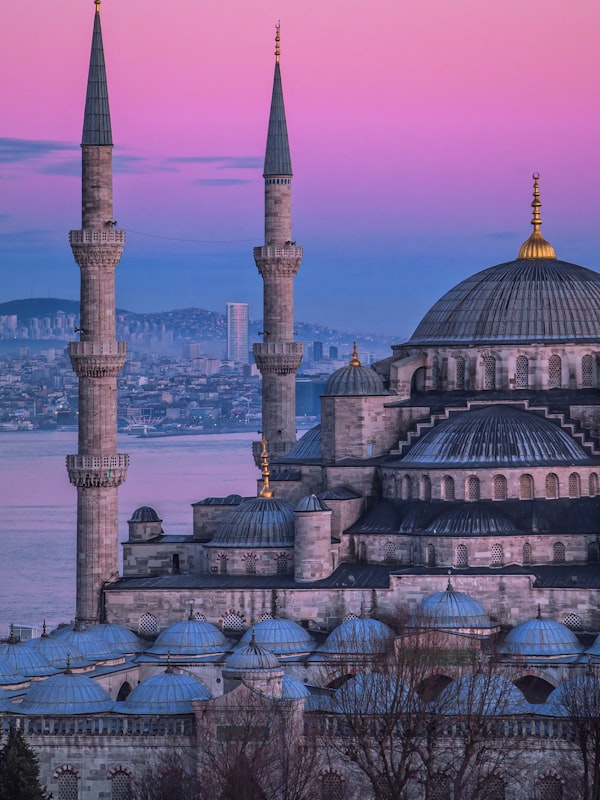
Photos: Fatih Yürür, Meriç Dağlı · Unsplash
Frequently asked questions
How do work visas and long-term residency work in Turkey?
Turkey offers several types of residency with different durations. The tourist visa (30 days) is the simplest entry and can be renewed in some cases. For longer residency, there are options such as the short-term residence visa (iKY), renewable annually, and the formal work visa (requires contract with Turkish employer and government approval). The process is less automated than in EU European countries, and specific requirements vary depending on visa type. It is highly recommended to consult the embassy or consulate of your country of origin or a lawyer specializing in Turkish immigration to understand current options, as rules change periodically. Many foreigners use the iKY as an initial entry while establishing life in the country and then explore other options.
Can my spouse or partner work if I move to Turkey?
Yes, spouses or resident partners can seek work in Turkey, but will need to obtain their own work visa (work permit) with a Turkish employer and corresponding residency registration. Unmarried partners may face additional restrictions, so it is important to verify legal recognition of civil status according to country of origin. Obtaining a work visa depends on the Turkish employer being willing to sponsor and the Turkish government approving the application. Many expatriate couples successfully work locally, but the process is not automatic and is notably bureaucratic, varying according to individual circumstances.
What is the cost of living compared to other countries?
Turkey is significantly cheaper than wealthy European countries like Germany, United Kingdom or Scandinavia, and even more affordable than Portugal or Greece in many items. Rent, food, transportation and services cost a fraction of what they cost in equivalent European cities. Those working remotely in EUR, USD or GBP find much higher purchasing power compared to the same budget in Western Europe. Costs vary considerably by city: Istanbul and Ankara are more expensive; smaller cities and the Aegean coast are significantly more affordable. The major concern is that the Turkish lira has a recent history of significant volatility and devaluation against foreign currencies, so those receiving income in Turkish lira or accumulating savings in Turkish lira face real risk of erosion of purchasing power.
What type of work is most viable for foreigners in Turkey?
Tourism, language teaching (especially English), technology in Istanbul startups, and hiring by international companies based in Turkey are sectors that regularly hire foreigners. Remote work for foreign companies is very common among the expatriate community and is legal if done under appropriate residency. Local work in Turkish companies is possible but more competitive and generally requires advanced Turkish fluency. Entrepreneurship and freelancing are also viable if you can navigate Turkish tax bureaucracy, which is complex. Most expatriates working locally are concentrated in Istanbul, where there is greater demand for international profiles.
Ready to go beyond the summary?
View the complete guide: Türkiye