
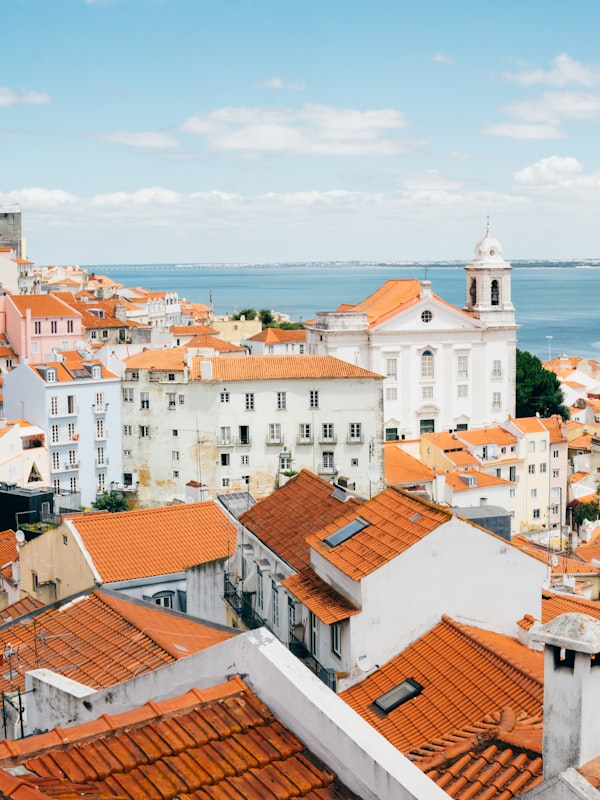
Country dossier · Living
🇵🇹 Portugal
Living guide: real net salary, cost of living, taxes, health and quality of life, with source for every figure.
- Region
- Southwestern Europe (Iberian Peninsula)
- Capital
- Lisbon
- Languages
- Portuguese
- Currency
- Euro (EUR)
- Population
- ≈ 11.4 million
- Time zone
- UTC+0 (WET)
- Blocs
- EU + Schengen
What this rate includes
Average EFFECTIVE rate for married with kids — blends progressive brackets, contributions and typical deductions; not the marginal rate. It is progressivity-adjusted: incomes below the local anchor effectively pay less, director-level incomes pay more (up to +20%). Where public healthcare is contribution-funded (Germany, Nordics, Japan), it is already included.
Calibration: OECD Taxing Wages · PwC Tax Summaries
Portugal is accessible among Europeans: cost of living is lower than the rest of the West, climate is pleasant, and quality of life is good if you don't depend entirely on local salaries. Portuguese salaries are the lowest in Western EU, which means that working remotely for company outside is a clear advantage. Worth it a lot for digital nomads, less for those working locally.
Portugal at a glance
Languages and regions
Portuguese is the official language, and English is known among young people and professionals, though with lower penetration than in Nordic countries. In Lisbon and the tech sector, English works fine for the job, but outside the capital Portuguese is essential. The country is small, 92,000 km2, and the population is concentrated in the Lisbon metropolitan area and Porto, while the Algarve, in the south, is a tourist destination. Each region has its own identity and tradition.
Climate and geography
The climate ranges from temperate to subtropical: Lisbon and the south are hot and dry in summer, from June to September, while the north is more temperate, and winters are mild everywhere. The landscape varies between the spectacular Atlantic coast in the west, the beaches of the Algarve, soft mountains in the center and north, and rivers like the Douro and the Tagus. There are no high mountains, and proximity to water is a hallmark of the country.
What the country lives on
The economy is diversified, strong in tourism, beaches, wine and heritage, cork, of which Portugal is the world's largest producer, textiles, renewable energy, with wind and solar parks, and technology, with a growing number of startups. Local salaries are low compared to the rest of Western Europe, but the cost of living is low too, which results in a certain balance, with tourism and agricultural exports as pillars of the economy.
Education
Public education is accessible and free, and universities are cheap for EU citizens. Quality varies, but there are good institutions, like IST in Lisbon and FEUP in Porto. Vocational education is an alternative track, less structured than in Germany, and the system as a whole has been undergoing reforms to improve quality.
Culture and integration
Portuguese culture values community, personal relationships, leisure and quality of life, and work is less hierarchical than in some other European countries. Social life matters, between cafes, restaurants and beaches, but bureaucracy is notoriously slow and complex, which frustrates those coming from more efficient contexts. Integration for foreigners is friendly in Lisbon, and more challenging outside the capital.
Fun facts
- Portugal is the world's largest cork producer, with centuries-old tradition.
- Pastéis de nata, or Belém pastries, are an icon of Portuguese pastry-making, and the original recipe is a closely guarded secret.
- Fado is traditional Portuguese music, melancholic and deep, recognized by UNESCO as cultural heritage.
- The word 'casa' carries significant cultural weight in Portugal, tied to family and belonging.
- Portuguese bureaucracy is notorious for slowness, but there's a real push toward digital modernization, with advances in e-government.
Net salary, summarized
Source: national medians (OECD/Eurostat) + calculator formulaJust to show the ballpark of what you earn. Tax and cost of living take a chunk. Three sample professions, junior to senior. The full calculation, for your role, level, family, and currency, is the Living calculator.
Net pay by profession and level
| Profession | Junior | Mid | Senior |
|---|---|---|---|
| Software developer | US$ 1.877 | US$ 2.295 | US$ 3.385 |
| Financial analyst | US$ 1.456 | US$ 1.784 | US$ 2.646 |
| Nurse | US$ 1.312 | US$ 1.610 | US$ 2.392 |
Estimated net monthly, after progressive tax, in dollars (site base). Calculate for your role, level, and currency →
Gross and net by profession
Mid level. The dark part is tax and contributions.
Position among the 50 countries
Dimension by dimension
The fuller the bar, the better the position. The tick marks the median of the 50. Finance is left out of this ruler while the cost base is under review.
Profile against the median
this countrymedian of the 50
Where it wins
Climate1st of 50Immigration1st of 50Safety8th of 50Where it loses
Business27th of 50Corruption26th of 50Health23rd of 50Cost of living, what you actually keep
Source: basket for couple + 2 children (Numbeo) + local health and school rules| Housing (rent)≈ 38% of cost | US$ 1.292 |
| Food | US$ 759 |
| Transport | US$ 316 |
| Utilities and internet | US$ 274 |
| Recreation and other | US$ 759 |
| Healthcare | US$ 40 |
| Children's schoolpublic viable for non-residents | included |
| Total cost per month | US$ 3.440 |
Spending pattern (housing + living only)
Local tax, health, and school rules change how much is left at month end.
Family and immigration
Visa and spouse work rules; local values estimatedQuality of life
Indices: GPI, PISA, WHO, WHR, Ookla, EF EPI, CPI (0 to 10)Life
Daily
Institutions
Verdict
Worth it a lot for digital nomads and those working remotely for company outside Portugal, where cost of living is low and climate is pleasant. Quality of life is good, especially if you don't depend on local salaries. Worth less for those working locally: Portuguese salaries are the lowest in Western EU, which limits purchasing power even with moderate costs. Learning Portuguese is necessary for social integration outside Lisbon. Point of caution: bureaucracy is slow and complex, health system has waiting lists and pressure (crisis factor), professional integration is slow outside specific sectors.
Imagine yourself here.
Complete guide: Portugal
This page is the sample. The guide is the complete map.
Everything you saw here, deeper and actionable: from first visa step to moving day, sourced for every fact.
- Visa and sponsorship, step by step
- Cities and regions compared
- Health insurance: how to choose
- Retirement, taxes, and local rules
- Useful links: housing, bank, jobs
Photos: Tom Byrom, Henry Ren, Julia Solonina · Unsplash
Frequently asked questions
Do I need a special visa as a digital nomad?
Portugal has a digital nomad visa (D8) for those with verified income from outside the country, while the D7 is the passive income visa, aimed at retirees and people living off investments. The process is administrative, not competitive like in other countries, and the D8 requires monthly income of at least four times the national minimum wage, around EUR 3,680 in 2026, plus proof of means of subsistence.
What is health like in Portugal?
The public system, the SNS, is free for residents and funded by taxes, but quality varies and wait times can be long, especially for elective procedures. Private insurance is affordable and common, emergencies are prioritized, and access depends on legal residency.
What is housing cost in Lisbon?
Rent for a one-bedroom in central Lisbon runs between EUR 800 and 1,300 a month, dropping to EUR 600 to 900 outside the center. Porto is similar but a bit cheaper, and overall costs remain lower than in most European capitals.
Do I need to speak Portuguese to work remotely?
If you work for a company outside Portugal, not necessarily, but if you work locally, Portuguese is essential. For social integration, the language helps a lot, especially outside Lisbon, where English works among the more educated, but is far from universal.
Ready to go beyond the summary?
View the complete guide: Portugal