
Country dossier · Living
🇸🇰 Slovakia
Living guide: real net salary, cost of living, taxes, health and quality of life, with source for every figure.
- Region
- Central Europe
- Capital
- Bratislava
- Languages
- Slovak
- Currency
- Euro (EUR)
- Population
- ≈ 5.4 million
- Time zone
- UTC+1 (CET)
- Blocs
- EU + Schengen (eurozone)
What this rate includes
Average EFFECTIVE rate for married with kids — blends progressive brackets, contributions and typical deductions; not the marginal rate. It is progressivity-adjusted: incomes below the local anchor effectively pay less, director-level incomes pay more (up to +20%). Where public healthcare is contribution-funded (Germany, Nordics, Japan), it is already included.
Calibration: OECD Taxing Wages · PwC Tax Summaries
Slovakia is one of the most affordable countries in the eurozone, with a cost of living significantly below Western Europe. The economy relies mainly on manufacturing and automotive industries, making the local market competitive for professionals with specialized qualifications. Those working remotely in strong currency have real purchasing power. Proximity to Vienna and full European integration create a unique regional dynamic, with opportunities that extend beyond national borders.
Slovakia at a glance
Languages and regions
Slovak is the official and most widely spoken language. Most residents in Bratislava speak English fluently, especially in technology and business professions, but outside the capital English is less common. The language is Slavic, written in Latin script, and has affinity with Czech and Polish. Bratislava concentrates most of the urban population and job opportunities, while the rest of the country is more rural and industrial. The second largest city, Kosice, is in the east and has a smaller job market but a growing international community.
Climate and geography
Slovakia has a moderate continental climate, with cold snowy winters especially in the mountains, and mild summers. The Tatra Mountains to the north dominate the landscape and are a destination for hiking and winter sports. The country is quite mountainous in the north and east, while the west and south are flatter plains. Bratislava sits on the Danube, less than sixty kilometers from Vienna, making it possible to reach the Austrian capital in just a few minutes by train.
What drives the economy
The economy is strongly industrial, with particular emphasis on the automotive industry, which represents a significant percentage of GDP and exports. Several European car manufacturers operate factories in the country, generating jobs in manufacturing, logistics and related services. The technology and services sector is growing in Bratislava. Slovakia is fully integrated into the European economy via the EU and eurozone, which provides exchange rate stability and access to the European market, but also exposes the country to regional economic cycles.
Education
The education system is public and high quality through secondary school. Technical universities and business schools have solid reputations, especially in Bratislava. Private education costs are low compared to other European countries. International students can access some programs taught in English, although most courses are in Slovak. The system follows the European Bologna model and offers academic mobility through Erasmus programs.
Culture and integration
Slovakia has a rich cultural heritage, with medieval castles, historic cities and living folk traditions, especially away from Bratislava. The capital is increasingly international, with restaurants, galleries and events catering also to the expat audience. European integration is complete, which facilitates free movement of people and regulatory compatibility with other EU countries. The international community in Bratislava is growing, but outside the capital the environment is more local.
Fun facts
- Bratislava is less than an hour by train from Vienna, making it feasible to work in one city and live in the other.
- Slovakia is one of the world's largest producers of automobiles per capita, thanks to Volkswagen, PSA and Jaguar Land Rover factories.
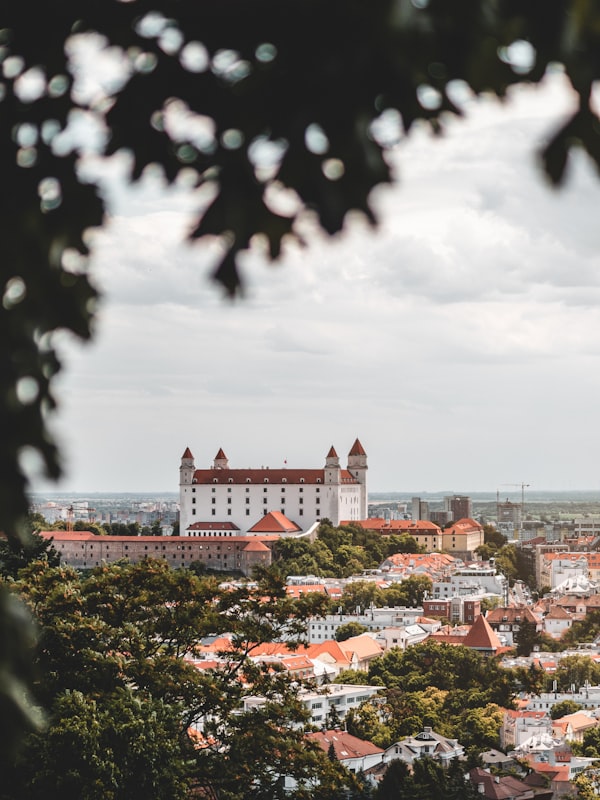
- Bratislava Castle, which dominates the city, was rebuilt in the 1960s after centuries of abandonment and is today a national symbol.
- The Tatra Mountains have glacial peaks and alpine lakes, and are just a few hours drive from Bratislava, offering natural refuge nearby.
- Slovakia was part of Czechoslovakia until 1993, when it separated peacefully, an event known as the Velvet Divorce.
Net salary, summarized
Source: national medians (OECD/Eurostat) + calculator formulaJust to show the ballpark of what you earn. Tax and cost of living take a chunk. Three sample professions, junior to senior. The full calculation, for your role, level, family, and currency, is the Living calculator.
Net pay by profession and level
| Profession | Junior | Mid | Senior |
|---|---|---|---|
| Software developer | US$ 1.723 | US$ 2.111 | US$ 3.128 |
| Financial analyst | US$ 1.334 | US$ 1.638 | US$ 2.438 |
| Nurse | US$ 1.202 | US$ 1.476 | US$ 2.202 |
Estimated net monthly, after progressive tax, in dollars (site base). Calculate for your role, level, and currency →
Gross and net by profession
Mid level. The dark part is tax and contributions.
Position among the 50 countries
Dimension by dimension
The fuller the bar, the better the position. The tick marks the median of the 50. Finance is left out of this ruler while the cost base is under review.
Profile against the median
this countrymedian of the 50
Where it wins
Immigration15th of 50Work-life16th of 50Safety20th of 50Where it loses
Business36th of 50Corruption34th of 50English33rd of 50Cost of living, what you actually keep
Source: basket for couple + 2 children (Numbeo) + local health and school rules| Housing (rent)≈ 33% of cost | US$ 957 |
| Food | US$ 699 |
| Transport | US$ 291 |
| Utilities and internet | US$ 253 |
| Recreation and other | US$ 699 |
| Healthcare | US$ 20 |
| Children's schoolpublic viable for non-residents | included |
| Total cost per month | US$ 2.920 |
Spending pattern (housing + living only)
Local tax, health, and school rules change how much is left at month end.
Family and immigration
Visa and spouse work rules; local values estimatedQuality of life
Indices: GPI, PISA, WHO, WHR, Ookla, EF EPI, CPI (0 to 10)Life
Daily
Institutions
Verdict
Slovakia is a viable option for those seeking low cost of living within the eurozone, European stability and a base to explore central Europe. Local salaries are modest and the job market is challenging for those without specific qualifications in industry or technology, but remote professionals, binational couples or those seeking to live near Vienna find real value. Culturally, learning Slovak is required for genuine integration outside Bratislava, and harsh winters pose a challenge for those from milder regions.

Imagine yourself here.
Complete guide: Slovakia
This page is the sample. The guide is the complete map.
Everything you saw here, deeper and actionable: from first visa step to moving day, sourced for every fact.
- Visa and sponsorship, step by step
- Cities and regions compared
- Health insurance: how to choose
- Retirement, taxes, and local rules
- Useful links: housing, bank, jobs
Photos: Martin Katler, Martin Katler, Martin Katler · Unsplash
Frequently asked questions
What is the work visa process for non-EU citizens?
Non-EU citizens need a formal job offer and employer sponsorship to obtain a work visa. The process requires approval from immigration authorities and proof of qualifications that justify hiring a non-European. Once in, there are opportunities for permanent residency after five continuous years. The process is bureaucratic and competitive, especially for professions that can be filled by European citizens.
Can my spouse or partner work if I have a work visa?
If you are an EU citizen, your spouse or registered partner has the right to accompany you and can work freely. If you are a non-European with a work visa, your spouse does not automatically have the right to work; they would need to obtain their own work visa or residency, which requires independent approval from authorities. Couples where both have job offers have an easier time than couples where only one works.
How does the cost of living in Bratislava compare with other European capitals?
Bratislava is significantly cheaper than Western European capitals like Vienna, Zurich or Berlin, but more expensive than non-euro Eastern European countries like Poland or Czech Republic. Apartment rent in the center is a fraction of what you pay in Vienna. Food, transport and entertainment cost well below Western averages, although Bratislava has become more expensive in recent years. Purchasing power varies dramatically between the capital and smaller cities.
Is it necessary to speak Slovak to live in Slovakia?
In Bratislava, it is possible to live with English in daily life, especially in technology work, business or international fields. Outside the capital, Slovak is practically necessary for social and functional integration. Learning the language opens doors to deeper relationships with the local community and significantly improves the experience of living there. Authorities do not require fluency for work residency, but lack of Slovak limits genuine social and cultural life.
Ready to go beyond the summary?
View the complete guide: Slovakia