
Country dossier · Living
🇨🇭 Switzerland
The highest nominal salaries in Europe, with housing and compulsory health insurance eating the difference. Zurich and Geneva erode those starting out.
- Region
- Central Europe
- Capital
- Bern
- Languages
- German, French, Italian, Romansh
- Currency
- Swiss Franc (CHF)
- Population
- ≈ 9.1 million
- Time zone
- UTC+1 (CET)
- Blocs
- Outside the EU (Schengen + EFTA)
What this rate includes
Average EFFECTIVE rate for married with kids — blends progressive brackets, contributions and typical deductions; not the marginal rate. It is progressivity-adjusted: incomes below the local anchor effectively pay less, director-level incomes pay more (up to +20%). Where public healthcare is contribution-funded (Germany, Nordics, Japan), it is already included.
Calibration: OECD Taxing Wages · PwC Tax Summaries
Switzerland pays the highest nominal salaries in Europe, and that's exactly why it fools so many people. The gross number looks impressive in job postings, housing and healthcare consume the difference quickly. The data below shows what's actually left over, not what appears at the top of your paycheck.
Switzerland at a glance
Languages and regions
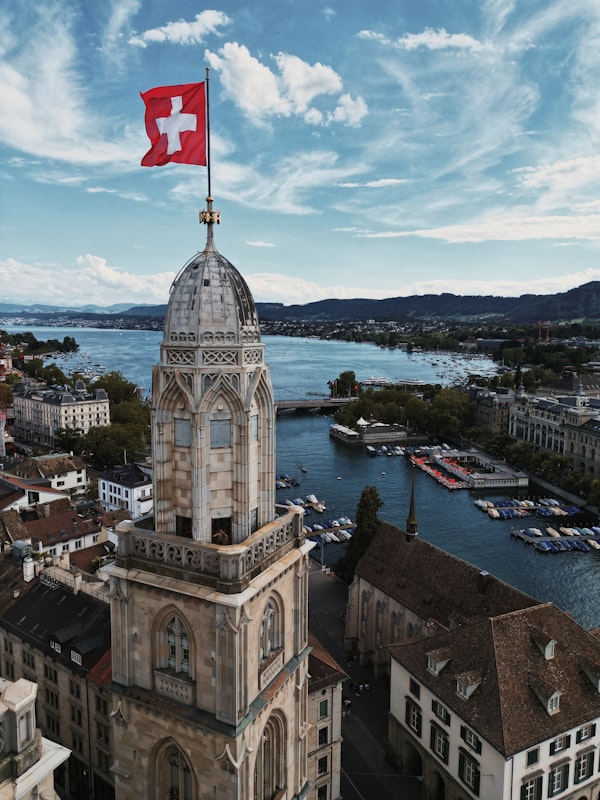
Switzerland has four official languages, each dominant in one region: German (Swiss German in daily life) in the center and east, French in the west, in Geneva and Lausanne, Italian in the south, in the canton of Ticino, and Romansh, minority, in valleys of the Grisons. Those who move to work in technology or finance, especially in Zurich, usually manage well with just English in the professional environment. Outside work, the local language weighs more in daily life.
Climate and geography
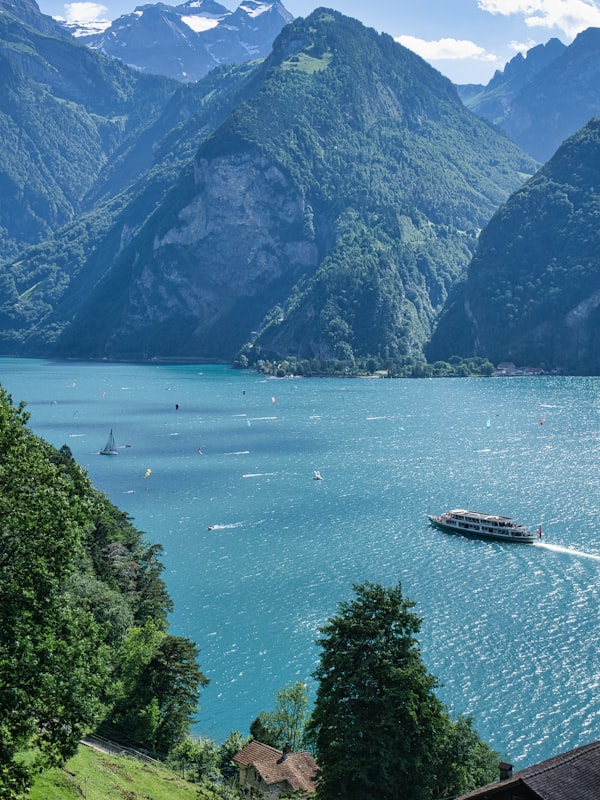
Small and mountainous country: the Alps cover much of the territory and define the landscape, with lakes and plateaus between the chains. The climate is temperate, with four well-defined seasons: cold and snowy winters in high regions, mild summers elsewhere. Altitude changes the experience of living in one canton or another significantly, even within a small country.
What the country lives on
Rich and diversified economy, highlighting financial services (Zurich and Geneva are global banking centers), pharmaceutical industry (Roche and Novartis, in Basel), precision engineering and watchmaking. It is a high-cost, high-salary country, with strong presence of multinational corporations and international headquarters, which explains much of the demand for qualified foreign professionals.
Education
Public education has a good reputation and is free, organized by canton, which matters directly to those who move with children. A hallmark of the system is the vocational training pathway (dual apprenticeship, combining school and work), valued as much as the university route. Universities have good quality, with highlights on federal polytechnics, including Zurich's ETH.
Culture and integration
Daily life values punctuality, organization and privacy, social norms that often surprise outsiders. Politics is marked by direct democracy, with frequent popular votes on concrete issues. Cities are clean, safe and with punctual public transport, which makes adaptation for those arriving without a car much easier.
Fun facts
- There is no capital in traditional terms: Bern seats the government, but Zurich and Geneva are larger and more known internationally.
- In direct democracy, any citizen can help call a national referendum, and there are popular votes several times a year.
- The country is not part of the European Union, but participates in the Schengen area and EFTA.
- Four official languages coexist in a small territory, something rare among countries of the world.
- Neutrality is a centuries-old tradition and still shapes foreign policy today.
Net salary, summarized
Source: national medians (OECD/Eurostat) + calculator formulaJust to show the ballpark of what you earn. Tax and cost of living take a chunk. Three sample professions, junior to senior. The full calculation, for your role, level, family, and currency, is the Living calculator.
Net pay by profession and level
| Profession | Junior | Mid | Senior |
|---|---|---|---|
| Software developer | US$ 9.064 | US$ 11.153 | US$ 16.861 |
| Financial analyst | US$ 6.983 | US$ 8.605 | US$ 12.926 |
| Nurse | US$ 6.277 | US$ 7.740 | US$ 11.641 |
Estimated net monthly, after progressive tax, in dollars (site base). Calculate for your role, level, and currency →
Gross and net by profession
Mid level. The dark part is tax and contributions.
Position among the 50 countries
Dimension by dimension
The fuller the bar, the better the position. The tick marks the median of the 50. Finance is left out of this ruler while the cost base is under review.
Profile against the median
this countrymedian of the 50
Where it wins
Health1st of 50Happiness1st of 50Stability1st of 50Where it loses
Immigration38th of 50English22nd of 50Climate20th of 50Cost of living, what you actually keep
Source: basket for couple + 2 children (Numbeo) + local health and school rules| Housing (rent)≈ 40% of cost | US$ 2.720 |
| Food | US$ 1.469 |
| Transport | US$ 612 |
| Utilities and internet | US$ 530 |
| Recreation and other | US$ 1.469 |
| Healthcare (private plan required)fixed cost, does not decrease with lower income | US$ 1.250 |
| Children's schoolpublic viable for non-residents | included |
| Total cost per month | US$ 8.050 |
Spending pattern (housing + living only)
Local tax, health, and school rules change how much is left at month end.
Family and immigration
Visa and spouse work rules; local values estimatedQuality of life
Indices: GPI, PISA, WHO, WHR, Ookla, EF EPI, CPI (0 to 10)Life
Daily
Institutions
Verdict
Worth it for those working in technology, finance or healthcare who achieve full or senior level salary, where real surplus still exceeds most neighboring countries. Worth less for those starting career: housing costs in Zurich and Geneva eat away much of the salary advantage precisely in the bracket where it should help most. Real point of caution: the mandatory private health system has high fixed costs regardless of income, so the surplus calculation weighs proportionally more for lower earners.
Complete guide: Switzerland
This page is the overview. The guide goes deeper.
The guide goes further than this page: visas, taxes, cost of living by region, healthcare, schools, a verdict by profile and the first 90 days, with the main sources listed in the guide.
The guide is delivered in English. Portuguese, Spanish, French, German, Italian and Chinese versions are sent on request after purchase.
- Visa and sponsorship, step by step
- Cities and regions compared
- Health insurance: how to choose
- Retirement, taxes, and local rules
- Useful links: housing, bank, jobs
Frequently asked questions
Do I need to speak German, French or Italian to work in Switzerland?
Depends on the sector and region. In technology and finance, mainly in Zurich, English is accepted in most international positions. Outside these sectors, the local language weighs more in hiring.
Is the work visa difficult for non-EU citizens?
Outside the European Union, the process goes through annual quotas and employer sponsorship. It's more bureaucratic than within the European bloc, but viable for qualified profiles, especially in areas with labor shortages.
Can the spouse work?
Yes, dependents of work visa holders generally have the right to work themselves, but the process has its own stage and is not automatic.
Why does the cost of living vary so much within the country itself?
Zurich and Geneva concentrate the highest salaries and also the highest housing costs in the country. Smaller cities, like Basel, offer a different balance between salary and cost.
Latest on this country
Tourism nights in the EU, 2025: where tourists sleep and how many come from abroad
In 2025, guests spent 3,144.7 million nights in hotels, holiday rentals and campsites in the EU, 4.1% more than in 2024, and 48.9% of them were spent by people living in another country. Italy and Spain had the most nights. Here are the figures for the 27 EU countries, Norway, Switzerland and Türkiye.
Doctors per 100,000 people in the EU, 2024: where the most physicians see patients
In 2024, Greece had 626.89 practising physicians per 100,000 inhabitants, the most in the EU, and Belgium 334.25, the fewest. Practising means doctors who treat patients, not everyone with a licence. Here are the figures for 26 EU countries, Norway and Switzerland.
Naturalisation rates in the EU, 2024: where the most resident foreigners became citizens
In 2024, 2.73 of every 100 foreign citizens living in the EU acquired the citizenship of their country of residence. The rate ranged from 7.55 in Sweden to 0.09 in Lithuania. Here are the figures for the 27 EU countries, Norway and Switzerland.
Ready to go beyond the summary?
View the complete guide: Switzerland