
University degrees in the EU, 2025: the share of 25 to 34 year olds with tertiary education
Published
In 2025, 44.8% of people aged 25 to 34 in the EU had completed tertiary education, just below the EU target of 45% for 2030. The share ranged from 66.8% in Ireland to 23.0% in Romania, and women were ahead of men in every country. Here are the figures for all 27.
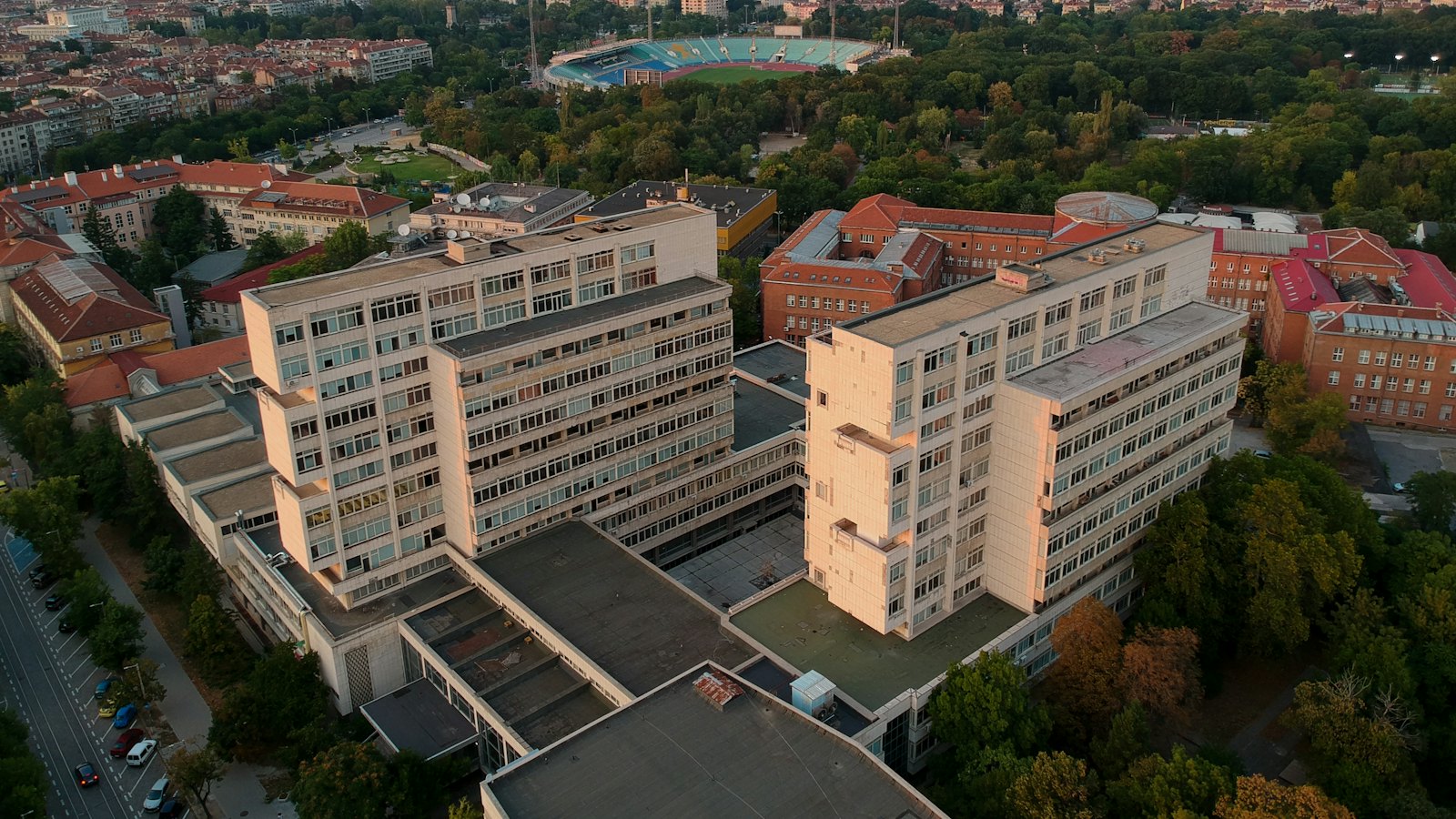
In 2025, 44.8% of people aged 25 to 34 in the EU had completed tertiary education, according to Eurostat. In 2021, the share was 41.5%. Among women it was 50.5%, and among men 39.3%. The figures come from Eurostat's data on the educational attainment of the population, last updated on 10 September 2026, which has 2025 figures for all 27 countries.
What counts as tertiary education
Eurostat counts the highest level of education a person has successfully completed. Tertiary education covers levels 5 to 8 of the international classification of education, ISCED 2011: short-cycle tertiary education, bachelor's or equivalent level, master's or equivalent level, and doctoral or equivalent level.
So the share includes short-cycle programmes as well as university degrees, and a person counts once, whatever the highest of these levels is. It measures how many people hold a tertiary qualification, not the quality of the education, the field of study or what the qualification is worth on the job market. The figures come from the EU Labour Force Survey and cover people living in private households.
The EU target for 2030
In February 2021, the Council of the EU approved a resolution on a strategic framework for European cooperation in education and training towards the European Education Area, covering 2021 to 2030. It sets an EU-level target: at least 45% of people aged 25 to 34 should have completed tertiary education by 2030. The target applies to the EU as a whole. At 44.8% in 2025, the EU was 0.2 points below it.
The table
Share of people aged 25 to 34 with tertiary education (ISCED levels 5 to 8), in %, 2025, ranked by the total. The difference column is women minus men, in percentage points. The last column is the total in 2021.
| Rank | Country | Total | Women | Men | Women minus men, points | Total, 2021 |
|---|---|---|---|---|---|---|
| 1 | Ireland | 66.8 | 70.2 | 63.3 | 6.9 | 62.2 |
| 2 | Luxembourg | 65.2 | 67.5 | 63.0 | 4.5 | 62.6 |
| 3 | Lithuania | 60.8 | 69.9 | 52.8 | 17.1 | 57.5 |
| 4 | Cyprus | 60.0 | 69.1 | 51.8 | 17.3 | 58.8 |
| 5 | Netherlands | 56.1 | 60.8 | 51.6 | 9.2 | 55.6 |
| 6 | France | 55.8 | 59.2 | 52.3 | 6.9 | 50.3 |
| 7 | Sweden | 53.6 | 61.3 | 46.4 | 14.9 | 49.3 |
| 8 | Belgium | 52.7 | 60.3 | 45.2 | 15.1 | 50.9 |
| 9 | Denmark | 52.5 | 61.3 | 44.1 | 17.2 | 49.1 |
| 9 | Spain | 52.5 | 58.7 | 46.6 | 12.1 | 48.5 |
| 11 | Malta | 47.7 | 56.2 | 41.5 | 14.7 | 42.9 |
| 12 | Poland | 45.2 | 54.5 | 36.3 | 18.2 | 41.8 |
| 13 | Latvia | 44.7 | 54.7 | 35.2 | 19.5 | 45.5 |
| 14 | Estonia | 44.3 | 56.2 | 33.2 | 23.0 | 43.2 |
| 15 | Austria | 43.7 | 49.7 | 38.0 | 11.7 | 42.4 |
| 16 | Greece | 42.8 | 50.9 | 35.4 | 15.5 | 44.2 |
| 16 | Slovenia | 42.8 | 55.4 | 31.6 | 23.8 | 47.9 |
| 18 | Portugal | 42.5 | 50.7 | 34.6 | 16.1 | 45.9 |
| 19 | Croatia | 42.0 | 50.5 | 34.3 | 16.2 | 36.2 |
| 20 | Bulgaria | 41.2 | 48.1 | 34.6 | 13.5 | 33.8 |
| 21 | Germany | 40.9 | 44.1 | 38.0 | 6.1 | 36.9 |
| 22 | Finland | 38.2 | 46.2 | 30.7 | 15.5 | 40.1 |
| 23 | Slovakia | 36.3 | 45.3 | 27.7 | 17.6 | 39.5 |
| 24 | Czechia | 36.0 | 43.5 | 28.9 | 14.6 | 34.9 |
| 25 | Hungary | 32.6 | 37.6 | 27.9 | 9.7 | 33.4 |
| 26 | Italy | 31.1 | 37.8 | 24.7 | 13.1 | 28.3 |
| 27 | Romania | 23.0 | 25.2 | 21.1 | 4.1 | 23.3 |
| EU | 44.8 | 50.5 | 39.3 | 11.2 | 41.5 |
Where the share is highest
Ireland had the highest share in 2025, 66.8%, followed by Luxembourg (65.2%), Lithuania (60.8%) and Cyprus (60.0%). The Netherlands (56.1%), France (55.8%), Sweden (53.6%), Belgium (52.7%), Denmark and Spain (both 52.5%) were also above half.
In all, 12 countries were at or above the 45% level of the EU target, with Malta (47.7%) and Poland (45.2%) completing the group.
Where it is lowest
Romania had the lowest share, 23.0%, and was the only country below 30%. Italy (31.1%), Hungary (32.6%), Czechia (36.0%), Slovakia (36.3%) and Finland (38.2%) followed. Germany stood at 40.9%.
Women ahead of men in every country
In all 27 countries, a larger share of women than of men aged 25 to 34 had completed tertiary education. Across the EU the difference was 11.2 points: 50.5% of women against 39.3% of men.
The largest differences were in Slovenia (23.8 points) and Estonia (23.0), followed by Latvia (19.5) and Poland (18.2). The smallest were in Romania (4.1 points), Luxembourg (4.5) and Germany (6.1). In 22 countries, the share among women was at or above 45%; among men, that was the case in 9.
Change since 2021
Eurostat marks a break in series in 2021 for all countries, so 2021 is the first year of the current series. Between 2021 and 2025, the share rose in 19 countries and fell in 8. The largest rises were in Bulgaria (7.4 points), Croatia (5.8), France (5.5) and Malta (4.8). The largest falls were in Slovenia (5.1 points), Portugal (3.4) and Slovakia (3.2).
Eurostat also marks breaks in series for Slovenia in 2023 and for Bulgaria and France in 2024, so the change for these three countries needs caution.
Related reading
For the cost of studying in another country, see our article on low-cost universities abroad. For language skills among adults, see foreign languages in the EU.
Notes on the data
- What the share is not. A higher share does not mean that education is better, or that degrees from that country are easier or harder to obtain. It only counts completed qualifications.
- Flags. Eurostat shows no flags on the 2025 figures.
Country profiles: Ireland, Luxembourg, Lithuania, Netherlands, Romania, Italy, Slovenia and Estonia.
Countries in this article
The guide is delivered in English. Portuguese, Spanish, French, German, Italian and Chinese versions are sent on request after purchase.
Related
Sources
- Eurostat. Population in private households by educational attainment level (edat_lfse_03), ages 25 to 34, tertiary education (ISCED levels 5 to 8), total, women and men, 2021 and 2025 (database update of 10 September 2026). accessed .
- Eurostat. Educational attainment statistics (Statistics Explained), data extracted in April 2026, including the EU-level target of at least 45% of people aged 25 to 34 with tertiary education by 2030. accessed .
- Eurostat. Educational attainment, outcomes and returns of education (edat1), reference metadata. accessed .