
Overcrowded homes in the EU, 2025: where people have the fewest rooms
Published
In 2025, 16.8% of people in the EU lived in a household that Eurostat counts as overcrowded, almost the same as the 16.9% of 2024. The share ranged from 40.4% in Romania to 2.2% in Cyprus. Here are the figures for all 27 countries and what Eurostat means by overcrowded.
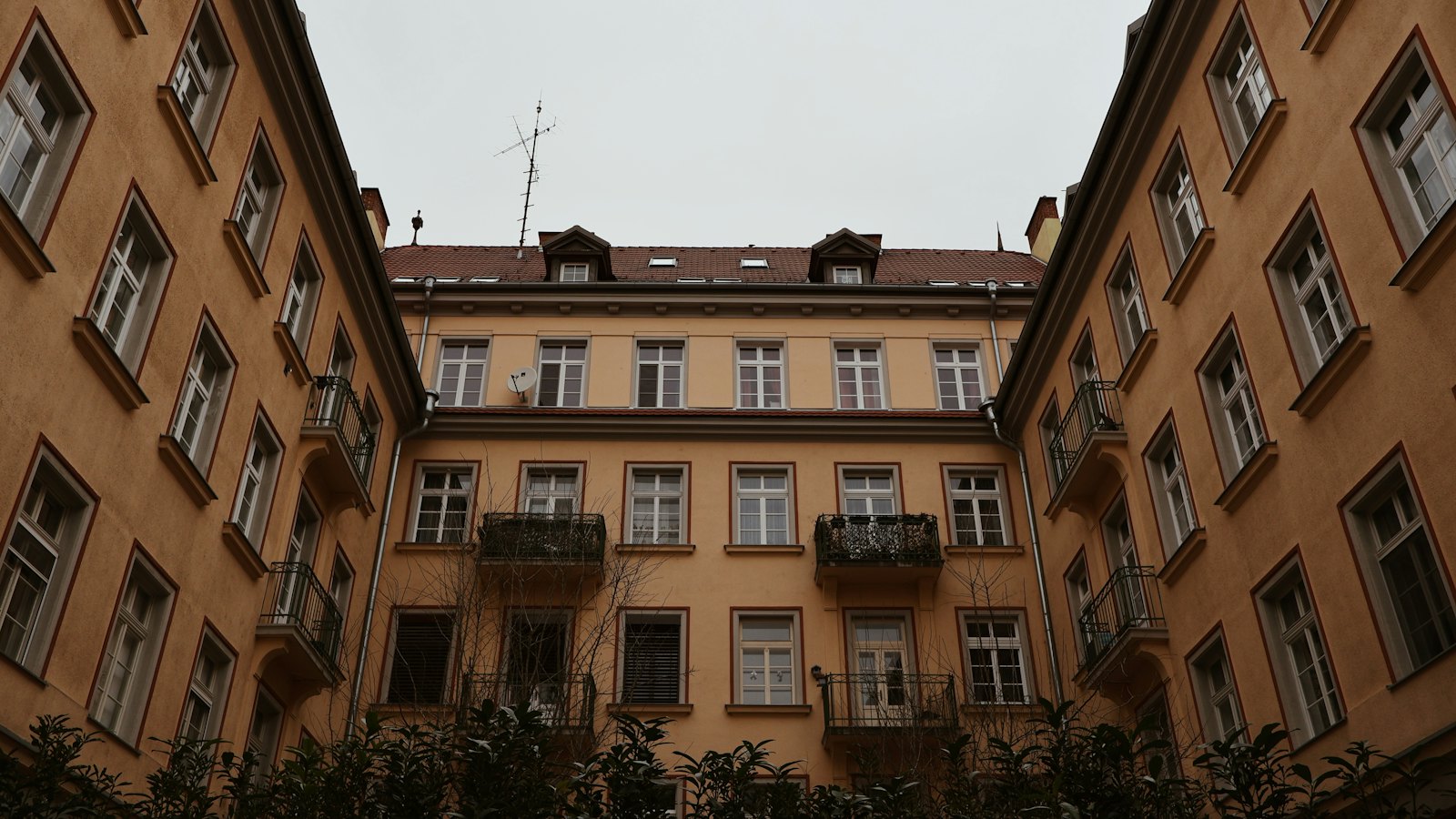
In 2025, 16.8% of people in the EU lived in an overcrowded household, according to Eurostat. That is about one person in six, and almost the same as in 2024, when the share was 16.9%. The figures come from Eurostat's data on the overcrowding rate, last updated on 20 October 2026, which has 2025 figures for all 27 countries.
What overcrowded means here
Eurostat's definition is based on rooms only. It compares the number of rooms a household has with the number of rooms it should have, given who lives in it. A household is counted as overcrowded if it does not have at least:
- one room for the household;
- one room for each couple;
- one room for each single person aged 18 or over;
- one room for each pair of single people of the same gender aged 12 to 17;
- one room for each other single person aged 12 to 17;
- one room for each pair of children under 12.
The overcrowding rate is the share of the population living in such a household. Because it counts people rather than households, a large family in a small home weighs more in the rate than a person living alone. A couple with two young children, for example, needs at least three rooms under this rule: one for the household, one for the couple and one for the children.
The rule only compares rooms with who lives in the home. An overcrowded home in this sense is not necessarily a poor-quality home, and the figure says nothing about the income of the people who live there.
The table
Share of the population living in an overcrowded household, in %, ranked from the highest to the lowest rate in 2025. The last column is the change in percentage points since 2024.
| Rank | Country | 2025 | 2024 | Change since 2024, points |
|---|---|---|---|---|
| 1 | Romania | 40.4 | 40.7 | -0.3 |
| 2 | Latvia | 38.9 | 39.3 | -0.4 |
| 3 | Bulgaria | 32.5 | 33.8 | -1.3 |
| 4 | Croatia | 31.8 | 31.7 | 0.1 |
| 5 | Poland | 30.9 | 33.7 | -2.8 |
| 6 | Greece | 28.3 | 27.0 | 1.3 |
| 7 | Lithuania | 27.8 | 26.3 | 1.5 |
| 7 | Slovakia | 27.8 | 29.9 | -2.1 |
| 9 | Italy | 24.3 | 23.9 | 0.4 |
| 10 | Estonia | 17.9 | 18.4 | -0.5 |
| 11 | Czechia | 16.7 | 16.6 | 0.1 |
| 12 | Sweden | 15.7 | 16.7 | -1.0 |
| 13 | Hungary | 14.6 | 14.6 | 0.0 |
| 14 | Austria | 14.2 | 13.7 | 0.5 |
| 15 | Portugal | 12.7 | 11.2 | 1.5 |
| 16 | Germany | 11.7 | 11.5 | 0.2 |
| 17 | France | 10.8 | 10.4 | 0.4 |
| 18 | Slovenia | 10.5 | 10.6 | -0.1 |
| 19 | Denmark | 9.9 | 9.3 | 0.6 |
| 20 | Finland | 9.5 | 9.1 | 0.4 |
| 20 | Spain | 9.5 | 9.1 | 0.4 |
| 22 | Luxembourg | 8.8 | 6.8 | 2.0 |
| 23 | Belgium | 6.6 | 6.5 | 0.1 |
| 24 | Ireland | 5.4 | 5.0 | 0.4 |
| 25 | Malta | 4.7 | 3.7 | 1.0 |
| 26 | Netherlands | 4.1 | 4.6 | -0.5 |
| 27 | Cyprus | 2.2 | 2.4 | -0.2 |
| EU | 16.8 | 16.9 | -0.1 |
Where overcrowding is most common
Romania had the highest rate in 2025, 40.4%, followed by Latvia (38.9%), Bulgaria (32.5%), Croatia (31.8%) and Poland (30.9%). In these five countries, three people in ten or more lived in a household with fewer rooms than the rule requires. Greece (28.3%), Lithuania and Slovakia (both 27.8%) and Italy (24.3%) followed. In all, 10 countries were above the EU figure of 16.8%.
Where it is least common
At the other end, Cyprus had the lowest rate, 2.2%, or fewer than one person in forty. It was followed by the Netherlands (4.1%) and Malta (4.7%). Ireland (5.4%), Belgium (6.6%) and Luxembourg (8.8%) were also below 10%, as were Spain and Finland (both 9.5%) and Denmark (9.9%).
Little change in one year
Between 2024 and 2025, the rate rose in 16 countries, fell in 10 and did not change in one, Hungary. Most changes were small, below one percentage point. The largest falls were in Poland (2.8 points) and Slovakia (2.1 points). The largest rises were in Luxembourg (2.0 points), Lithuania and Portugal (both 1.5 points) and Greece (1.3 points).
The EU figure has stayed close to 17% for several years: it was 17.1% in 2018, an estimate, and 16.8% in 2025.
What this can tell someone looking for a home
If you are planning to move, the rate gives an idea of how common it is, in each country, for households to have fewer rooms than Eurostat's rule requires. It does not say how big the rooms are, how much homes cost, or what is available to rent. For the cost side, see the housing cost burden in Europe and house prices in the EU. Our article on the age young people leave their parents' home looks at another side of how people live.
Notes on the data
- Luxembourg. Eurostat marks a break in series in 2025, so the change since 2024 needs caution.
- Lithuania. The 2024 and 2025 figures are provisional.
- Malta. Eurostat's article on housing, with data extracted in November 2025, gives 4.4% for Malta in 2024; the database now gives 3.7%, the figure used here.
- Source. The figures come from the EU statistics on income and living conditions survey.
Country profiles: Romania, Croatia, Poland, Greece, Netherlands, Ireland, Belgium and Spain.
Countries in this article
The guide is delivered in English. Portuguese, Spanish, French, German, Italian and Chinese versions are sent on request after purchase.
Related
Sources
- Eurostat. Overcrowding rate by age, sex and poverty status, total population (ilc_lvho05a), all ages, both sexes, total, 2024 and 2025 (database update of 20 October 2026). accessed .
- Eurostat. Glossary: Overcrowding rate. accessed .
- Eurostat. Living conditions in Europe: housing (Statistics Explained), data extracted in November 2025. accessed .