
The safest countries to live in 2026
Published
The Global Peace Index 2026 ranks 163 countries on 23 indicators. Here is the top 10, what the index actually measures, and why it is not a ranking of street crime.
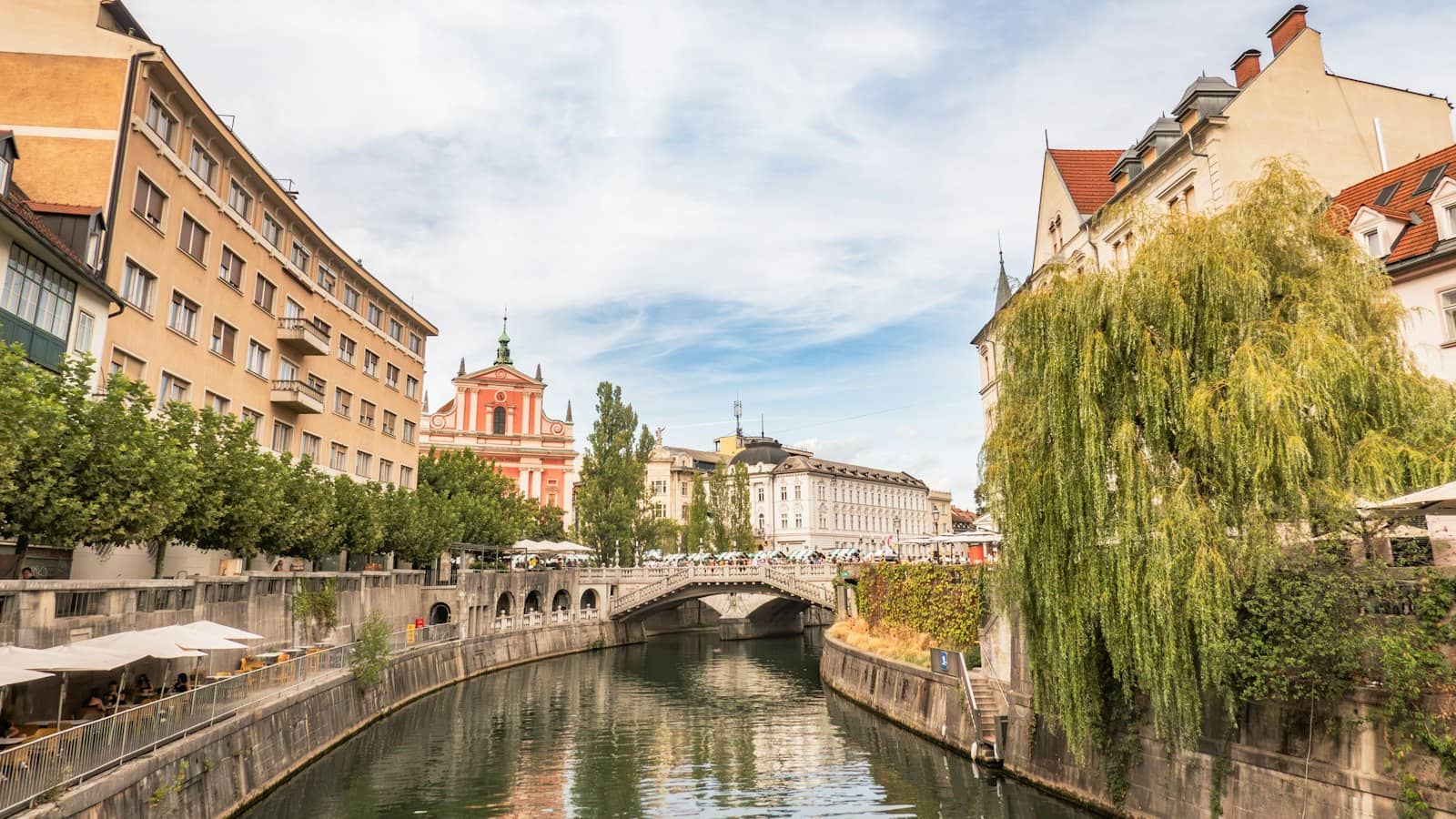
Iceland is the most peaceful country in the world for the 19th year in a row, according to the Global Peace Index 2026, published in June by the Institute for Economics and Peace (IEP). New Zealand, Switzerland, Slovenia and Ireland complete the top five.
The index covers 163 countries and territories, home to 99.7% of the world's population. It is the most cited answer to the question "which countries are safest?", which is exactly why it is worth knowing what it measures before you use it to choose where to live.
The top 10 in 2026
Every country gets a score. Indicators are normalised on a scale of 1 to 5, and a lower overall score means a more peaceful country.
| Rank | Country | GPI 2026 score |
|---|---|---|
| 1 | Iceland | 1.161 |
| 2 | New Zealand | 1.343 |
| 3 | Switzerland | 1.363 |
| 4 | Slovenia | 1.369 |
| 5 | Ireland | 1.371 |
| 6 | Austria | 1.421 |
| 7 | Portugal | 1.427 |
| 8 | Singapore | 1.435 |
| 9 | Finland | 1.478 |
| 10 | Japan | 1.489 |
The IEP notes that nine of these ten countries were also in the top 10 in 2025, and that seven of them are in Western and Central Europe.
Nine of the ten are among the 50 countries covered by Gledori. Iceland is the exception.
Small gaps, big headlines
Rankings make every place look like a clear step above the next. The scores often say otherwise. Switzerland (1.363), Slovenia (1.369) and Ireland (1.371) are separated by less than one hundredth of a point, and Austria (1.421) and Portugal (1.427) are almost as close. In practice, places three to five are a near tie, and so are places six and seven.
The one real gap is at the top. Iceland is ahead of New Zealand by 0.182 points, more than the distance between second and tenth place.
What the index measures
The Global Peace Index combines 23 indicators in three groups:
- Societal safety and security. Includes the homicide rate, violent crime, perceptions of criminality, the incarceration rate, the police rate, access to small arms, violent demonstrations, political instability and the impact of terrorism.
- Ongoing domestic and international conflict. Includes internal and external conflicts fought, deaths from those conflicts and relations with neighbouring countries.
- Militarisation. Includes military spending as a share of GDP, the number of armed services personnel, weapons imports and exports, nuclear and heavy weapons capability, and funding for UN peacekeeping.
This is a measure of peace in the broad sense: how violent a society is, how involved the state is in conflict and how militarised it is.
What the index does not measure
The GPI is not a ranking of how safe you will feel walking home at night. A country can have calm streets and still score worse because it spends heavily on its military, exports weapons or is involved in a conflict abroad. The reverse is also possible.
For the day to day, a second measure helps. The OECD asks people aged 15 and over whether they feel safe at night where they live. The 2025 figures for the top 10 tell a different story from the ranking:
| Country | GPI 2026 rank | Feel safe at night, 2025 |
|---|---|---|
| Switzerland | 3 | 88.2% |
| Iceland | 1 | 87.6% |
| Slovenia | 4 | 87.3% |
| Finland | 9 | 85.6% |
| Austria | 6 | 83.0% |
| Portugal | 7 | 78.7% |
| Japan | 10 | 78.3% |
| Ireland | 5 | 74.5% |
| New Zealand | 2 | 62.9% |
| Singapore | 8 | not published |
New Zealand is second in the peace index, yet it has the lowest share of people who feel safe at night among the countries in this table. That is not a contradiction. The two numbers answer different questions, and the OECD figure is a perception, not a crime rate. Singapore is not an OECD member and does not appear in that database.
Beyond the top 10
If the countries on your list are not in the top 10, the ranking is still useful as a first filter. Among the countries covered by Gledori, the next places in 2026 are Denmark (11th), Malaysia (12th), Czechia (13th), Canada (14th), Hungary (15th), the Netherlands (17th) and Australia (20th).
The global picture is less reassuring. The IEP reports that peacefulness worldwide fell by 0.7% over the past year, the 12th consecutive year of decline, driven mostly by armed conflict.
How to use this ranking
A peace index is a good starting point and a poor finishing line. Before deciding, it helps to:
- Look at the city, not just the country. National scores hide large differences between regions and neighbourhoods.
- Check the indicator that matters to you. If you are moving with children, perceived safety and local crime data say more than military spending.
- Weigh safety against everything else. A very peaceful country can still be a hard move if salaries, housing or visa rules do not work for you.
Country profiles
Each profile brings safety together with salary, cost of living, healthcare and visas:
- Switzerland, Slovenia, Ireland, Austria and Portugal
- New Zealand, Singapore, Finland and Japan
To see how safety sits next to what you would actually earn and spend, the cost of living calculator compares all 50 countries for your profession and family size.
Sources
- Institute for Economics and Peace. Global Peace Index 2026: Identifying and measuring the factors that drive peace. accessed .
- Vision of Humanity, Institute for Economics and Peace. Why Iceland stretched its lead among the world's 10 most peaceful countries in 2026. accessed .
- OECD. OECD Well-being Database (How's Life?), current well-being: feeling safe at night. accessed .