
Best countries to move to with your family in 2026
Published
Safety, schools, healthcare and time at home, each from its own official source. No country wins on all four, and the table shows where each one is strong and where it falls short.
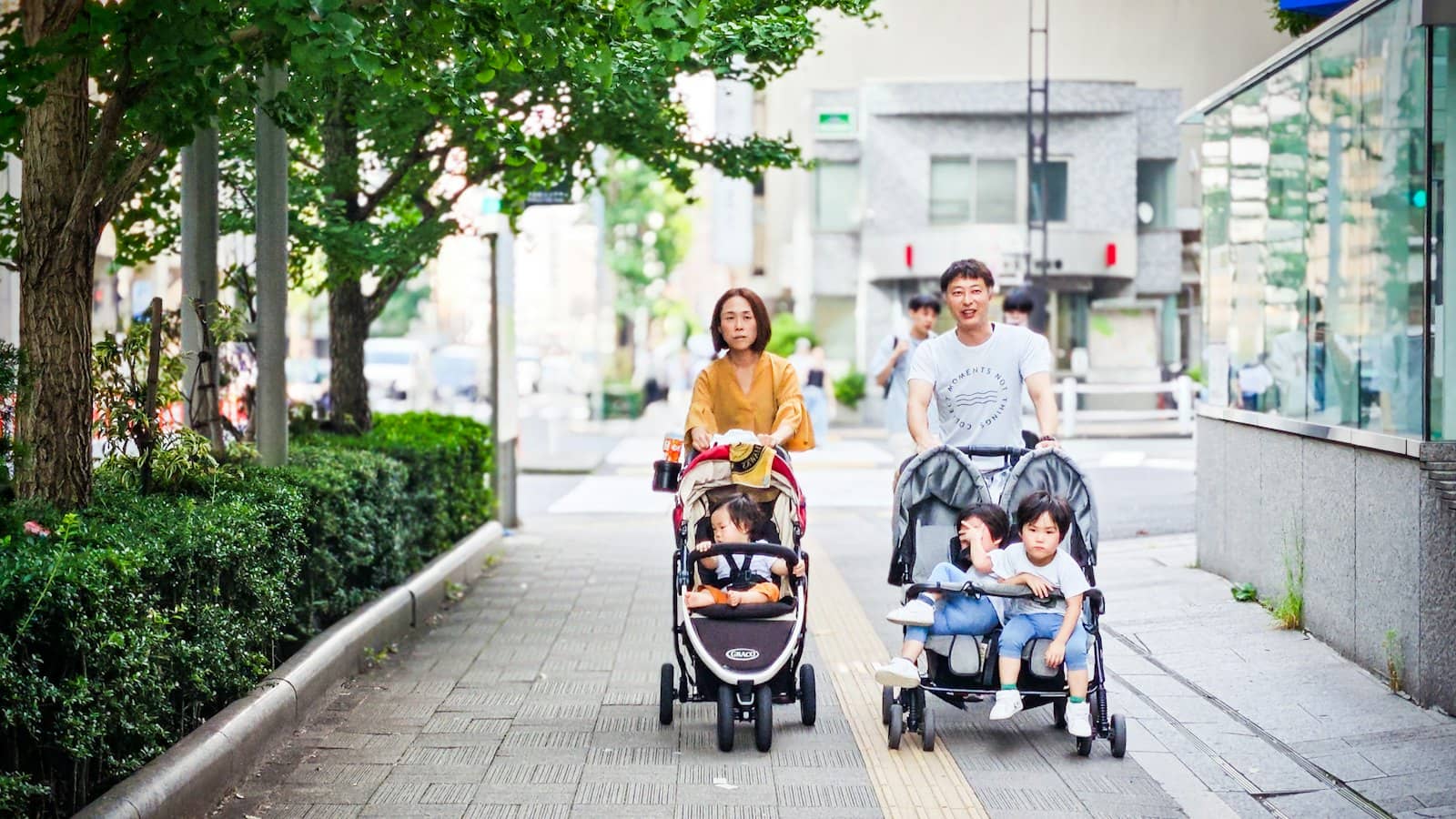
Families moving abroad tend to ask the same four questions. Is it safe? Are the schools good? Will we be looked after if someone gets sick? Will we actually see each other, or will work eat the evenings?
There is no single index that answers all four, and combining them into one score would hide more than it shows. So this ranking does something simpler: it puts four official measures side by side and lets you see the trade offs.
How the comparison works
Each criterion comes from one source, the most recent edition available in September 2026:
- Safety: rank in the Global Peace Index 2026, from the Institute for Economics and Peace. A lower rank is better.
- Schools: mean science score of 15 year olds in PISA 2025, published by the OECD on 8 September 2026. Science was the main subject of this round. The OECD average is 482.
- Healthcare: deaths from treatable causes per 100,000 people, age standardised, from the OECD's Health at a Glance 2025. These are deaths under age 75 that timely and effective healthcare should prevent, so a lower number is better. The OECD average is 77. Most figures are for 2023, some for the nearest earlier year.
- Time at home: share of employees who usually work 50 hours or more a week, from the OECD's How's Life well-being database, 2025. A lower share is better.
The countries in the table are those among the 50 covered by Gledori that rank in the top 20 of the peace index and are OECD members, so that all four measures exist for them.
The table
| Country | Peace rank (GPI 2026) | PISA 2025 science | Treatable deaths per 100,000 | Employees working 50h+ |
|---|---|---|---|---|
| New Zealand | 2 | 509* | not published | 11.1% |
| Switzerland | 3 | 501 | 34 | 5.0% |
| Slovenia | 4 | 484 | 53 | 2.0% |
| Ireland | 5 | 500 | 57 | 3.9% |
| Austria | 6 | 497 | 54 | 4.0% |
| Portugal | 7 | 482 | 63 | 6.5% |
| Finland | 9 | 504 | 57 | 2.6% |
| Japan | 10 | 538 | 49 | not published |
| Denmark | 11 | 478 | 55 | 2.4% |
| Czechia | 13 | 490 | 87 | 2.9% |
| Canada | 14 | 510* | 58 | 3.1% |
| Hungary | 15 | 480 | 141 | 1.5% |
| Netherlands | 17 | 485* | 49 | 1.8% |
| Australia | 20 | 509 | 47 | 9.7% |
*The OECD asks for caution with these PISA results because one or more of its sampling standards were not met.
"Not published" means the source does not include that country for that measure. We did not fill the gap with an estimate.
What the table shows
Switzerland is the most complete profile. Third for peace, the lowest treatable mortality in the whole OECD at 34 deaths per 100,000, and a science score above the OECD average. What this table does not show is what it costs to live there, which is where the cost of living comparison below comes in.
Japan has the strongest schools on this list by a clear margin. Its science score of 538 is well ahead of every other country in the table. Healthcare outcomes are also strong. The OECD database used here does not include Japan's figure for long working hours, so the table cannot tell you how much time families actually get together.
The Netherlands, Hungary, Slovenia and Denmark protect family time. Two percent or less of Dutch, Hungarian and Slovenian employees work 50 hours or more a week, and Denmark is close behind. For a family, this can matter as much as any school ranking.
New Zealand and Australia are safe and good at schooling, with longer working weeks. New Zealand is second in the world for peace and Australia has one of the lowest treatable mortality rates in the table, but both have around one employee in ten working very long hours.
Portugal is peaceful, with schools at the OECD average. Seventh in the peace index, it scores exactly the OECD average in PISA science. Treatable mortality is lower than the OECD average but higher than in most of Western Europe.
Hungary and Czechia are the outliers on healthcare. Both rank well for peace, but treatable mortality is above the OECD average of 77: 87 per 100,000 in Czechia and 141 in Hungary, the highest in the table.
What this ranking leaves out
- School access, not just school quality. PISA measures how 15 year olds perform. It does not tell you whether a foreign child will get a place, in which language classes are taught or what international schools cost.
- Healthcare access for newcomers. A good health system is only useful once you are in it. Registration rules and waiting times for new residents vary a lot.
- Money. None of these measures tells you whether your salary will cover rent, childcare and school fees.
- The city. All four measures are national averages.
Next steps
The country profiles cover schooling, healthcare and the cost of a family household in each country:
- Switzerland, Japan, Netherlands, Denmark and Slovenia
- Ireland, Austria, Finland, Portugal, Czechia and Hungary
- Canada, Australia and New Zealand
The cost of living calculator lets you set the number of adults and children, public or private school and healthcare, and see what is left each month in all 50 countries. When you have narrowed it down, the country guides go through visas, schools, healthcare registration and the first months step by step.
Sources
- Institute for Economics and Peace. Global Peace Index 2026: Identifying and measuring the factors that drive peace. accessed .
- OECD. PISA 2025 Results (Volume I), Table I.1: Snapshot of performance in science, reading, mathematics and computational problem-solving. accessed .
- OECD. Health at a Glance 2025, Figure 3.6: Mortality from treatable causes, 2023 and 2013 (or nearest year). accessed .
- OECD. OECD Well-being Database (How's Life?), current well-being: long hours in paid work. accessed .
- OECD. How's Life? 2024: Well-being and Resilience in Times of Crisis. accessed .